

Audio By Carbonatix
As someone whose diet is 92.7% cheese (yes, I made that number up but it’s an accurate estimate), I was disheartened to learn of news related to a cancer study.
It turns out that consuming cheddar cheese and cream cheeses can increase the risk of breast cancer by fifty percent.
Before you start throwing out those blocks of cheese you saved for your Netflix binge on the weekend, let's look into the research. A 2017 study done by Roswell Park Cancer Institute in New York studied the dairy intake of more than 3,000 women over 11 years.
In doing so, they found that eating cheese increased these women's risk of breast cancer by 53%.
Dairy contains a growth hormone called IGF-1 (Insulin-like Growth Factor) and unfortunately, high intake of that hormone does seem to potentially promote cancer. On the plus side, the study also found that eating yogurt cuts the risk by 30%.
We are all taught to eat a balanced diet, but if you’re anything like me, you have two major food groups: cheese and bread! (Even better when it’s cheesy bread! Am I right?) But there is still hope, even for cheese lovers like me.
Manveet Basra, Senior Public Health Officer at Breast Cancer Now, told The Daily Mail, “Despite this, and many other studies looking at whether or not there is a link between diet or specific foods and breast cancer, this link is still not clear.”
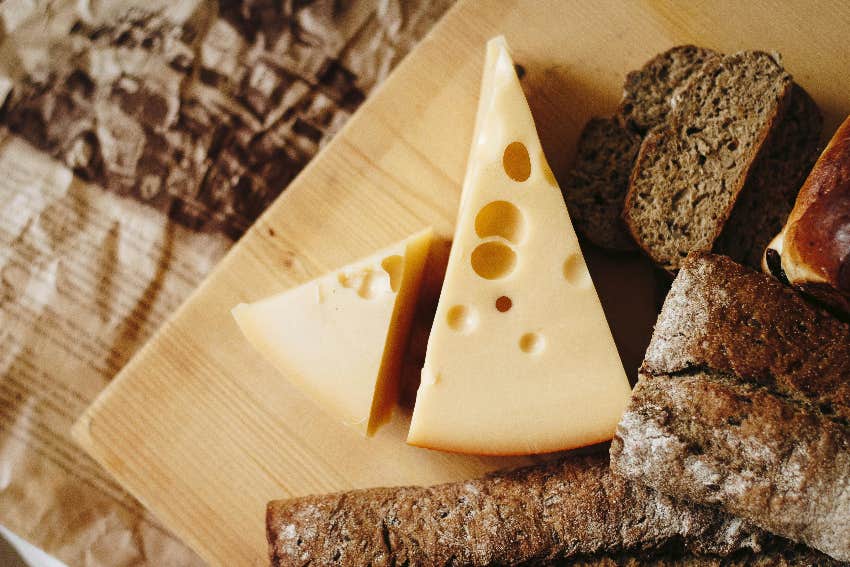 NastyaSensei / Pexels
So, we still don't know if your favorite cheese increases your risk of cancer or not. Of course, any time new information surfaces, there's always someone else ready to play devil's advocate.
Research reported in the New York Times, about that year's annual meeting of the American Association for Cancer Research, states that decades of studies related to specific foods as potential causes of or protections against cancer are now considered weakly associated, with one expert saying "During the last two decades the connection between the foods we eat and the cellular anarchy called cancer has been unraveling string by string."
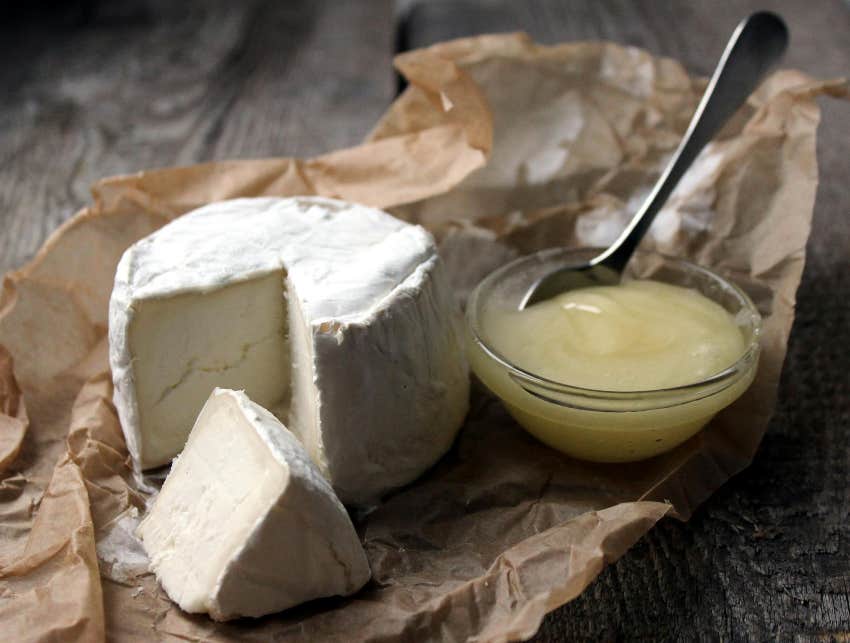 Irita Antonevica / Pexels
Expanding upon a plenary presentation made by Harvard epidemiologist Dr. Walter C. Willett continues with the following: "Whatever is true for other diseases, when it comes to cancer there was little evidence that fruits and vegetables are protective or that fatty foods are bad ... [Unless] a person is seriously malnourished, the influence of specific foods is so weak that the signal is easily swamped by noise ...
The hypothesis that fatty foods are a direct cause of cancer has also been crumbling, along with the case for eating more fiber.
The idea that red meat causes colon cancer is shrouded in ambiguity ... If hamburgers are carcinogenic, the effect appears to be mild." Dr. Willet summed it all up by saying, “Diet and cancer [have] turned out to be more complex and challenging than any of us expected.”
Unfortunately, at the end of the day, there are things one can do to prevent cancer, but — and this is a big but — it can happen to any of us. Even the healthiest of the healthiest can be diagnosed with cancer. It's a scary thing but we can only hope that one day a cure is found.
Latest Stories
-
Ghana housing finance conference adopts communiqué to improve affordable housing access
3 hours -
Special Initiatives Minister urges Wa Technical Institute to enrol more girls as EU-backed solar training lab opens
3 hours -
In the matter of my first year at the Bar
3 hours -
ActionAid Ghana calls for an end to child marriage, greater investment in girls’ rights
3 hours -
Newsfile to tackle World Cup visa scandal, beach demolitions, education strikes, BRICS bid
4 hours -
UK-Ghana Trade & Investment Summit: Trade Resource Centre to help businesses maximise UK-Ghana trade opportunities
4 hours -
Embassy of Denmark celebrates World Maritime Day
4 hours -
Linking LEAP to productive inclusion could cut extreme poverty by 2030 – UNICEF
5 hours -
Trade Ministry backs use of creative arts to rehabilitate prison inmates
5 hours -
Negotiations with government to continue despite strike suspension – GNAT
5 hours -
‘Ghana cannot afford to waste public resources; every cedi has a job’ – Ato Forson
5 hours -
Ghana expects economic boost as World Assemblies of God Congress brings 10,000 delegates to Accra
5 hours -
Joy in Nayilifong as Farouk Aliu Mahama donates 100kVA transformer to improve power supply
6 hours -
Chief Justice urges employers to tackle mental health stigma in workplaces
7 hours -
Analysis: Ghana’s yellow fever numbers reveal a gap between vaccination and protection
7 hours