

Audio By Carbonatix
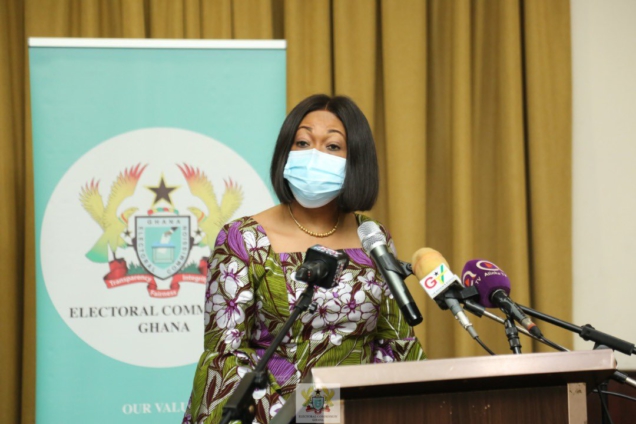
The Jean Mensah-led Electoral Commission has directed the opposition National Democratic Congress (NDC) to table its proposed electoral reforms before the Interparty Advisory Committee (IPAC) for dialogue.
The Commission said it is open to suggestions and feedback to enhance the country’s electoral process but insists IPAC is the appropriate forum for such suggestions.
The directive was after the EC took delivery of the NDC’s proposals.
“We don’t deal with individual parties, and IPAC is designed to promote multi-party views, so IPAC is the right forum for such discussion.
"So we responded to their proposals and asked the party to bring it to IPAC,” it said.
The Commission further explained the decision to ask the NDC to table its suggestion before IPAC was arrived at during a top Management meeting over the suggestions.
But the EC also observed that some of the suggestions captured in the NDC’s proposal go beyond its mandate.
It argued that, “there are some of the issues which are constitutional matters and that would require constitutional amendments and execution from the executive arm of government.”
Some of the issues the Commission listed as not being part of their mandate include, among others
1. Specially-designated courts should be appointed exclusively for electoral disputes and offences before, during and after registration of voters and elections.
2. Split the EC into two separate bodies, namely an Office for the Regulation of Political Parties (ORPP) and an Electoral Commission (EC) by amending the Political Parties Act, 2000, Act 574.
3. Provide for prior parliamentary approval for the appointment of EC members.
But the commission, says the suggestions which have a direct nexus on their operations would be looked at.
“The Electoral Commission always wants to be the best, and so we are for anything that would enhance the electoral process.
"When the NDC finally submits its electoral reforms to IPAC, we will look at the issues holistically and decide on them.”
The Commission added, “Regional collation centres in our own estimations were good, and that would have been continued-nevertheless if there’s an opportunity to improve, it would be available to do so.”
Latest Stories
-
World Vision targets 90 percent universal WASH access in Asunafo North, Asutifi North
7 seconds -
I told EOCO to arrest Manhyia South MP – Mustapha Gbande
20 minutes -
2028 election will be a combination of strategy and ‘buga’ – Miracles Aboagye
21 minutes -
Bombs preventing rescue of kidnapped youths, Nigerian police say
30 minutes -
Flydubai co-pilot planned to crash plane into Tel Aviv airport or building, reports say
31 minutes -
National security must be built beyond Accra – Muntaka
31 minutes -
Ghana bans preaching on buses with jail terms for offenders
31 minutes -
Twelve arrested for allegedly running cat trafficking ring in Vietnam
45 minutes -
Kojo Bamba could be a chairman in the NDC any day without competition – Miracles Aboagye
47 minutes -
Photos: Vice President Jane Naana Opoku-Agyemang at the Ghana Teacher Prize 2026
52 minutes -
GoldBod Jewellery opens new showroom in Takoradi to promote gold value addition
1 hour -
National Cathedral site handed back to government pending AG’s review – Mahama Ayariga
1 hour -
Gov’t outlines measures to expand access to affordable housing as Ghana marks World Habitat Day
1 hour -
Ghana AI Summit 2027 set for Accra in March
1 hour -
GoldBod to sell spot dollars to banks twice a week under new FX framework
1 hour