

Audio By Carbonatix
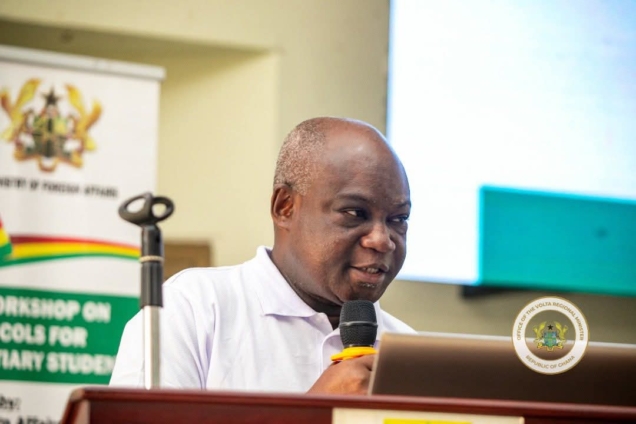
The Coordinating Director for Multilateral and International Organisations at the Ministry of Foreign Affairs, Ambassador Francis Danti Kotia, has disclosed that ECOWAS, with the active involvement of President John Dramani Mahama and the ECOWAS Commission President, Dr Omar Alieu Touray Mahawa, is ramping up diplomatic efforts to reintegrate the Sahel States into the regional bloc.
Speaking at a Regional Sensitisation Workshop on ECOWAS Protocols for Secondary and Tertiary Students in Ho on Wednesday, October 5, 2025, Ambassador Kotia said recent geopolitical tensions have tested ECOWAS’s unity, but ongoing engagement is already yielding encouraging signals.
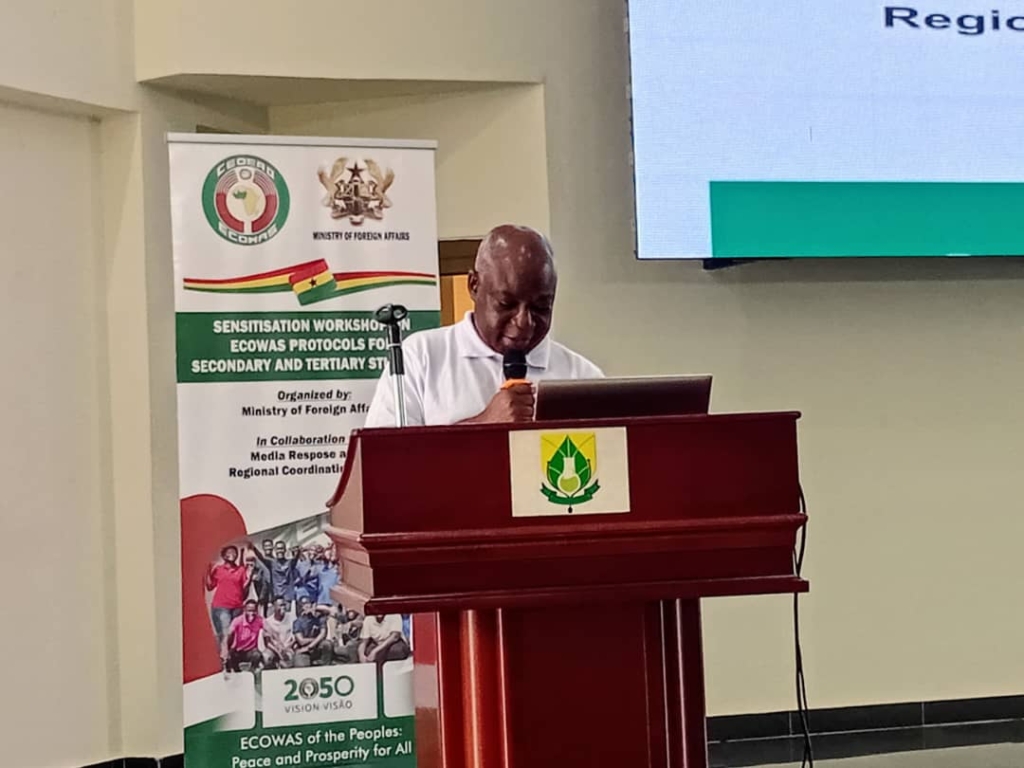
The authorities of ECOWAS have been making very serious efforts to bring these three countries back into the fold of ECOWAS. And our President, in particular, H.E. President John Dramani Mahama, has been at the forefront of these efforts,” he said.
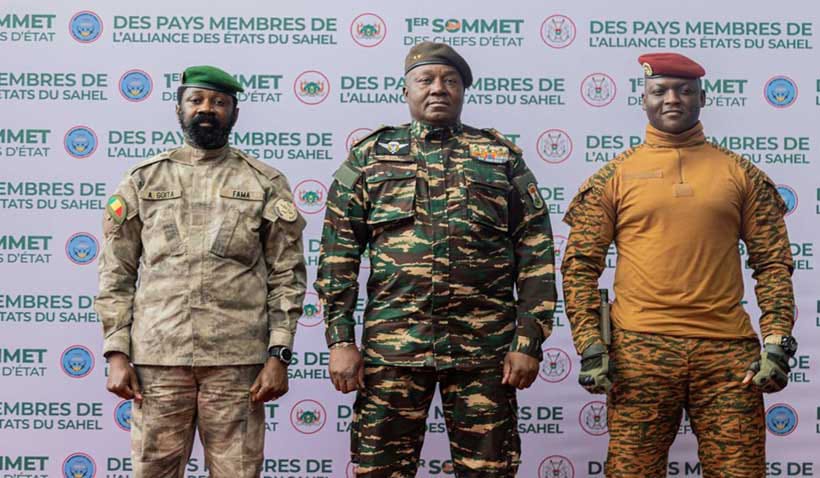
He was referring to Burkina Faso, Mali, and Niger, which withdrew from the bloc in January 2024 to form the Alliance of Sahel States (AES) after disagreements over security and sovereignty matters.
Ambassador Kotia reaffirmed Ghana’s unwavering commitment to the ideals and objectives of ECOWAS, describing the nation as “a pillar of stability” and a key driver of peace and integration in West Africa.
“Ghana remains resolute in its support for ECOWAS and its ideals. Our country continues to serve as a beacon of peace, stability, and cooperation in West Africa,” he declared.
Deepening Youth Understanding of ECOWAS
The sensitisation workshop, organised by the Ministry of Foreign Affairs and Regional Integration, sought to enhance students’ understanding of ECOWAS’s protocols, mandate, and development opportunities, while encouraging active youth engagement in regional integration.
Ambassador Kotia stressed that ECOWAS represents more than a political or economic alliance.
“ECOWAS is a shared dream, a dream of unity, progress, and prosperity for all West Africans. For it to thrive, our young people must be informed participants and active advocates of integration and peace,” he noted.
Tracing ECOWAS’s evolution since 1975, he highlighted the bloc’s achievements in economic cooperation, political stability, and social development. The free movement protocols, he said, have boosted economic activity and strengthened cross-border collaboration.
He also pointed to the region’s combined economic output of about $740 billion and export value of $122.7 billion as evidence of ECOWAS’s collective strength.
Promoting Regional Identity
Ambassador Kotia applauded ongoing measures to deepen regional identity, such as the ECOWAS Identity Card (Ghana Card) and the ECOWAS Passport, describing them as “symbols of a shared regional identity and instruments of economic empowerment.”
He urged students to look beyond travel benefits.
“My dear students, ECOWAS is much more than the name on your ID cards or passports. It is about opportunity, connection, and a common identity. It is about breaking barriers and building bridges — so that a student in Ghana can partner with peers in Nigeria, Senegal, or Sierra Leone to solve Africa’s challenges,” he said.
He encouraged them to take advantage of ECOWAS initiatives, including scholarships, internships, and entrepreneurship programmes designed to empower young people across the sub-region.
A Call for Collective Responsibility
Ambassador Kotia appealed for renewed dedication to the regional integration agenda.
“ECOWAS is not only for policymakers and politicians. It is our community, a family of nations working toward a common destiny. Each of us has a role to play in making West Africa a zone of stability, progress, and shared prosperity,” he said.
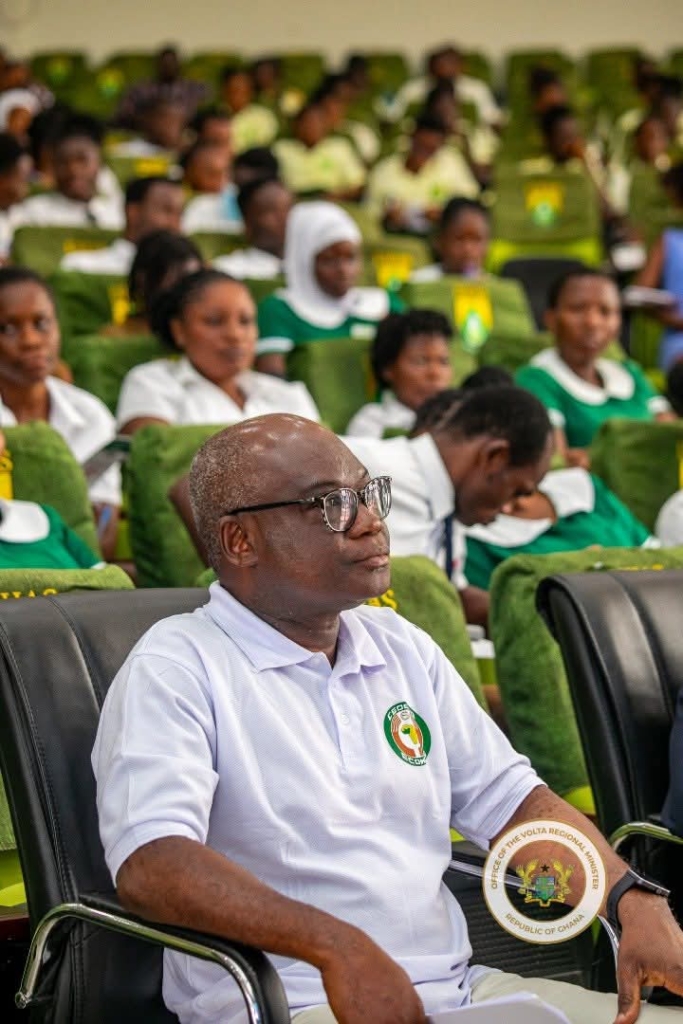
The workshop brought together the Volta Regional Coordinating Council, Members of Parliament, traditional and religious leaders, educators, and hundreds of students who engaged in interactive discussions on ECOWAS’s values and opportunities for youth development.
Ambassador Kotia expressed appreciation to the Volta Regional Minister, Hon. James Gunu, and all partners for supporting the programme. He closed with a call for unity:
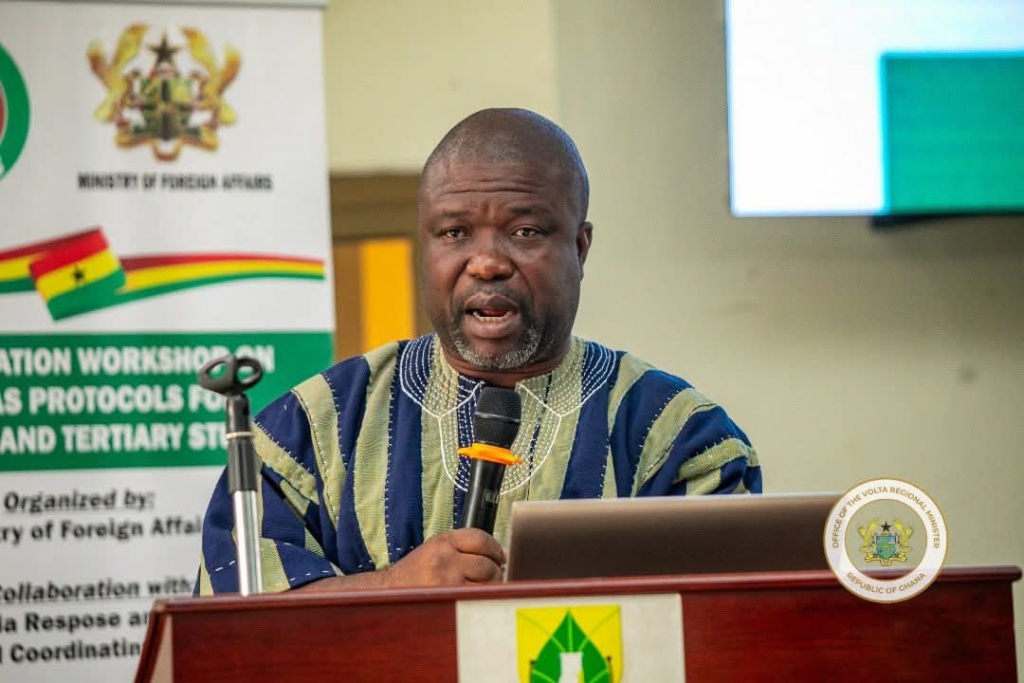
“Let us all become active participants in shaping a united West Africa, through knowledge, collaboration, and action.”
He expressed confidence that with the right skills and purpose, the youth will champion a more integrated, prosperous, and peaceful West Africa led by its own people.
Latest Stories
-
Young woman found dead at Kasoa Peace Town
6 minutes -
Livestream: The Law examines lawful arrest in Ghana
31 minutes -
Mahama urges African governments to treat healthcare as an investment, not budget cost
1 hour -
Bawumia congratulates John Boadu and new NPP executives, pledges support ahead of 2028
1 hour -
‘No talent should be left out’ – Bawumia pledges inclusive NPP campaign for 2028
1 hour -
Prof. Mike Oquaye recounts how he blocked Special Prosecutor’s attempt to arrest Bawku Central MP
1 hour -
Make health sovereignty a priority for Africa – Mahama
2 hours -
Dorimon Naa, Wa West DCE lead massive clean-up exercise; threaten sanctions against recalcitrant residents
2 hours -
Photos from Adom FM Y2K Jam
2 hours -
Praye Tiatia steals the show at Adom FM Y2K Jam [Watch]
2 hours -
Boakye Agyarko congratulates John Boadu, pledges support for NPP leadership
2 hours -
Antwi HiMight thrills fans with Antwi ne Antwi hits at Adom FM’s Y2K Jam [Video]
3 hours -
Amb. Edward Boateng congratulates Boadu, Kodua on election wins
3 hours -
John Boadu pledges to rebuild NPP from grassroots and restore ‘winning machinery’
3 hours -
Ashaiman Assembly deploys monitoring system to curb dumping in storm drain
3 hours