

Audio By Carbonatix
A member of the National Peace Council’s Governing Board, Joana Opare, has underscored the critical role of elections as reflections of societal values and priorities.
She emphasized that it was essential for citizens to engage in actions that promote peace and stability ahead of the forthcoming general elections.
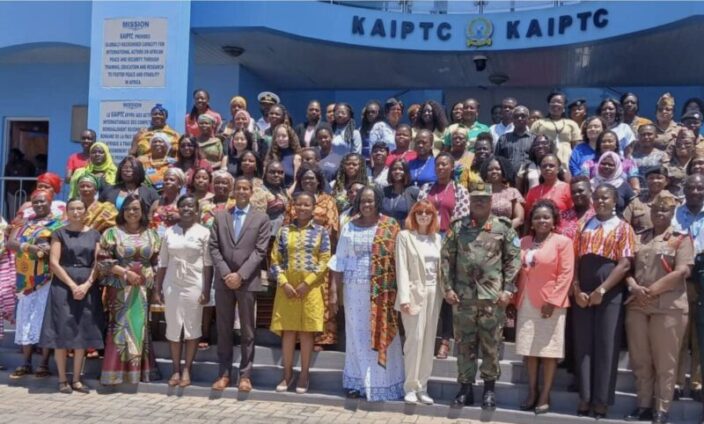
Speaking at the National Women Peace and Security Conference in Accra, Mrs. Opare stressed that elections were not solely about selecting leaders, but also a reflection of values, a demonstration of unity, and a peace pledge.
She advocated for a more collaborative and empathetic approach to politics, emphasising respect, dialogue, and understanding for fewer electoral conflicts.
The conference was on the theme: “Cultivating the Culture of Peace for Ghana 2024 General Elections: The Role of Women.”
It was organised by the Foundation for Security Development in Africa (FOSDA).
Mrs. Opare reiterated the importance of prioritizing the well-being of children, men, and society during elections.
She urged all parties to take proactive steps to protect women from electoral violence and keep them safe at polling stations and during campaign activities
Madam Abena Anim-Adjei, a Youth Engagement Coordinator at Plan International Ghana, noted that women have historically played a crucial role in peacebuilding and conflict resolution.
Despite their significant contributions, they continue to encounter numerous barriers, such as limited access to resources and insufficient opportunities, which hinder their ability to engage fully in decision-making processes.
Madam Anim-Adjei underscored the need to adopt more inclusive strategies that empower women and amplify their voices to ensure their full participation in peacebuilding and electoral processes.
She recommended that all institutions adopt a Gender Mainstreaming approach to empower women as agents of peace during elections.
This would help amplify women’s voices, ensure their protection, and celebrate their contributions to peacebuilding efforts.
Andrew Maharaj, Charge d’Affaires at the Canadian High Commission, said statistics had indicated a strong correlation between gender equality, respect for rights, and state stability.
He noted that when gender equality was lacking and rights were not upheld, countries were twice as likely to experience instability and three times more likely to succumb to corruption.
“When women are not included, it makes it likely for a state to backslide and struggle to develop. Hence, Canada is proud to support the initiative to support Ghana to advance women in peace and security,” he said.
He stated that women remain underrepresented in decision-making processes and urged the government, civil society organizations (CSOs), and development partners to create an environment where women feel safe and empowered to contribute to peace and security efforts.
Dr Afua Ansere, Senior Gender Specialist at UN Women, emphasized the rising tension and potential for violence against women during elections and highlighted the critical need for protective measures for them.
She said that the upcoming elections presented a unique opportunity to empower women as agents of change, saying that the UN would collaborate with the Gender Ministry, civil society organizations, and international partners to foster dialogue and mobilize women for significant roles in the electoral process.
Dr Ansere said UN Women planned to train individuals and establish a Gender and Development Situation Room, bringing together women’s groups such as Abantu for Development, NETRIGHT, and WiLDAF, to monitor, mediate, and ensure peace in the lead-up to, during, and after elections.
Mrs. Theodora Williams-Anti, Executive Director of FOSDA, stressed the need to dismantle structural barriers that hinder women’s participation in politics.
She condemned the derogatory insults suggesting that women trade their bodies for political positions and urged a shift in focus towards their capabilities and potential contributions.
Mrs Williams-Anti called on the public to support women candidates in the upcoming elections, insisting that failing to do so could jeopardize the current 14.5 per cent representation of women in Parliament.
Latest Stories
-
Teacher unions reject government plea, vow to stay home until salaries reflect on payslips
6 minutes -
Passengers decry non-uniform charges after 8% transport fare increase
13 minutes -
IDP Foundation partners with Opportunity International to expand the Rising Schools Program to Northern Ghana
14 minutes -
We Should Say No to Floating Nuclear Reactors, and Yes to Patience
21 minutes -
33-year-old phone dealer murder investigation reveals fight, burnt body and sale of iPhone 12
22 minutes -
You can’t build a winning team if you change every call-up – Carlos Quieroz
27 minutes -
Teachers’ strike: All outstanding issues to be addressed at meeting – Education Ministry assures
28 minutes -
AFCON 2027Q: ‘I was not happy that Ghana lost to Côte d’Ivoire’ – Carlos Queiroz
36 minutes -
GPL Matchweek: Aduana’s Osei Kufuor, 8 others win TV sets as NASCO Men of the Match
37 minutes -
Ghana urged to harness AI to transform tourism
39 minutes -
Four killed in Accra-Kumasi Highway crash at Anyinasin Junction
40 minutes -
Jetour set for wider presence in Ghana as Swiss Group plans more showrooms and workshops
42 minutes -
Tinting front windscreens is illegal – ACP Alexander warns motorists
47 minutes -
Your HR Department already has the answer. The problem is finding it
48 minutes -
AFCON 2027Q:‘Qualifying for one or two tournaments is not a sign of success’ – Carlos Queiroz
51 minutes