

Audio By Carbonatix
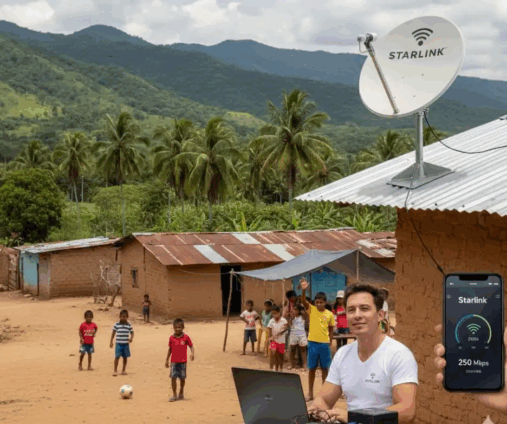
Elon Musk’s Starlink is offering free broadband internet service in Venezuela through Feb. 3, following U.S. airstrikes and the capture of ousted leader Nicolás Maduro.
The satellite internet provider said Sunday that it was proactively adding service credits to both active and inactive accounts as it monitored evolving conditions and regulatory requirements in the country.
“While we do [not yet have] a timeline for local purchase availability, if and when there are updates, they will be communicated directly through official Starlink channels,” the company said.
Starlink, a subsidiary of SpaceX, delivers internet access via low Earth-orbit satellites and requires users to purchase separate hardware to connect to the network.
Although Starlink’s availability map lists Venezuela as “coming soon,” indicating the service has not formally launched in the country, the company acknowledged that some users were already active. It remains unclear how Starlink’s services and pricing will change after Feb. 3.
The temporary provision of free internet access could help restore connectivity amid the fallout from recent U.S. military operations.
Washington carried out airstrikes and a ground raid to capture and extradite Maduro for trial on allegations including narco-terrorism and election rigging.
“Starlink will likely become available, for free, everywhere where the U.S. is involved in an antagonistic relationship with the regime,” said Marko Papic, global GeoMacro strategist at BCA Research.
U.S. operations on Jan. 3 primarily targeted areas in the Venezuelan capital of Caracas, with the states of Miranda, Aragua and La Guaira also hit, according to a government statement.
Following the strikes, reports indicated that parts of Caracas lost power and internet access. Some local media outlets also reported outages in Miranda over the weekend.
U.S. President Donald Trump said the United States would oversee Venezuela’s transition, though details remain unclear amid concerns about a potential power vacuum.
Trump also announced Saturday that Vice President Delcy Rodriguez was sworn in following Maduro’s arrest, while warning of a second strike if the new leadership did not “behave.”
The U.N. Security Council is expected to meet on Jan. 6 to discuss the legality of the U.S. action. Several countries, including U.S. allies such as Brazil and Spain, have condemned the military operation.
Starlink’s expanding role in global conflicts
Venezuela is not the first conflict zone where Starlink has been deployed.
The service was rolled out in Ukraine in 2022 after Russia’s invasion damaged the country’s internet and communications infrastructure, quickly becoming a critical tool for civilian and military connectivity.
While Starlink’s role in Ukraine was widely praised, its use in wartime also raised concerns about the influence a single private company could exert over access to essential communications.
Those concerns intensified in September 2023 after a biography of Musk revealed he had previously declined a Ukrainian request to activate Starlink coverage over Russian-annexed Crimea, effectively blocking a planned drone submarine attack.
The revelation prompted the U.S. Senate Armed Services Committee to investigate what it described as “serious national liability issues” related to a private citizen’s influence over an active conflict.
In June 2023, the U.S. Department of Defence brought Starlink’s activities in Ukraine under formal oversight through a contract with SpaceX, making the company an official military contractor.
The Pentagon did not immediately respond to a CNBC request for comment on whether it was involved in or overseeing Starlink’s operations in Venezuela.
Outside conflict zones, Starlink has also been used to bypass government-imposed internet shutdowns and censorship.
In Iran, thousands of users have reportedly relied on Starlink to access unfiltered internet despite the service not being officially approved by authorities.
Venezuela has a long history of internet censorship and shutdowns, particularly during periods of political unrest under the governments of Hugo Chávez and Maduro.
“Starlink allows internet to be provided by non-state companies in authoritarian regimes,” Papic told CNBC, adding that this trend is likely to accelerate.
“Starlink will likely become available, for free, everywhere where the U.S. is involved in an antagonistic relationship with the regime,” he said.
As concerns grow over Starlink’s influence and the U.S. dominance of satellite broadband, governments, including China and the European Union, have stepped up support for domestic alternatives.
China-backed Qianfan, also known as SpaceSail, has launched at least 108 low Earth-orbit satellites to date, according to state media.
Meanwhile, China’s state-owned space program last month announced the successful launch of its 17th batch of low Earth orbit internet satellites under the Guowang constellation project.
Latest Stories
-
Kwaku Azar writes: A-G vs OSP
8 minutes -
Mfantsipim–Adisadel rivalry built excellence, not division – Sam Jonah
33 minutes -
Vice President launches Mfantsipim’s 150 years of shaping Ghana’s greatest mind
50 minutes -
I assure Otumfuo, Mahama will join him to commission KNUST Teaching Hospital by end of this year – Haruna Iddrisu
2 hours -
Gov’t to roll out free special education for persons with disabilities from July 1 – Education Minister
2 hours -
“We used it to test our officiating officials’ readiness” – Bawah Fuseini after CAA Athletics event
2 hours -
Volleyball emerges as Ghana’s fastest rising sport
2 hours -
National Sports Fund needs strong leadership from the top – Administrator David Wuaku
3 hours -
JoySports Exclusive: Steve McLaren in talks with GFA after expressing interest in Black Stars job
3 hours -
Fire guts auto parts warehouse at Bubuashie, one fire officer injured
3 hours -
I owe my victory to coach Ofori Asare – Allotey after winning WBA Africa Gold Super Flyweight belt
3 hours -
Church of Pentecost supports over 2,000 BECE candidates in Obuasi with career guidance seminar
5 hours -
Brandon Asante and Coventry all but promoted to Premier League despite Sheffield Wednesday draw
5 hours -
GPL 2025/26: Late Kwartemaa strike downs Hearts in Tema
5 hours -
Ghana Faces Sierra Leone Moment as Prosecutorial Powers come under strain
5 hours