

Audio By Carbonatix
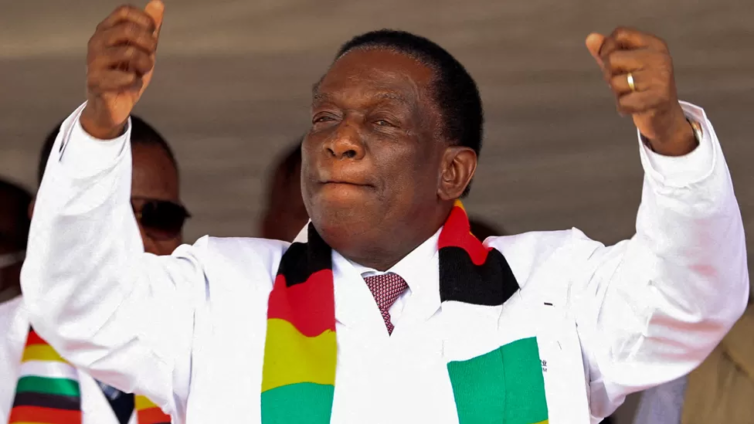
Zimbabwe's President Emmerson Mnangagwa has been elected to a second term with 52.6% of the vote, the electoral commission says.
However, the opposition claimed there had been widespread vote-rigging and international observers said the vote fell short of democratic standards.
Mr Mnangagwa is only Zimbabwe's third president. A 2017 coup against veteran ruler Robert Mugabe put him in charge.
Zimbabweans still face high inflation, poverty and a climate of fear.
When he first became president, Mr Mnangagwa - known as "The Crocodile" for his ruthlessness - promised a new start for his country's people.
But Zimbabwe had one of the highest inflation rates in the world last month - prices in July had rocketed by 101.3% since the previous year. Unemployment also remains rife, with only 25% of Zimbabweans holding formal jobs.
Mr Mnangagwa's vow to guarantee human rights also appears hollow, with little changing in this regard since Mr Mugabe's departure.
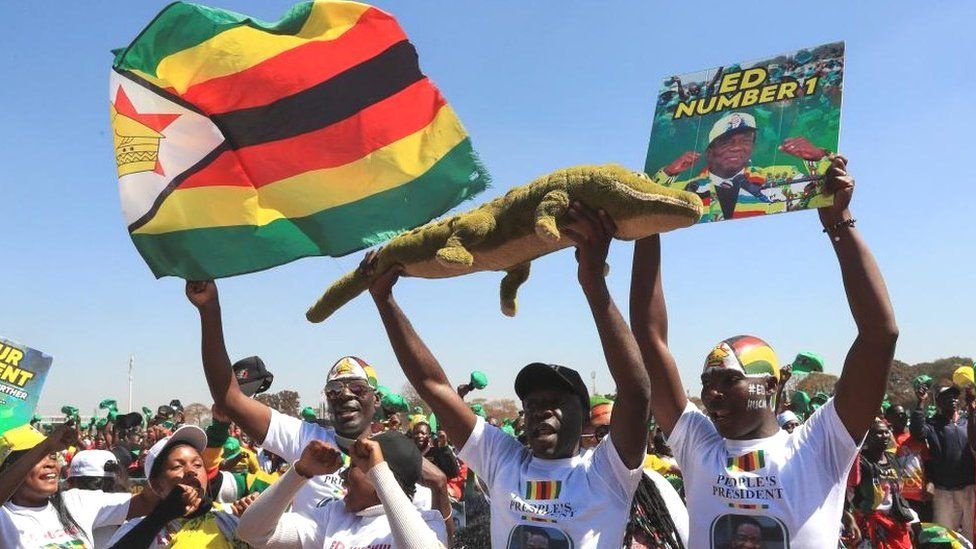
Critics say the 80-year-old silenced dissent and clamped down on the opposition in the run-up to the vote, which he had been widely expected to win.
The Zimbabwe Electoral Commission (ZEC) said Mr Mnangagwa's main challenger, Citizens' Coalition for Change (CCC) candidate Nelson Chamisa, secured 44% of the vote.
Mr Mnangagwa received more than 2.3m votes, while Mr Chamisa took 1.9m, according to the ZEC. Voter turnout in the country of almost 16m was 69%, the electoral body said.
The opposition claims the vote was rigged, but the constitutional court has upheld the result.
A spokesperson for the CCC posted on X - formerly known as Twitter - that the party rejected "any result hastily assembled without proper verification".
Promise Mkwananzi, a spokesperson for the party, told the AFP news agency that the CCC did not sign the "false" final tally and "cannot accept the results".
He said the party would announce its next move soon.
Observer missions from the EU, Commonwealth and 16-nation Southern African Development Community (SADC) said they had a number of concerns with the vote, including the banning of opposition rallies, issues with the electoral register, biased state media coverage and voter intimidation.
"The elections were fraught with irregularities and aggrieved the people of Zimbabwe," political analyst Rejoice Ngwenya told AFP.
The run-up to the election was largely free of violence, but CCC members were convicted on what they describe as fabricated charges aimed at weakening the party. The party says the police have banned several of its meetings since July, and nearly 100 gatherings since it was formed in January last year.
Earlier this month, 40 CCC members, including a parliamentary candidate, were arrested while campaigning in the capital Harare.
The recent killing of a CCC backer, allegedly by supporters of Mr Mnangagwa's Zanu-PF party, further raised concerns about rights.
Critics continue to be arrested and taken to court for insulting the president - an offence punishable by one year in jail or a fine or both. A man in Harare was charged in April after allegedly being overheard by a police officer saying that Mr Mnangagwa would lose the next election.
"The Crocodile", as he is known, has a fearsome reputation that was cemented after independence during the civil war that broke out in the 1980s between Mr Mugabe's Zanu party and the Zapu party of Joshua Nkomo.
As national security minister, Mr Mnangagwa was in charge of the Central Intelligence Organisation (CIO), which worked hand in glove with the army to suppress Zapu.
Thousands of civilians - mainly ethnic Ndebeles, seen as Zapu supporters - were killed in a campaign known as Gukurahundi, before the two parties merged to form Zanu-PF.
Mr Mnangagwa has denied any role in the massacres. As president, he has tried to broach reconciliation. Some have felt his comments glib given the deep wounds in Matabeleland, but an initiative to allow exhumations and reburials has been agreed.
Voting in the presidential and parliamentary elections was meant to take place on Wednesday, but was extended into Thursday in some areas due to the late distribution of ballot papers.
Mr Mnangagwa's election means Zanu-PF has ruled Zimbabwe for 43 years, since the country gained independence from British rule in 1980.
The party was also declared the winner in the parliamentary race, securing 136 of 210 seats, with the CCC taking 73. A further 60 seats are reserved for women and are appointed through proportional representation.
Latest Stories
-
MyJoyOnline Gets Result: FIFA/ FIBA agency Pep Sports moves to admit Ghana’s 7-Foot Basketball dreamer, Mac-Saawa, to its Ultra-Modern Sports campus
2 seconds -
GAUA strike disrupts academic plans at University of Ghana as students, parents express frustration
5 minutes -
Dad’s Army/African Polistas crowned champions of 2026 Accra Polo Club Trustees’ Cup
12 minutes -
Mahama approves Integrated Basic Education Model, with funding expected in 2027 under GETFund formula
14 minutes -
Money-driven elections fuelling corruption – Haruna Iddrisu
19 minutes -
Excessive borrowing ‘cracked’ Ghana’s economy under Akufo-Addo – Haruna Iddrisu
28 minutes -
NPP’s silence on economic indicators suggests Mahama is doing better – Haruna Iddrisu
41 minutes -
GoldBod must be more accountable to Ghanaians – Haruna Iddrisu
56 minutes -
Affi Agbenyo’s EC appointment is constitutionally appropriate, but politically, people have the right to remind us – Haruna Iddrisu
1 hour -
Accra Mall brings Soulful Weekend Vibes to October with Live R&B and Jazz
1 hour -
Education is critical to Ghana’s future and development – Haruna Iddrisu
1 hour -
Who’s Emelia Affi Agbenyo, the 43-year-old newly sworn-in Deputy EC Chair?
2 hours -
Haruna Iddrisu calls for limits on annual university accommodation fee increases
3 hours -
Today’s front pages: Tuesday, October 13, 2026
3 hours -
Wealth Over Water: How Galamsey Is Threatening Ghana’s Water Security
4 hours