

Audio By Carbonatix
Facebook has said it will block a Frenchman suffering from a rare and incurable disease from live streaming his death on the platform.
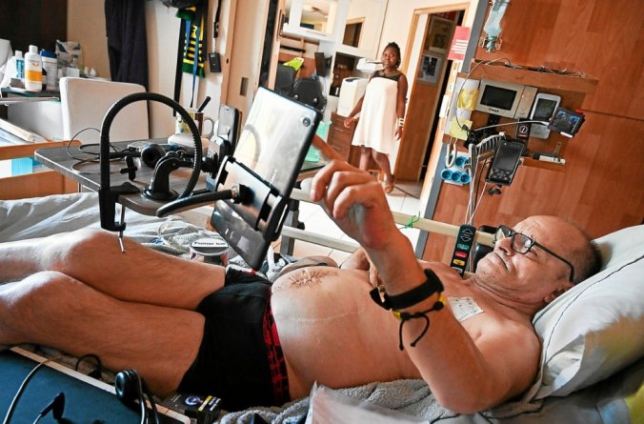
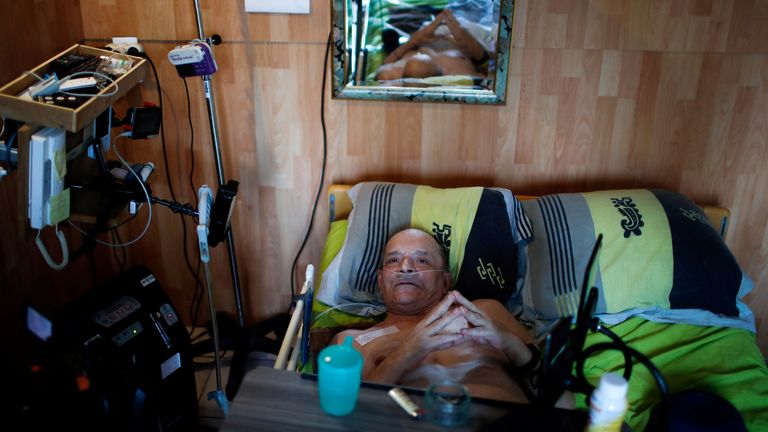
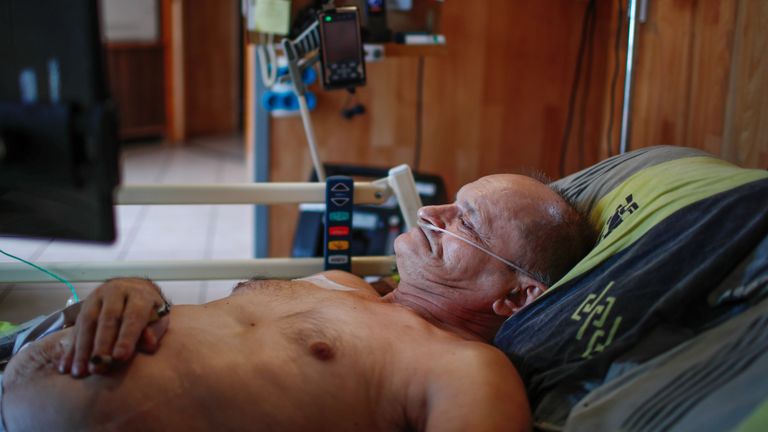
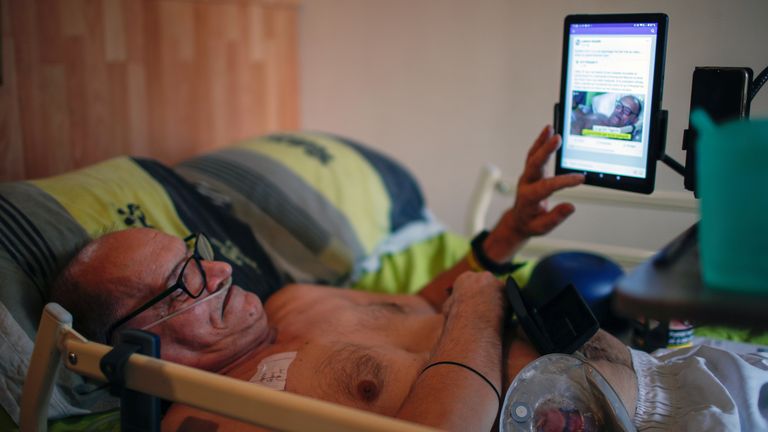
Alain Cocq, who has lived with a degenerative disease for 34 years, has stopped eating, drinking and has not taken his medication since Friday night.
The 57-year-old said he would live-stream his death on social media after President Emmanuel Macron turned down his request for euthanasia.
In a video from his medical bed at home in Dijon, eastern France, he said: "So I have finished my last meal... I drink to your health one last time.
"The road to deliverance begins and, believe me, I am happy. I have made up my mind and I am at peace."
He added: "Yes, I know what awaits me will be difficult. But you know, compared to all I've been through and what awaits me, the deterioration of my body which I'll be going through, in fact it doesn't matter to me.
"It will be hard to handle, I agree, but in the end it won't be much compared to what I've been through."
But Facebook said it will block him livestreaming his death, saying its rules forbid any users from portraying suicide.
"Although we respect his decision to want to draw attention to this complex question, following expert advice we have taken measures to prevent the live broadcast on Alain's account," a spokesperson told the AFP news agency.
"Our rules do not allow us to show suicide attempts."
Mr Cocq had written to Mr Macron asking to be given a sedative to allow him to die in peace, but the president wrote back to him explaining this was not allowed under French law.
Neighbouring countries including Switzerland, Belgium and the Netherlands have adopted laws that allow medically-assisted dying in some cases.
However, France has refrained from taking that step, partly due to pressure from the Catholic Church.
"Because I am not above the law, I am not able to comply with your request," Mr Macron wrote in his reply, which Mr Cocq published on his Facebook page.
"Your wish is to request active assistance in dying which is not currently permitted in our country," the president added.
The Claeys-Leonetti law on the end of life, adopted in 2016, authorises deep sedation - but it is only eligible for patients whose prognosis is threatened in the short-term.
He was fed by a drip and his digestive system connected to a colostomy bag.
His condition has caused brain aneurysms and he experiences convulsions if he does not take his medicine, and he claims to be in constant pain.
Mr Macron included a handwritten postscript to his letter, which read: "With all my personal support and profound respect."
Latest Stories
-
Tarkwa court jails labourer for three years over GH¢123,000 theft
41 minutes -
GAEC must retain nuclear scientists for Ghana’s nuclear ambitions – Minister
1 hour -
Man reportedly mistaken for game and shot by hunter dead in forest
1 hour -
19-year-old mason jailed 15 years for defiling seven-year-old pupil
1 hour -
Ghana’s banking sector assets rise 20.47% to GH¢500.2bn – BoG Governor
1 hour -
22 injured as Sprinter bus overturns at Sege after tyre burst
1 hour -
UN housing expert urges Ghana to strengthen Rent Control Department amid housing affordability concerns
2 hours -
Delta-BCI partnership reaches 166,000 people with breast cancer education
2 hours -
Power restoration fault suspected in Kumasi Central Market fire
7 hours -
The 7-foot giant of Ngleshie Amanfro: Seven-foot Ghanaian Ephraim Saawa dreams of joining the national basketball team
8 hours -
Government promises support for Kumasi Central Market fire victims
8 hours -
Vibes The Movie: Big Ghun’s Ghanaian film earns five nominations at 2026 REFFA
8 hours -
‘I’m a fulfilled man’—Justice Korbieh on missing out on Supreme Court despite two nominations
8 hours -
MamaCare CEO warns unresolved conflicts among health workers could undermine maternal and neonatal care
9 hours -
Health professionals urged to translate medical knowledge into practice to save mothers
9 hours