


Audio By Carbonatix
Facebook "unintentionally" uploaded the email contacts of more than 1.5 million users without asking permission to do so, the social network has admitted.
The data harvesting happened via a system used to verify the identity of new members,
Facebook asked new users to supply the password for their email account, and took a copy of their contacts.
Facebook said it had now changed the way it handled new users to stop contacts being uploaded.
Data losses
All those users whose contacts were taken would be notified and all the contacts it had grabbed without consent would be deleted, it said.
The information grabbed is believed to have been used by Facebook to help map social and personal connections between users.

Analysis: Rory Cellan-Jones, Technology correspondent
Anyone who, like me, joined Facebook a decade or more ago, probably clicked "yes" when invited to upload all of their contacts.
It seemed a good way of making the network more useful and, after all, what could be the harm? But after the various data scandals shattered trust in Facebook, we've become far more cautious.
We've woken up to the harms that could come from handing over that precious information about our social connections - for journalists it could mean revealing their contacts, for whistleblowers their dealings with regulators, for just about anyone their contacts with people they might not want their partners to know about.
Now we know that Facebook somehow scraped up the email contacts of 1.5 million people over a three year period without their agreement. Now every time the social network suggests "people you may know", we will wonder "How do you know that I may know them?"
To many, the idea that they should trust Facebook with their data seems more old-fashioned by the day.
Contacts started being taken without consent in May 2016, the company told Business Insider, which broke the story.
Before this date, new users were asked if they wanted to verify their identity via their email account. They were also asked if they wanted to upload their address book voluntarily.
This option and the text specifying that contacts were being grabbed was changed in May 2016 but the underlying code that actually scraped contacts was left intact, said Facebook.
Ireland's Data Protection Commissioner, which oversees Facebook in Europe, is engaged with the firm to understand what happened and its consequences.
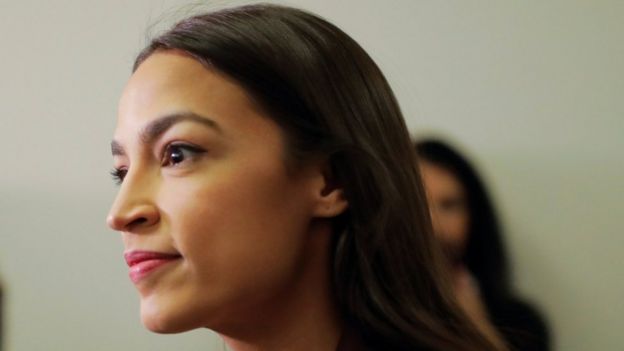
Image caption: Rep Ocasio Cortez said social media was a 'health risk'
The email contacts case is the latest in a long series in which Facebook has mishandled the data of some of its billions of users.
In late March, Facebook found that the passwords of about 600 million users were stored internally in plain text for months.
The ongoing breaches and other criticisms of Facebook are also prompting some high-profile users to bow out. The latest is Democrat Representative Alexandria Ocasio-Cortez who said she had "quit" the social network.
In an interview with a Yahoo News podcast she said: "I personally gave up Facebook, which was kind of a big deal because I started my campaign on Facebook."
She added that social media posed a "public health risk".
Latest Stories
-
Cryptocurrency regulation: BoG, SEC must collaborate closely to align risk assessments – IMF
24 minutes -
Congo’s Ebola outbreak has killed more than 4,000, government data shows
35 minutes -
Ethiopian rebel forces withdraw from Tigray regional capital
43 minutes -
All set for 7th Ghana Credit Excellence Awards 2026 on October 10
46 minutes -
Why pastors may not be seen – or heard – preaching on buses for much longer
54 minutes -
Oil slips as Middle East crude exports rise, G7 to release stocks
1 hour -
France to step up Ebola funding in Congo amid resurgence fears, minister says
1 hour -
Djokovic beats Zverev to reach China Open semis
1 hour -
Brazil election goes to run-off as right-wing Flávio Bolsonaro wins first round
2 hours -
Modric ‘ashamed’ of Croatia’s ‘catastrophic night’
2 hours -
Klopp’s mixed start continues as Germany held
2 hours -
The job interview question you don’t have to answer
2 hours -
Trump unveils ‘Super Intelligence Force’ to oversee AI policy
2 hours -
Zirkzee gives Netherlands win as van Dijk joins 100 club
2 hours -
Haaland injury worry as Norway lose in Portugal
3 hours