

Audio By Carbonatix
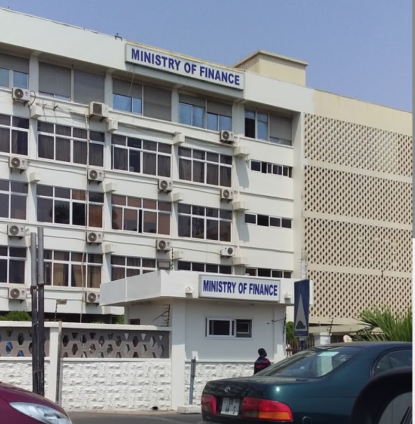
The Finance Ministry has been ranked by Imani Ghana as the most financially reckless ministry.
That is according to the latest fiscal recklessness index launched by IMANI Ghana on Tuesday. Officials of the policy Think Tank explained that the Ministry has recorded more than 11 billion cedis in losses to the state.
The losses were based on irregularities tracked in the Auditor-General's reports between 2015 and 2020.
Speaking at the forum in Accra today, Research Consultant for the IMANI Ghana, Dennis Asare said, “over the 6-year period, the Ministry of Finance consistently appeared as the most reckless in the institution.”
“One major reason is that when we say Ministry of Finance, it is not Ministry of Finance Headquarters. When we say Ministry of Finance in the Auditor-General’s report, it includes subsidiary agencies like the GRA, because the Ministry of Finance, beyond its role as a sector ministry, is also a central management entity, that also coordinates the work of other ministries. So sometimes, if there is an irregularity, it also appears in the activities of the Ministry of Finance. Key institutions that came out strongly were the GRA and the Controller and Accountant General's Department,” Mr. Dennis Asare explained.
He added that “Commercial banks who collect tax revenue on behalf of government fail to lodge the funds based on the time frame provided by the PFM Act and that was one of the major issues that government faced. So overall, this is the fiscal recklessness of the 29 MDAs in Ghana.”
According to him, IMANI Ghana also observed that "the recklessness or the financial cost of the recklessness of the Ministries Departments and Agencies are increasing as compared to 2010 and 2014."
Mr. Asare added that this means that the current public financial system is not delivering efficiency.
"If you compare 2010 to 2014, the financial cost of the recklessness of MDAs to the period 2015 and 2020, you see that the recklessness has increased for about 13 times. So between 2010 and 2014, the financial cost of irregularity was about 1.4 billion, but between 2015 and 2020 it is about 13.9 billion which shows that the Public Financial System that we have, to some extent is not delivering the level of efficiency," he stressed.
The Health Ministry was also ranked the second most financially reckless in the country.
Latest Stories
-
Ghana included in WHO lead-testing programme as questions remain over local exposure risks
1 minute -
2026 Amputee World Cup: We will win the trophy – Samson Deen
10 minutes -
Controller and Accountant-General pays promotion arrears to 56,003 GES teachers ahead of deadline
10 minutes -
2026 Amputee World Cup: We want to make the continent proud – Black Challenge coach
14 minutes -
International Day of the Girl: Central Region Education Directorate calls for action to tackle child marriage, teenage pregnancy
20 minutes -
The Eyes of Ghana: iShowSpeed joins Obamas as producers of Chris Hesse documentary
31 minutes -
FirstBank Ghana pledges action on customer feedback at service week forum
1 hour -
Sahara Group urges journalists to look beyond fuel prices in energy reporting
1 hour -
Today’s front pages: Friday, October 16, 2026
1 hour -
Ashanti Region: ECG urges customer cooperation with franchise officers
1 hour -
Ghana’s research fund faces a test of turning funding promises into scientific breakthroughs
2 hours -
Dîner en Blanc Accra returns on December 28 for second edition
2 hours -
20% digital tax: Government hiding behind technicalities to cheat Ghanaians – Dr Boako
2 hours -
David Selassie Anthony declares bid for NDC Deputy National Organiser
3 hours -
Amin Adam proposes 13 measures to strengthen Ghana’s debt transparency and market confidence
3 hours