

Audio By Carbonatix
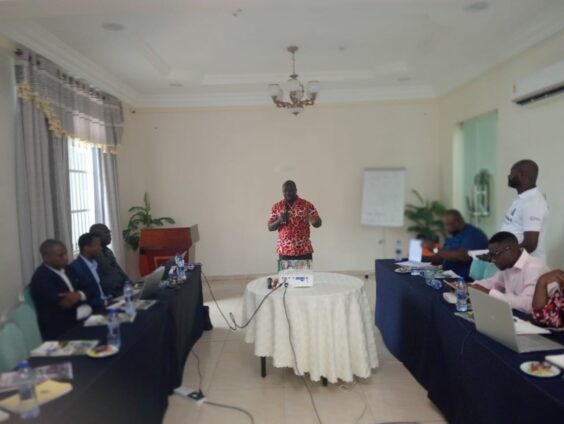
The National Disaster Organisation (NADMO), Ministry of Finance, in collaboration with the United Nations Development Programme (UNDP), has commenced a four-day capacity development training aimed at strengthening Ghana’s capacity to finance and manage the financial risks associated with climate-related disasters, particularly flooding.
The training, being held from August 24 to 27, 2026, at the Capital View Hotel, brings together representatives from Ministries, Departments and Agencies (MDAs), the National Disaster Management Organisation (NADMO), National Insurance Commission (NIC), Ghana Statistical Service (GSS), National Development Planning Commission (NDPC), and Metropolitan, Municipal and District Assemblies (MMDAs) within the Greater Accra Metropolitan Area (GAMA).
Dubbed the “UNDP Ghana Capacity Development Training on Disaster Risk Financing, Flood Risk Modelling, Technical Assistance Deployment and Payout Management,” the programme seeks to strengthen institutional knowledge and practical capacity in disaster risk financing, risk modelling and the management of financial protection mechanisms.
Opening the training on behalf of the Ministry of Finance, Mr Richard Ofori Addo, Chief Economic Officer, said the programme came at a critical time as the frequency and severity of climate-related disasters continued to increase globally and in Ghana.
He said flooding remained one of the major threats to lives, livelihoods, infrastructure and economic activity in the country, while the financial consequences placed significant pressure on public resources.
Mr Ofori Addo noted that disasters often created unplanned fiscal obligations for emergency response, recovery and reconstruction, making disaster risk financing an important component of prudent fiscal management and sustainable economic development.
He said strengthening Ghana’s capacity to anticipate, manage and finance disaster-related risks was essential to protecting public finances and safeguarding the country’s development gains.
He described the Accra Flood Risk Financing Solution as an important milestone in improving Ghana’s preparedness and financial resilience against flood-related disasters.
The initiative, he explained, was expected to generate reliable risk information and strengthen analytical capacity to enable government institutions to better assess their fiscal exposure to disasters.
“It will also support the identification and development of appropriate financial protection mechanisms, including contingency financing arrangements and insurance solutions, to reduce the financial burden of future disasters,” he said.
Mr Ofori Addo emphasised the importance of collaboration among government institutions, technical agencies and development partners in building an effective disaster risk financing framework.
He encouraged participants to actively engage in the discussions, share experiences and identify practical measures to support the successful implementation and sustainability of the initiative.
The Ministry of Finance expressed appreciation to NADMO and UNDP, through its Insurance and Risk Finance Facility (IRFF), for their continued support towards Ghana’s resilience agenda.
Dr Amina Sammo, National Coordinator of the Insurance and Risk Finance Facility (IRFF) at UNDP Ghana, said disaster risk financing was not merely a financial instrument but a critical tool for sustainable development.
She noted that millions of people remained vulnerable to the impacts of disasters, stressing that a single flood, failed harvest or other shock could wipe out years of economic progress for families and communities.
Dr Sammo said resilience was strengthened through sound institutions, effective policies, reliable data, early warning systems and financial mechanisms that enabled people and governments to recover more quickly from crises.
She identified disaster risk financing as a key tool for protecting livelihoods, supporting small businesses, enabling farmers to invest with greater confidence, and helping governments manage fiscal risks more effectively.
She said UNDP, through its Insurance and Risk Finance Facility, was working with countries globally to strengthen financial resilience through innovative insurance and risk financing solutions.
Prof. Issahaku Haruna of the Department of Finance, School of Business, University for Development Studies (UDS), Tamale, who facilitated the training, said Ghana needed to strengthen its capacity to finance disaster risks before disasters occurred.
He explained that disaster risk financing focused on ensuring that the necessary financial resources were available before a disaster struck, thereby enabling faster and more effective response and recovery.
Prof. Haruna stressed that disaster risk financing did not replace emergency response mechanisms but complemented them by ensuring that adequate financial resources were available to support response and recovery efforts.
He said strengthening disaster risk financing would therefore enable Ghana to better manage the financial implications of its evolving hazard profile and build greater resilience to future shocks.
The training forms part of ongoing efforts by the Government of Ghana and its development partners to strengthen the country’s disaster risk financing architecture and improve financial preparedness for climate-related disasters.
Latest Stories
-
Kojo Bamba, Henry Nana Boakye and Nana Akomea elected NPP Vice Chairmen
4 minutes -
From Delta Force to NPP First Vice Chairman – Kojo Bamba’s political journey
9 minutes -
Police restore calm at Larteh following Odwira festival disturbance
1 hour -
‘All the camps will dissolve’ – Bawumia demands one NPP for 2028
1 hour -
There is no time to waste – Bawumia orders NPP to begin 2028 work
1 hour -
Sarkodie visits MobileMoney Fintech LTD
1 hour -
John Boadu unveils new NPP strategy to win back youth and modernise party
1 hour -
Hawa Koomson elected NPP National Women’s Organiser
1 hour -
John Boadu begins NPP rebuild from grassroots ahead of 2028 election
1 hour -
Titus Glover wins NPP National Organiser race on second attempt
1 hour -
Winning 2028 election won’t be easy; we must work harder – Bawumia
1 hour -
You’ll be part of 2028 campaign; there’s enough work for all of us – Bawumia to NPP aspirants
2 hours -
John Boadu moves to unite NPP after heated leadership contest
2 hours -
Today is not a day of victory but a day of responsibility and great unity – John Boadu
2 hours -
Let us choose unity over division – John Boadu to NPP
2 hours