

Audio By Carbonatix
The fight to end period poverty finally has momentum, with a Ghanaian firm championing affordable, made-in-Ghana sanitary pads while creating hundreds of jobs.
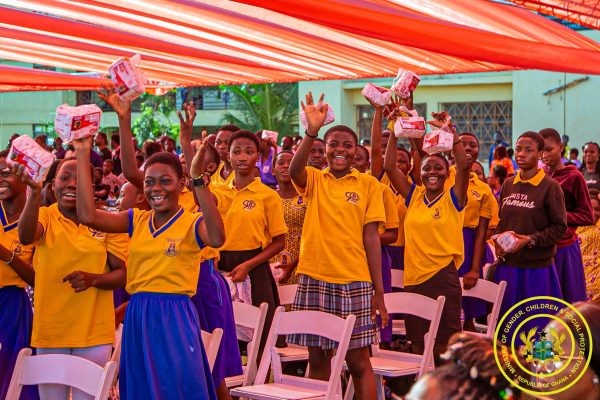
Nordiq Hygiene Care Industry is the name behind this quiet revolution, executing the government's strategy tackling the twin problems of period-related school absenteeism and unemployment. More than 27% of adolescent girls miss one to seven school days each month due to menstruation.
Girls are left to deal with debilitating infections including UTIs and bacterial vaginosis as they are forced to resort to old rags, newspapers, leaves, or cloth instead of disposable sanitary pads.
The government's Free Sanitary Pads Initiative set the frame, backed by a dedicated budget line and a pledge to ensure no girl misses school because of her period. Nordiq Hygiene Care Industry led the first round of this initiative, proving itself as a local manufacturing partner ready to deliver.
It deliberately adopted a cutting-edge, yet job-centric, production strategy. This people-first philosophy was a conscious choice: Nordiq possesses the capability for a fully automated packaging process, which would require only a handful of operators and result in perfectly sealed, market-ready products. Instead, to maximize employment, the company configured its production line to incorporate manual sealing and packaging.
This decision deliberately prioritized community impact and job creation not only over streamlined efficiency and higher profit margins, but also over the marketing advantage of flawless, machine-perfect packaging.
Nordiq chose the dignity of hands at work over aesthetic perfection. It is crucial to note that this choice affected only the external packaging's appearance; the strictest hygiene protocols were always maintained to ensure product safety and quality.
This strategic choice had a powerful ripple effect far beyond Nordiq's own factory walls. By opting for manual packaging, the company was able to source all its packaging materials from three different Ghanaian manufacturers. This decision meant Nordiq wasn't just creating jobs within its own facility; it was generating crucial business and activating night-shifts for these other local factories, proving the collective strength of Ghana's manufacturing sector. The alternative—a fully automated process—would have necessitated importing specialized packaging rolls from abroad, bypassing Ghanaian industry entirely.
The result: to meet the ambitious delivery timeline of 6 million pads in under three months, Nordiq's factory operated around the clock, embodying the government's '24-hour economy' vision. This drive created more than 300 jobs during the contract period—roles that would have disappeared under a fully automated process. Nordiq chose jobs over profit.
This hiring surge was conducted in line with national labour practices, and Nordiq fulfilled its statutory obligations for the project's workforce. This commitment to formal, compliant job creation is a core tenet of the company's philosophy. The initiative had a lasting impact: even after the government contract was fulfilled, Nordiq has sustained its growth, significantly expanding its core, permanent workforce.
The workforce is inclusive too. Nordiq’s commitment to inclusion is long-standing. Since its inception, the company has actively opened its doors to persons with various disabilities—including physical, hearing, and intellectual disabilities such as Down syndrome. These team members are fully integrated into meaningful, mainstream roles, performing their duties effectively and receiving equal pay. This is not a temporary initiative but a defining part of Nordiq’s identity—one that gives dignity, opportunity, and belonging to all.
With people at the heart of its strategy, Nordiq is acutely aware of the economic barriers pushing girls across the country into period poverty. A single pack of sanitary pads can swallow more than 10% of a minimum-wage earner’s monthly income in Ghana.
Faced with the dilemma, many low-income households are forced to choose between buying pads and food. It gets worse. Plan International has reported that in Wa East, 83% of adolescent girls surveyed admitted to transactional sex to obtain pads, just to stay in class for the month.
Nordiq Hygiene Care Industry is now producing made-in-Ghana sanitary pads at a fraction of the cost while reducing reliance on imports. Affordability is the watchword powering the government’s free sanitary pads policy. For Nordiq, access to sanitary pads for girls is not a privilege; it is a right.
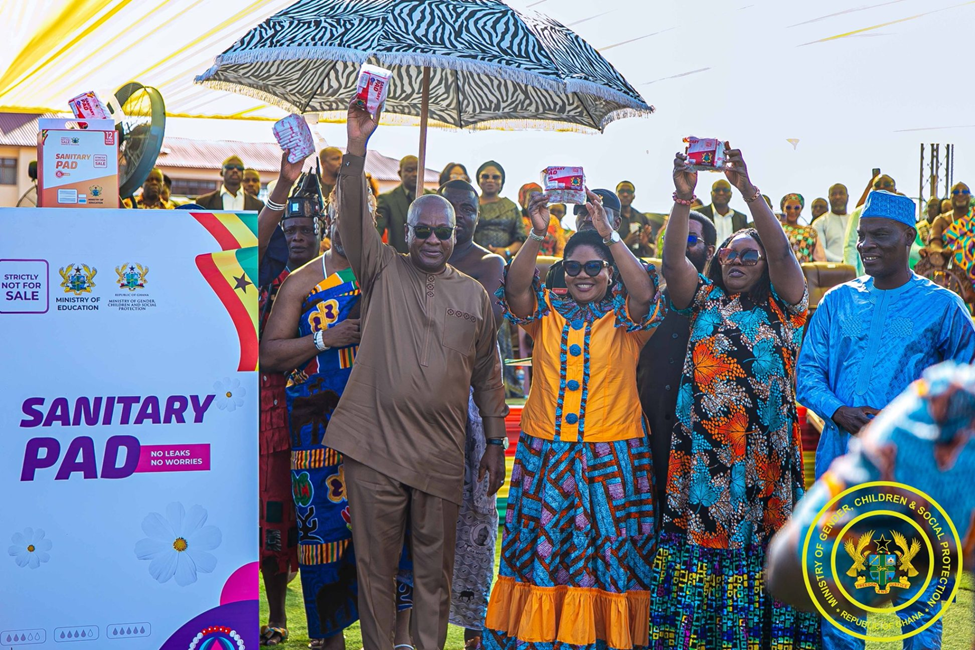
At the national launch, His Excellency President John Dramani Mahama underscored that commitment, calling for an end to period-linked absenteeism. The Minister of Education, Honorable Haruna Iddrisu, has been instrumental in framing and implementing this programme as a practical assault on the stigma and cost barrier that keeps girls out of class.
Nordiq’s role was execution with conscience: aligning with the vision for local manufacturing, embracing the 24-hour economy to create over 300 jobs, ensuring full statutory compliance for all workers, and maintaining a deep-seated commitment to an inclusive workforce, with 75% of employees being women.
It is a manufacturing story with a social spine. It is about keeping girls in school, protecting workers, and proving that industry can choose people first.
Latest Stories
-
Kwaku Azar writes: A-G vs OSP
31 minutes -
Mfantsipim–Adisadel rivalry built excellence, not division – Sam Jonah
56 minutes -
Vice President launches Mfantsipim’s 150 years of shaping Ghana’s greatest mind
1 hour -
I assure Otumfuo, Mahama will join him to commission KNUST Teaching Hospital by end of this year – Haruna Iddrisu
2 hours -
Barcelona dominate derby to extend La Liga lead
2 hours -
Gov’t to roll out free special education for persons with disabilities from July 1 – Education Minister
2 hours -
Importers and Exporters Association declares full support for Publican AI port system
3 hours -
“We used it to test our officiating officials’ readiness” – Bawah Fuseini after CAA Athletics event
3 hours -
Volleyball emerges as Ghana’s fastest rising sport
3 hours -
National Sports Fund needs strong leadership from the top – Administrator David Wuaku
3 hours -
JoySports Exclusive: Steve McLaren in talks with GFA after expressing interest in Black Stars job
3 hours -
Fire guts auto parts warehouse at Bubuashie, one fire officer injured
3 hours -
I owe my victory to coach Ofori Asare – Allotey after winning WBA Africa Gold Super Flyweight belt
3 hours -
Church of Pentecost supports over 2,000 BECE candidates in Obuasi with career guidance seminar
5 hours -
Brandon Asante and Coventry all but promoted to Premier League despite Sheffield Wednesday draw
5 hours