

Audio By Carbonatix
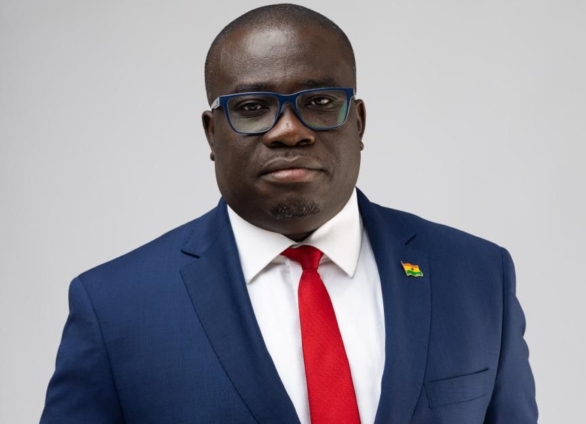
Former Dormaa East Member of Parliament, Paul Twum Barimah, has criticised the government’s response to the recent floods, accusing it of focusing more on public relations than implementing sustainable measures to prevent future disasters.
In a Facebook post following the June 28–29 floods that affected parts of Accra, the Volta Region and the Central Region, Mr Barimah argued that the government’s approach remained reactive despite years of recurring flooding.
According to him, while emergency interventions such as relief packages, task forces and security deployments may provide temporary assistance, they do not address the fundamental causes of flooding.
He claimed the government had placed greater emphasis on post-disaster responses instead of strengthening existing flood prevention initiatives.
Mr Barimah cited the Greater Accra Resilient and Integrated Development Project (GARID), a World Bank-supported intervention aimed at improving flood risk management, as one of the initiatives requiring stronger commitment.
He alleged that the project had suffered setbacks due to funding challenges, claiming that in May 2026, the World Bank downgraded its performance rating to "Moderately Unsatisfactory" after the Ministry of Finance reportedly capped disbursements.
He further alleged that GH¢13.8 million was transferred from the project’s account, resulting in delayed payments to contractors working on critical flood mitigation interventions.
The former MP also raised concerns over what he described as the failure to activate a US$7 million flood early warning system procured several years ago.
He argued that such systems, if properly operationalised, could help authorities prepare communities ahead of extreme weather events and reduce the impact of floods.
Mr Barimah also criticised the continued encroachment on drainage buffer zones in Accra, insisting that weak enforcement of planning regulations has worsened the city’s vulnerability to flooding.
He maintained that the country must prioritise long-term solutions, including investment in drainage infrastructure, effective operation of early warning systems and strict enforcement against developments that obstruct waterways.
The former legislator said Ghana cannot continue to rely mainly on emergency responses after lives, property and livelihoods have already been affected.
He called for a shift from what he described as flood management through public relations to a more preventive approach focused on protecting communities before disasters happen.
Latest Stories
-
Ghana, Egypt explore fresh avenues in defense, pharmaceuticals, and infrastructure
40 minutes -
CSOs call for review of gold reconnaissance activities along Ghana’s inshore waters
47 minutes -
Gov’t is committed to addressing teachers’ conditions of service, deprived-area allowance – Minister
53 minutes -
Traffic, not sour grapes, kept Nana Akomea away from NPP swearing-in
1 hour -
Trump says he will stop using taxpayer funds for ads after bipartisan pushback
1 hour -
Nana Akomea explains why he ignored polls ahead of NPP election
2 hours -
‘Bamba’s message was clever, very clever’ – Akomea on NPP election upset
2 hours -
Nana Akomea reveals why he was disappointed after placing third in NPP election
2 hours -
Saudi Arabia urged to spare man sentenced to death over Facebook post
2 hours -
NPP to deliberately select candidates for orphan constituencies ahead of 2028 election
3 hours -
NPP wants early profiling of parliamentary candidates to avoid costly campaigns – Nana Akomea
3 hours -
At least 22 dead after two boats collide on Congo river, official says
3 hours -
Heavy rains lead to Senegal floods, government reports several deaths
3 hours -
FTBLRLIFE targets Ghana in expansion of global grassroots football network
5 hours -
NPP has secured the ‘blessing of time’ for 2028 election – Nana Akomea
5 hours