

Audio By Carbonatix
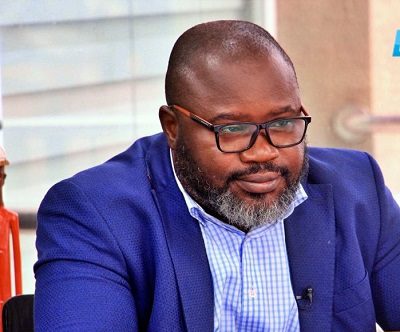
The Executive Director of Eduwatch, Kofi Asare, has shared his critical perspective on the NDC’s proposal to include private schools in the Free Senior High School (SHS) program.
In an interview on Joy News’ PM Express on Thursday, he suggested that the current educational climate doesn’t align with such an expansion.
Mr Asare argued that the double-track system’s challenges stem from more than just infrastructure deficits, calling it a multi-faceted issue that includes demand-supply imbalance and financial constraints.
This system divides the student body into two separate groups or “tracks” that attend school at different times, allowing more students to be educated using the same physical resources.
The student body is split into two or more tracks (often referred to as “Green” and “Gold” tracks).
Mr Asare began by emphasising the scale of students currently enrolled in SHS, with “1.4 million children in school,” many of whom are part of the double-track system.
He pointed out that adding private schools to Free SHS would only compound existing challenges.
“If the NDC is promising to end double track, which is partly an infrastructure problem, you don’t add to the numbers,” Mr Asare argued, advocating instead for focusing on current capacity constraints.
“You first focus on managing the numbers, expand infrastructure, phase out double track, and then, when we’re running single track, you can think about bringing private schools on board.”
According to Mr Asare, the double-track system is “not 100% an infrastructure problem.”
He explained that the issue also revolves around demand-supply mismatches, with certain schools under-enrolled while others face overcrowding.
“There are schools that are underserved with students, and there are schools that are over-seeing capacity,” he said, describing it as “a demand-supply issue and an infrastructure issue.”
This insight, Asare stressed, indicates that infrastructure expansion alone will not solve the double-track system’s shortcomings.
Furthermore, Mr Asare pointed out that the government’s proposed Free Senior High School Bill will create a compulsory secondary education system, effectively mandating that all graduates from junior high school enter SHS.
This law, he argued, will increase the demand for SHS spaces by absorbing approximately 700,000 JHS graduates, up from the current 500,000.
“You don’t have the space to think of adding private schools to this,” he emphasised, calling the NDC’s proposal “biting off more than it can chew.”

Asare noted that the NDC might have initially proposed incorporating private schools before the bill, but the new law would introduce an influx of students into the SHS system.
“Should the NDC win, it will be faced with creating space in secondary schools for around 80,000 more students within a double-track system that it has also promised to abolish,” he pointed out.
Given this potential dilemma, he advised that “expanding Free SHS to private schools should not be a priority.”
He also raised the issue of cost implications, explaining that adding private schools would strain government finances further.
“If you are adding private schools to a system that already requires double track, you’re adding more money to the table,” Mr Asare noted.
He argued that, given the financial challenges surrounding the current infrastructure, the priority should be on addressing these core issues rather than expanding the program to private schools.
To close, Asare urged the NDC to reconsider the Free SHS expansion in light of existing challenges, advising that “the core issues of infrastructure, demand, and financial resources need to be addressed before adding private schools into the mix.”
He reiterated that addressing the double-track system’s flaws requires “a fundamental look at both infrastructure and resource allocation.”
Latest Stories
-
High Court sets November 4 for ruling on Wontumi’s bail application
12 minutes -
Tetteh Kwetey files nomination for NDC Greater Accra Regional Chairmanship
22 minutes -
Korle Bu appeals for more doctors, nurses as A&E Centre struggles under pressure
34 minutes -
AFCON 2027Q: ‘I’m optimistic Black Stars can turn things around’ – Agyemang-Badu
35 minutes -
Digital innovation could widen Africa’s inequalities if people are left out – Sam Jonah
37 minutes -
Galamsey is an economic, health and moral problem – Sam Jonah
40 minutes -
Africa must create AI technology instead of paying to use it – Sam Jonah
43 minutes -
2026 U-17 WWC: Black Maidens to face Norway, Brazil and Canada in Group C
47 minutes -
Agbodza, Sam George move to curb fibre optic cable cuts during road works
54 minutes -
2026 U-17 WWC: Black Maidens unveil 21-player squad for competition in Morocco
56 minutes -
South Africa evacuation and the minority’s half-truth
1 hour -
‘You never know tomorrow’ – Anthony Baffoe on contesting for GFA Presidency
1 hour -
Obuasi SHTS head accused of sexually abusing students is NDC Juaben secretary seeking chairmanship
1 hour -
Cedi depreciates by 7.11% against dollar in August 2026 – BoG report
2 hours -
Put women and youth at the centre of mineral resource governance — ActionAid
2 hours