

Audio By Carbonatix
Energy Minister-designate, John Jinapor, has identified fuel supply and financial stability as the most pressing challenges confronting Ghana’s energy sector.
Speaking during his vetting before Parliament’s Appointments Committee on Monday, January 13, Mr Jinapor outlined strategic measures to address these issues and ensure the resilience of the country’s power infrastructure.
According to him, a significant fuel supply gap of 40 to 60 million standard cubic feet per day (mmcf/d), even with contributions from ENI, Jubilee, TEN fields, and Nigeria Gas (N-Gas). This deficit has forced reliance on alternative fuel sources, including light crude oil, heavy fuel oil, and distillate fuel oil, to keep power plants running.
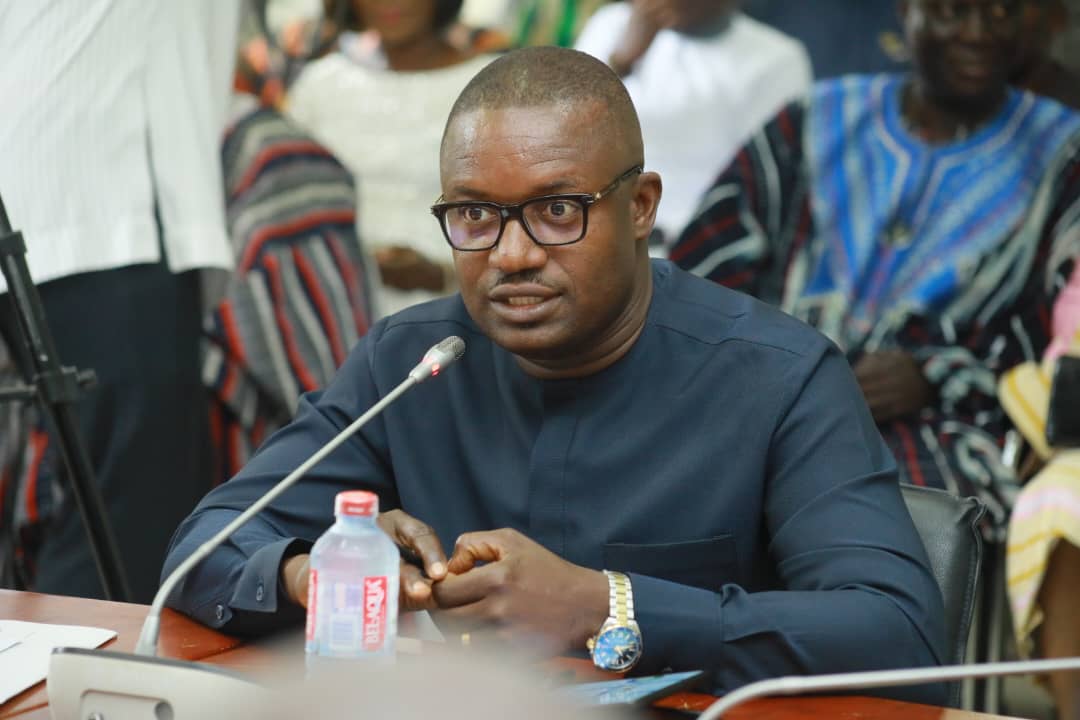
“Our immediate objective will be to bridge the fuel gap. We’ve engaged Jubilee partners, Tullow Oil, and Ghana Gas, and are confident that with reconditioning efforts, we can increase gas supply by an additional 35 mmcf/d, creating a much-needed buffer,” Mr Jinapor said.
He noted that resolving the fuel supply issue, along with maintaining adequate liquid fuel reserves, would significantly stabilise power generation and reduce vulnerabilities in the energy sector.
The Minister-designate also revealed a mounting financial crisis, with key power sector stakeholders threatening to cut supplies due to unpaid debts.
"Ghana owes Karpowership $377 million, and the company has warned of a potential shutdown, Tullow Oil - Outstanding payments exceed $100 million, with threats of reduced operations. ENI has also raised concerns over unpaid debts.
“These financial challenges require urgent attention. Without addressing these debts, we risk disruptions in power supply, which could severely impact the economy,” he warned.
He assured Ghanaians that once these issues are resolved, the energy sector will be on a stronger footing to deliver reliable and affordable power.
“These two challenges—fuel supply and financial stability—are critical. If we can get them right, we’ll be on the path to a more stable and efficient energy sector."
Despite these challenges, Jinapor expressed confidence in Ghana’s robust power grid, citing upgrades to transmission lines and primary substations.
“Our grid system is very resilient. We’ve upgraded many of our lines from 161 to 330 kV, and we’ve injected significant resources into primary substations. With a current stock capacity of 5,260 megawatts and a dependable capacity of 4,800 megawatts, we’re positioned to meet the new peak demand of 4,100 megawatts,” he noted.
Latest Stories
-
Ghana Russia Centre signs ICT cooperation agreement with Moscow University
2 minutes -
The powerhouses of the village: Honouring Ghana’s rural women on International Rural Women’s Day
3 minutes -
Vincent Assafuah petitions CHRAJ to investigate alleged irregularities in 2026 World Cup visa arrangements
3 minutes -
12-year-old boy found dead in muddy pit at Opeikuma
5 minutes -
GHS begins Yellow Fever vaccination campaign in three Upper West districts
6 minutes -
Organised Labour pushes for higher 2027 base pay despite slowing inflation
8 minutes -
Parliament’s Human Rights Committee demands swift justice in Obuasi SHTS sexual abuse case
18 minutes -
From Campaign Propaganda to Gov’t Accountability: When the message-makers demand a seat at the table
37 minutes -
Ashanti Region Security Coordinator warns sand winners to stay off Accra–Kumasi Expressway site
41 minutes -
PZ Cussons Ghana promotes hand washing among schoolchildren through Camel campaign
1 hour -
30 NDC aspirants file nominations in Upper West as regional election approaches
1 hour -
UPSA launches laptop assembly plant, requiring new students to assemble their own devices
1 hour -
UCC sociologist calls for action on gender inequality to end child marriage
1 hour -
LSN questions Ghana’s proposed five-year presidential term and DCE election reforms
1 hour -
AFCON 2027Q: Black Queens Coach to lead Black Stars for Somalia doubleheader with Tanko, Attram as assistants
1 hour