

Audio By Carbonatix
The Ghana Academy of Nutrition and Dietetics (GAND) has welcomed recent remarks by President John Dramani Mahama discouraging late-night consumption of heavy meals, describing them as a timely reminder of the role of diet in preventing non-communicable diseases.
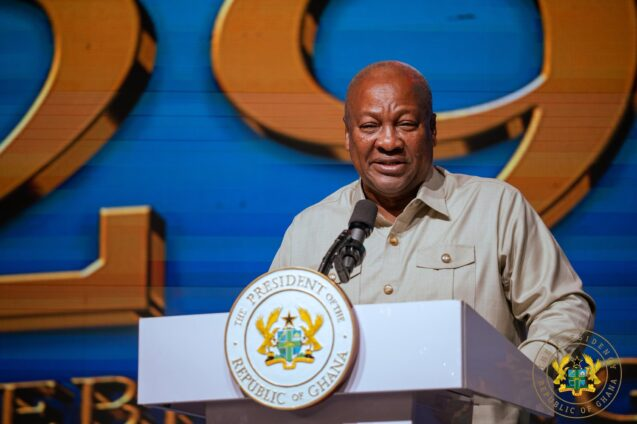
President Mahama, speaking at the launch of the Free Primary Health Care Initiative on April 15, cautioned Ghanaians against eating late in the evening, linking changing dietary patterns and sedentary lifestyles to the rising burden of non-communicable diseases such as diabetes and hypertension.
In a statement by Madam Pearl Exornam Selormey, Public Relations Officer for GAND, said the comments had helped to refocus national attention on preventive health and healthier lifestyle practices, particularly around meal timing.
“Meal timing significantly influences metabolic, digestive and sleep health,” the academy said, adding that consuming earlier and lighter evening meals supports long‑term wellbeing and productivity.
However, GAND stressed that public awareness alone would not be enough to achieve sustained behaviour change. It called for the deliberate integration of dietitians and nutritionists into primary healthcare facilities nationwide.
“Access to qualified nutrition professionals at the primary care level is essential to translate awareness into practical and sustained lifestyle change,” the statement said.
As Ghana rolls out the Free Primary Health Care initiative, the academy urged the government to prioritise the recruitment, posting and retention of nutrition professionals as a core component of preventive health services.
It also called for nutrition care to be formally recognised as a key pillar of non‑communicable disease prevention, alongside screening, physical activity promotion and health education.
GAND said strengthening nutrition services within primary care would help reduce the burden of diet‑related diseases, lower long‑term healthcare costs and improve population health and national productivity.
“Nutrition is prevention. Prevention requires professionals,” the academy said, reaffirming its commitment to supporting evidence‑based policies that promote healthier lifestyles and sustainable health outcomes for all Ghanaians.
Latest Stories
-
ITF World Tour : Patel Wins Boys’ Singles Final at J100 Accra
7 minutes -
Ghana must pursue BRICS partnership if it brings economic benefits – Kpebu
10 minutes -
Success and Wright Claims J100 Accra Girls’ Doubles Championship
11 minutes -
ITF J100: America’s Wright wins J100 Accra Girls’ Singles Title
17 minutes -
Expedition hopes to find aviator Amelia Earhart’s plane on remote island
18 minutes -
US seeks changes to rejected $109m health compact with Ghana – Mahama
48 minutes -
Nine dead in mass shooting at Pennsylvania home
1 hour -
‘Time for Ukraine to get new president,’ says Trump after Zelensky condemns diesel deal
1 hour -
Hincapie injury adds to Arsenal issues after Guimaraes rescue act
1 hour -
Henderson scores twice as Chelsea thumb Bournemouth
1 hour -
Photos: Mentapulse Africa convenes health and labour summit to address talent retention
2 hours -
Mahama inspects Nkokɔ Nketenkete plant, eyes Bechem as chicken capital
2 hours -
Ghana not seeking full BRICS membership, applying as Partner Country – Ablakwa
2 hours -
Woman injures three people in third Poland school knife attack in a week
2 hours -
Ghana should join BRICS as partner, not member – NPP Bono East Regional Secretary
2 hours