

Audio By Carbonatix
A planned auction in Germany of artefacts from prisoners of Nazi concentration camps has been cancelled following a public outcry, Poland's Deputy Prime Minister has said.
On Sunday, Radoslaw Sikorski thanked his German counterpart Johann Wadephul for agreeing that "such a scandal must be prevented".
A Holocaust survivors' group and politicians had earlier called for German auction house Felzmann to cancel the sale in Neuss, which was reportedly scheduled for Monday.
Among more than 600 items for sale was a letter from an Auschwitz prisoner and a medical diagnosis about the forced sterilisation of a prisoner from the Dachau concentration camp, German media reports.
"Respect for victims requires the dignity of silence, not the din of commerce," Sikorski said in post on X.
According to reports, the auction listing on the Auktionshaus Felzmann website had been removed by mid-afternoon on Sunday.
The BBC has contacted the auction house for comment.
"Documents or expert reports by Nazi perpetrators that were offered at the auction are not for private collections," German State Minister for Culture Wolfram Weimer told German news agency DPA.
Steps should be taken to prevent future auctions, he added.
"For victims of Nazi persecution and Holocaust survivors, this auction is a cynical and shameless undertaking that leaves them outraged and speechless", Christoph Heubner, an executive vice-president of the International Auschwitz Committee (IAC), said.
Poland's culture minister Marta Cienkowska said her ministry would investigate the provenance of the artefacts to determine whether any should be returned to Poland.
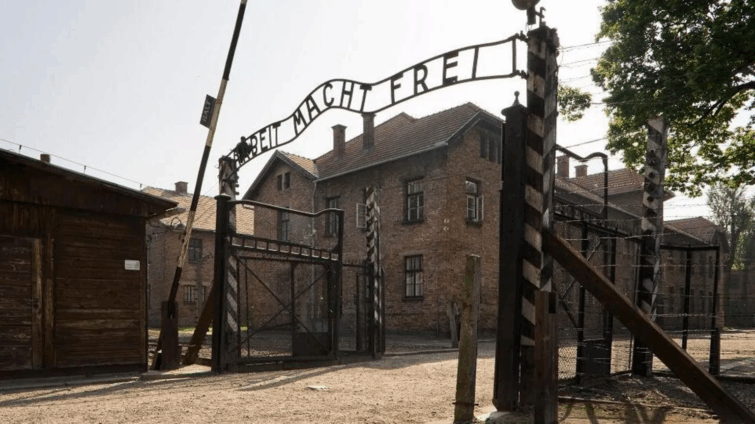
Auschwitz was at the centre of the Nazi campaign to eradicate Europe's Jewish population, and almost one million of those who died at the site were Jews.
Among the others who lost their lives were Poles, Roma and Russian prisoners of war.
Many of the artefacts scheduled to be auctioned were said to have come from the Buchenwald and Auschwitz concentration camps.
Mr Heubner, from the IAC, said they "belong to the families of the victims".
"They should be displayed in museums or memorial exhibitions and not degraded to mere commodities," he added.
Latest Stories
-
Ofori-Sarpong named Alumni President of the Year, honoured for PRESEC dormitory project
33 minutes -
Germany commits $132m to Ghana for skills development and training university – Pelpuo
34 minutes -
‘Influence should go beyond visibility’ – Taadi Banyinba GH launches The TB Impact
39 minutes -
Videos: Government announces emergency LEAP package for Hohoe flood victims
43 minutes -
Salomey Baffoe’s children are crying for their mother – Family appeals for her release
45 minutes -
Shortage of trained investigators and prosecutors hampers Ghana’s fight against money laundering – Report
45 minutes -
GoldBod generates US$1.87bn in September FX operations, exceeding monthly target
46 minutes -
Roads Minister says it is time to change one-year defect liability period for contractors, consultants
46 minutes -
Nana Asamoah takes Highlife across five West African languages
53 minutes -
UNICEF Ghana launches first Children’s Film Festival to amplify children’s voices
57 minutes -
Ghana must close gaps that allow drug trafficking – Dr Pelpuo
1 hour -
Emmanuel Osei: President Mahama, dissolve GFA and save our soul
1 hour -
Uganda Airlines to launch direct Accra-Entebbe flights from October 27
1 hour -
Ghana records surge in 2025 tourism receipts as Ahafo Region honors top industry players
1 hour -
I don’t have an official car, I use my own – Pelpuo
2 hours