

Audio By Carbonatix
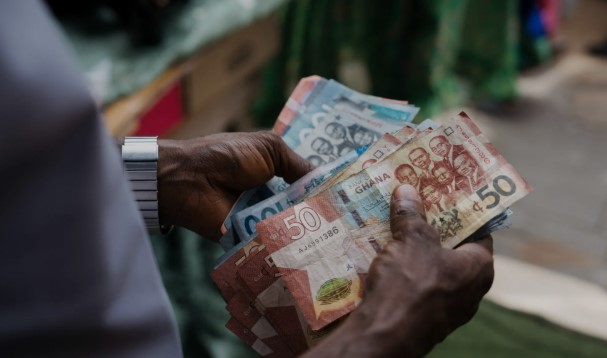
Ghana’s local currency, the cedi, is on course to record its first-ever annual appreciation against the United States dollar since its redenomination in 2007.
Data tracked by JoyNews Research indicates that the cedi has appreciated by about 36% year-to-date against the US greenback, compared to an average annual depreciation of 14.9% between 2008 and 2024.
Following the 2007 redenomination, the local currency has never posted a cumulative annual gain against the dollar. The steepest depreciations were recorded during the crisis years of 2014, 2022, and 2023, which were marked by fiscal instability and external shocks.
This year, however, the cedi has taken a different trajectory, buoyed by strong inflows from gold and cocoa exports, as well as improved fiscal management under the IMF Extended Credit Facility (ECF) programme.
The rapid and unprecedented appreciation of the cedi in 2025 has strengthened Ghana’s credit outlook, with the debt-to-GDP ratio falling below 50% for the first time in years.
Analysts attribute this performance to a combination of disciplined monetary policy, enhanced foreign exchange inflows, and record interventions by the Bank of Ghana.
Since 2022, the BoG’s total market interventions have exceeded $10 billion, helping to provide liquidity and anchor the currency. Although 2024 saw the highest intervention of about $3 billion, JoyNews sources suggest that 2025’s interventions are expected to surpass that figure, as the apex bank intensifies efforts to sustain exchange rate stability.
Foreign exchange inflows have been further boosted by the Goldbod initiative, which has generated about $12 billion from small-scale gold exports. Remittances and cocoa receipts have also served as strong buffers.
Overall, Ghana’s total export revenue is projected to reach $25 billion in 2025 — a 30 percent increase compared to the previous year — with gold exports expected to account for over 60 percent of the total.
The cedi’s performance has long been a key barometer of Ghana’s economic health, often influencing inflation expectations, credit ratings, and investor sentiment. The last two IMF programmes, implemented in 2014 and 2022, both coincided with periods of sharp currency depreciation.
Speaking at the IMF/World Bank Spring Meetings in Washington, D.C., Bank of Ghana Governor Dr. Johnson Asiama said his tenure is focused on building a central bank that is “agile and future-ready” while making the cedi the currency of choice for domestic transactions.
“I’ve seen this for many years. I started central banking some 30 years ago. The phenomenon [of dollarisation] has been there, and so we are tackling it to make the local currency the sole legal tender,” Dr. Asiama said.
He acknowledged that dollarisation remains a major challenge, noting that the widespread use of foreign currency undermines the effectiveness of monetary policy and weakens confidence in the cedi. Nonetheless, he expressed optimism that the reforms underway will consolidate gains made so far.
President John Mahama, in June disclosed that the real exchange rate of the cedi should be within the range of GH¢10 to GH¢12 per US dollar, revealing that the government’s target is to keep average annual depreciation around 5% over the medium term.
With Ghana’s international reserves now approaching $11 billion, providing nearly five months of import cover, Dr. Asiama said he sees no problem with strategic market interventions, provided they are not financed through the depletion of reserves.
If current trends hold, 2025 could mark a historic turning point in Ghana’s post-redenomination era — positioning the cedi as a symbol of renewed economic stability and a testament to the country’s ongoing fiscal and monetary reforms.
Latest Stories
-
Education Minister commends teacher unions for suspending nationwide strike
22 minutes -
‘Farmers Services Centres to be game changer for Ghana’s agriculture’ – Mahama
28 minutes -
WIWIK launches new leadership development pathway for Ghanaian university students
33 minutes -
Public basic schools resume today after strike suspension
40 minutes -
Environment Minister calls for transparency in Ghana’s GMO adoption
47 minutes -
Ghana risks 10% to 100% tariffs on exports to US under Trump’s threats as it moves to join BRICS
1 hour -
US Justice Department investigates TV networks over Trump pool coverage
2 hours -
PM says it is ‘clear’ Russia interfered with Brexit vote
2 hours -
Stanbic Bank launches ‘Be Powered’ campaign to drive Ghana’s green future
2 hours -
US imposes sanctions on ICC hours after former judge wins Nobel Peace Prize
2 hours -
South Africa withdraws asylum directive after anti-migrant violence
2 hours -
Moroccan king says migration cooperation model with Spain hit limit
3 hours -
Libya’s military seizes narcotics after firefight with smugglers
3 hours -
At least 139 migrants dead, including some children, after boat from Djibouti to Yemen capsizes, UN agency says
3 hours -
“US Embassy introduced TRIBE Culture Fest to NSA, GTA” – Kofi Adams
3 hours