

Audio By Carbonatix
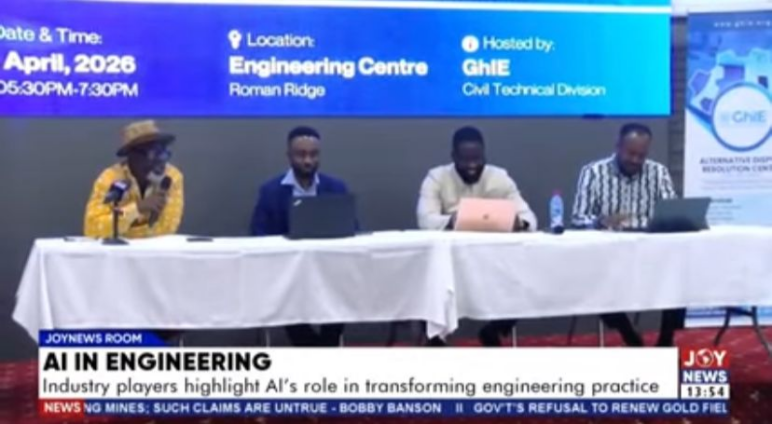
Civil engineers in Ghana are raising concerns over the growing administrative burden that consumes a significant portion of their working time, limiting productivity on core engineering tasks. However, emerging Artificial Intelligence (AI) solutions are beginning to transform the sector, offering faster, smarter, and more efficient ways of working.
Industry players say engineers spend between 30 and 50 per cent of their time on paperwork, documentation, and approvals, often after long hours on project sites. These processes are largely manual and fragmented, slowing down project delivery and affecting efficiency and decision-making.
AI Civil Engineering Solutions Specialist, Ing Aaron Boateng-Duah, says many engineering firms still rely heavily on traditional systems, where approvals are handled through emails and physical documentation.
“There is a lot of paperwork, signing of documents, and email follow-ups before approvals are granted. Sometimes you send an email and wait a long time for a response, which delays work,” he explained.
He notes that AI is increasingly being deployed to automate repetitive tasks such as report writing, task tracking, and documentation, allowing engineers to focus more on design and analysis.
“As an AI enthusiast and civil engineer, I realised there had to be a solution. So I developed a tool that puts everything in one space, allowing engineers to share files, coordinate tasks, and manage projects more efficiently,” he said.
According to him, such tools can convert rough site notes into structured reports, track deadlines, and centralise communication across teams.
“This tool converts rough site notes into structured reports, tracks deadlines, and allows clients to monitor project progress, budgets, and approvals in real time,” he added.
The Chairman of the Ghana Institution of Engineering, Michael Koduah, acknowledges the benefits of AI but cautions that it cannot replace human expertise.
“AI is clearly becoming an important tool in our industry, but as engineers, we must apply professional judgment to ensure outputs are accurate and suitable for real-world application,” he said.
Participants at the event also shared practical insights into how AI could improve project management. One participant, McLean Mensah, described the technology as a major breakthrough for engineers dealing with heavy reporting responsibilities.
“As a project manager, I do a lot of reports monthly and progress reports. What I’ve seen here is a great eye-opener. Once you input your data, it can generate reports and help monitor materials, labour, and expenses,” he said.
He added that the technology could significantly improve efficiency on construction sites.
“I will definitely explore how to incorporate this into what I do on site to make reporting and project tracking easier and more accurate,” he noted.
As AI continues to gain ground in Ghana’s engineering sector, stakeholders believe it will play a critical role in reducing administrative burdens, improving efficiency, and strengthening project delivery, while human expertise remains essential to ensure accuracy and accountability.
Latest Stories
-
Engage Now Africa to construct a 10-unit classroom block for struggling Navrongo Vocational Training Centre
3 minutes -
One digital financial breach could expose linked accounts to fraud – Financial Crimes Manager
7 minutes -
Ghana Russia Centre signs ICT cooperation agreement with Moscow University
11 minutes -
The powerhouses of the village: Honouring Ghana’s rural women on International Rural Women’s Day
12 minutes -
Vincent Assafuah petitions CHRAJ to investigate alleged irregularities in 2026 World Cup visa arrangements
12 minutes -
12-year-old boy found dead in muddy pit at Opeikuma
14 minutes -
GHS begins Yellow Fever vaccination campaign in three Upper West districts
15 minutes -
Organised Labour pushes for higher 2027 base pay despite slowing inflation
17 minutes -
Parliament’s Human Rights Committee demands swift justice in Obuasi SHTS sexual abuse case
27 minutes -
From Campaign Propaganda to Gov’t Accountability: When the message-makers demand a seat at the table
46 minutes -
Ashanti Region Security Coordinator warns sand winners to stay off Accra–Kumasi Expressway site
50 minutes -
PZ Cussons Ghana promotes hand washing among schoolchildren through Camel campaign
1 hour -
30 NDC aspirants file nominations in Upper West as regional election approaches
1 hour -
UPSA launches laptop assembly plant, requiring new students to assemble their own devices
2 hours -
UCC sociologist calls for action on gender inequality to end child marriage
2 hours