

Audio By Carbonatix
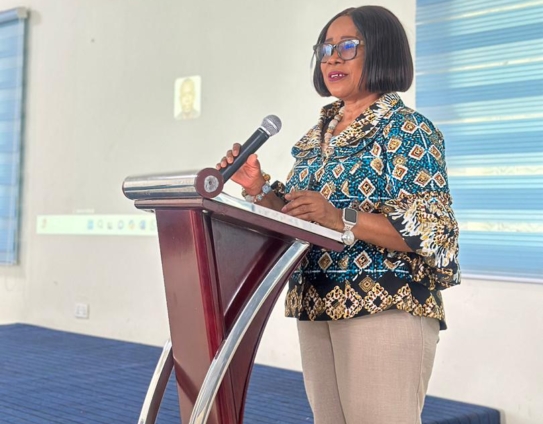
Executive Director of Women, Media and Change (WOMEC), Dr Charity Binka, has made a passionate appeal to government and stakeholders to treat child nutrition as a fundamental human right and not a privilege reserved for a few.
Speaking at a national capacity-building workshop held at Erata Hotel in Accra, Dr Binka declared, “Let us envision and create a Ghana where no mother must watch her child grow weak from hunger, where every child can grow up strong, and where nutrition is recognised not as a privilege but a fundamental right.”
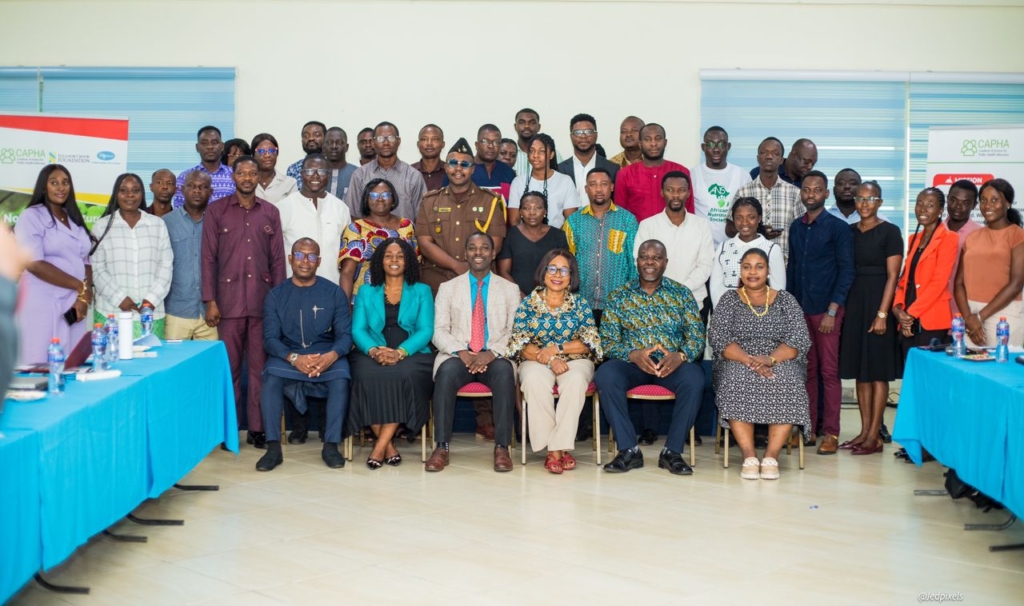
The event, organised by the Coalition of Actors for Public Health Advocacy (CAPHA) in collaboration with WOMEC, brought together civil society organisations and media professionals to drive strategic dialogue and action around maternal and child nutrition.
Dr Binka said Ghana must move beyond rhetoric and elevate nutrition to the highest levels of policy and funding decisions, noting that the country has enough resources to defeat malnutrition if accountability and prioritisation improve.
“Ghana should not be battling malnutrition,” she stressed. “We have fertile lands, capable farmers, national nutrition policies, and committed professionals. What we lack is a coordinated and well-funded national effort to close the nutrition gap.”
She expressed serious concern over the persistent rates of under nutrition in Ghana, especially among children under five, revealing that 18% of them are stunted while 7% suffer from wasting. She described these figures as devastating, highlighting that they reflect real lives being lost to a crisis that has long been under-addressed.
“These are not just statistics. They are real children, real families, and real futures being lost,” Dr Binka warned.
Underscoring the urgency, she explained that malnutrition does not just threaten health outcomes — it cripples national development. “Malnutrition weakens our workforce, increases healthcare costs, and reduces school performance. It robs children of their potential even before they get a chance to grow,” she said.
She was particularly emphatic on the need for government accountability in the nutrition space, demanding transparency on how resources allocated for nutrition initiatives are utilised.
“There appears to be a lack of accountability and transparency in terms of monies released towards nutrition initiatives,” she noted. “We need clarity and openness in how such funds are used to boost the fight against malnutrition.”
The workshop also served as a launchpad for the “Nourish Ghana: Advocating for Increased Leadership to Combat Malnutrition” project — a national advocacy initiative spearheaded by WOMEC and CAPHA with support from the Eleanor Crook Foundation, a globally recognised nutrition advocacy organisation.
According to Dr Binka, “Malnutrition is not just a health concern. It is a national emergency that threatens our development and steals the potential of our children.” She called on the government to integrate nutrition into all sectors and ensure it is adequately budgeted for at national, regional, and district levels.
She further advocated for enhanced public education on exclusive breastfeeding, improved complementary feeding, and the use of nutritious local foods prepared under hygienic conditions.
Crucially, Dr Binka challenged the media to use its power to reshape national conversations on nutrition.
“The media has the platform and the power to shape public opinion,” she said. “We must place malnutrition at the top of the national development agenda. Let us make nutrition part of everyday conversations — in our homes, our markets, and our communities.”
Dr Binka also used the opportunity to appeal to the government to commit more financial resources to tackle maternal and child malnutrition. She particularly expressed concern about how there appears to be a lack of accountability and transparency in terms of monies released towards nutrition initiatives, and demanded clarity and openness in how such funds are used to boost the fight against malnutrition.
Looking ahead, she announced that over the next year, WOMEC and CAPHA would roll out robust media campaigns, engage policymakers and nutrition champions, and strengthen partnerships to amplify advocacy efforts across the country.
The workshop marked a significant milestone in the fight against malnutrition in Ghana — not just as a health issue, but as a justice and development imperative.
Latest Stories
-
President Mahama ends Resetting Ghana tour of Ahafo Region
3 minutes -
African negotiators seek delivery of climate commitments at COP31
4 minutes -
BoG develops AI rules for financial sector
6 minutes -
‘Big Push’: Government assures contractors of prompt payments
10 minutes -
Court fines miner for breaking into gold buying shop
20 minutes -
Tarkwa court jails labourer for three years over GH¢123,000 theft
1 hour -
GAEC must retain nuclear scientists for Ghana’s nuclear ambitions – Minister
2 hours -
Man reportedly mistaken for game and shot by hunter dead in forest
2 hours -
19-year-old mason jailed 15 years for defiling seven-year-old pupil
2 hours -
Ghana’s banking sector assets rise 20.47% to GH¢500.2bn – BoG Governor
2 hours -
22 injured as Sprinter bus overturns at Sege after tyre burst
2 hours -
UN housing expert urges Ghana to strengthen Rent Control Department amid housing affordability concerns
2 hours -
Delta-BCI partnership reaches 166,000 people with breast cancer education
2 hours -
Power restoration fault suspected in Kumasi Central Market fire
7 hours -
The 7-foot giant of Ngleshie Amanfro: Seven-foot Ghanaian Ephraim Saawa dreams of joining the national basketball team
8 hours