

Audio By Carbonatix
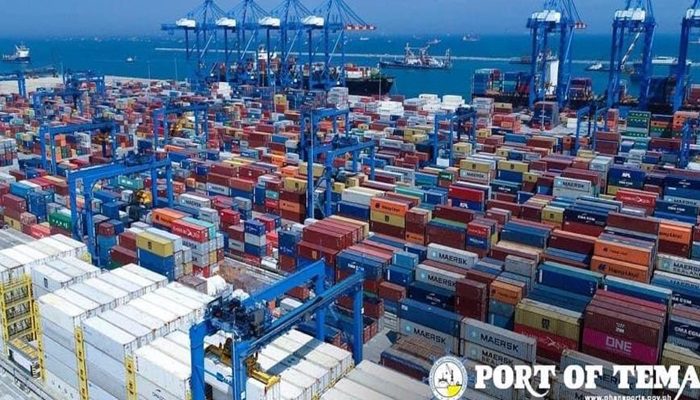
A report by the African Centre for Economic Transformation (ACET) has placed Ghana among the bottom 30 African nations in export competitiveness, highlighting a critical need for urgent policy reforms.
The ACET’s ‘African Economic Transformation Outlook 2023’ paints a concerning picture of Ghana’s economic performance, particularly in its ability to compete in the global marketplace.
The report, presented at a press briefing in Accra on Wednesday, was addressed by Mavis Owusu-Gyamfi, the President and Chief Executive Officer, ACET, and Dr Edward Brown, Senior Director, Research and Policy Programme.
Historically, Ghana’s major exports have been concentrated in cocoa and gold.
The commencement of commercial oil production in 2011 diversified the export portfolio.
However, despite numerous government initiatives aimed at increasing value addition, these interventions have encountered significant obstacles.
The report revealed that Ghana’s export competitiveness was alarmingly low, contributing significantly to the poor standing in the overall transformation index.
This ranking underscores the nation’s struggle to diversify its economy and move beyond primary commodity exports.
Dr Brown, presenting the report, emphasised that export competitiveness was important because, “if your companies will be sustainable, they need to compete in the global market.”
“If you are not competitive, if you don’t have all that it takes to compete in the global market in terms of price and quality, then we know that we are not competitive because our production cost is too high.”
The ACET report attributed Ghana’s dismal ranking to several factors, including persistently high production costs and an over-reliance on primary commodity exports such as gold and crude oil.
These commodities, while contributing to export revenue, are highly susceptible to global price volatility and offer limited opportunities for value addition.
“Our terms of trade are always geared towards massive imports and less exports, then it will affect your exchange rate. It will affect inflation. It will affect certain other things,” the report stated.
It highlighted the stagnation of Ghana’s manufacturing sector, a crucial component for diversifying exports and enhancing competitiveness.
Compared to other African nations, such as Eswatini, which had demonstrated success through focused support for manufacturing, particularly in textiles and garments, Ghana’s manufacturing sector had remained relatively weak, it noted.
The ACET report stressed the urgent need for Ghana to diversify its export base and transition towards higher value-added products.
That required deliberate government interventions to boost productivity, promote technological advancement, and address the high costs of production.
The report underscored the importance of enhancing productivity across agriculture, manufacturing, and services, alongside fostering technological innovation.
“These factors are essential for strengthening Ghana’s export competitiveness and driving sustainable economic growth,” it added.
Latest Stories
-
NCA announces major voice and data disruption across Northern Ghana due to fibre cuts
27 minutes -
Photos: Housing solutions take centre stage at Day 2 of the 3rd Republic Bank-JoyNews Habitat Fair
59 minutes -
Video: Immunity should be exercised without creating classism – Inusah Fuseini on cocaine bust
2 hours -
Ghana Air Force passes out 293 recruits after six months of intensive training
2 hours -
EOCO vrs Baffour Awuah: EOCO should have secured warrant before arrest attempt at court – Inusah Fuseini
2 hours -
Triple fibre cuts disrupt telecom services across Northern, Oti regions – Sam George
2 hours -
Politicisation could undermine parliamentary probe into cocaine seizures – Dr Osae-Kwapong
2 hours -
EOCO chases MP: Can Section 41 cure lacuna in EOCO Act? – Inusah Fuseini asks
2 hours -
GNFS, GWL inspect fire hydrants in Ministries enclave; 23 found faulty
2 hours -
Gov’t directs release of 50,000 bags of grain to ECOWAS
2 hours -
Ghana, Germany deepen cooperation on railways, labour mobility
2 hours -
Huge crowds greet Pope in Paris for open-air Mass
2 hours -
Ghana’s Charles Amofah Elected Vice President of African Bowling Federation
3 hours -
‘I never said I’ll declare a state of emergency’ – President Mahama on galamsey
3 hours -
Bobby Banson condemns EOCO’s attempted arrest of Nana Agyei Baffour Awuah
3 hours