

Audio By Carbonatix
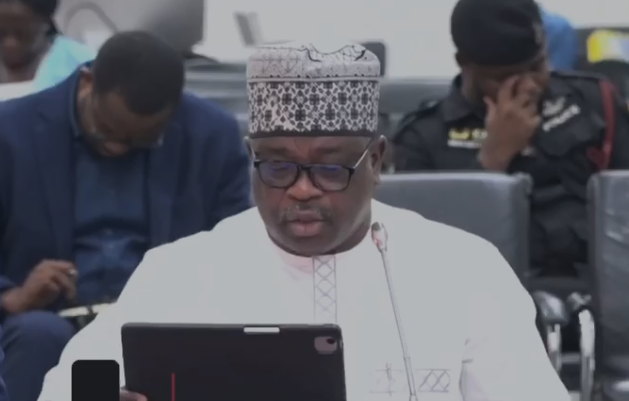
The Minister of State in charge of Climate Change and Sustainability, Alhaji Baba Seidu Issifu, says Ghana remains committed to achieving the 1.5 degrees Celsius global warming target under the Paris Agreement.
Addressing Parliament's Committee on Assurances, the Minister said the National Energy Transition Framework, which covers the period from 2022 to 2070, is part of the government’s efforts to achieve net-zero emissions by 2070.
"Ghana is aligning with the 1.5 degrees Celsius pathway and promoting a fair renewable energy transition. We are embarking on a National Energy Transition Framework, and this started in 2022, and it is supposed to stretch to 2070."
"Through this framework, Ghana commits to net-zero emissions by 2070, with emissions peaking by the mid-2050s before declining," he added.
The Minister said Ghana's energy transition agenda will require significant investment, with the framework estimating that about US$561 billion will be needed over the next five decades to implement the country's plans.
"Besides the National Energy Transition Framework, we also have decarbonisation of the energy mix and transport sector," he told the Committee.
He added that the government has also updated the Renewable Energy Master Plan in 2025 and revised the country's Nationally Determined Contributions (NDCs) to support Ghana's climate commitments.
"We have also updated our NDCs. NDCs are our Nationally Determined Contributions, and Article 6 of it talks about how to have voluntary cooperation between countries. That is also supporting the achievement of the 1.5 degrees Celsius," he said.
Mr Issifu further stated that Ghana is pursuing measures aimed at ensuring a just transition, including climate financing, regional and international cooperation, and policies that support the country's climate objectives.
"We're also looking at just transition measures and financing justice, and the regional and international cooperation, and finally we are also supporting policies and implementing programmes that will synergise our efforts in achieving these objectives," he said.
The Minister said Ghana is pursuing a gradual but deliberate transition towards a low-carbon energy system through increased renewable energy deployment, cleaner fuel alternatives and diversification of the country's energy mix.
"So in giving brief details, Ghana is pursuing a gradual but deliberate decarbonisation of its energy mix through increased renewable energy deployment, cleaner fuel alternatives, and diversification of the national energy portfolio," Mr Issifu said.
He added that these interventions form part of Ghana's broader strategy to meet its climate commitments while supporting sustainable development.
Latest Stories
-
President Mahama ends Resetting Ghana tour of Ahafo Region
2 minutes -
African negotiators seek delivery of climate commitments at COP31
3 minutes -
BoG develops AI rules for financial sector
6 minutes -
‘Big Push’: Government assures contractors of prompt payments
10 minutes -
Court fines miner for breaking into gold buying shop
20 minutes -
Tarkwa court jails labourer for three years over GH¢123,000 theft
1 hour -
GAEC must retain nuclear scientists for Ghana’s nuclear ambitions – Minister
2 hours -
Man reportedly mistaken for game and shot by hunter dead in forest
2 hours -
19-year-old mason jailed 15 years for defiling seven-year-old pupil
2 hours -
Ghana’s banking sector assets rise 20.47% to GH¢500.2bn – BoG Governor
2 hours -
22 injured as Sprinter bus overturns at Sege after tyre burst
2 hours -
UN housing expert urges Ghana to strengthen Rent Control Department amid housing affordability concerns
2 hours -
Delta-BCI partnership reaches 166,000 people with breast cancer education
2 hours -
Power restoration fault suspected in Kumasi Central Market fire
7 hours -
The 7-foot giant of Ngleshie Amanfro: Seven-foot Ghanaian Ephraim Saawa dreams of joining the national basketball team
8 hours