

Audio By Carbonatix
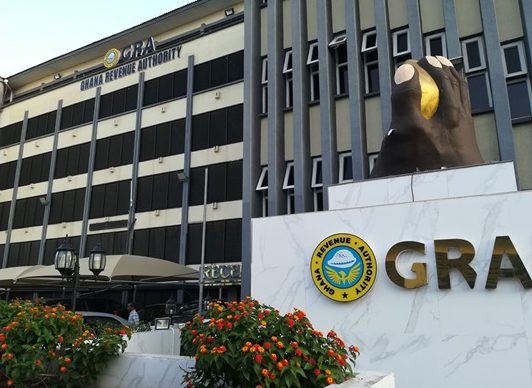
The Commissioner of Customs Division of Ghana Revenue Authority, Colonel Kwadwo Damoah, has disclosed that government will rake in about 2.5 billion cedis this year, owing to the reduction in the benchmark value.
The expected revenue is however dependent on volumes of imports that come into the country and the impact of the Russia-Ukraine conflict.
“If we had implemented the cut from the beginning of the year, we would expect to gain about GH¢3billion; but because we started from March, we lost out on that, so maybe, about GH¢2.5 billion; that is our expectation. That is if volumes of imports remain the same,” he said.
Government reduced the discounted duty on imports from 50 percent to 30 percent for general goods and 30 percent to 10 for vehicles, in March this year.
Speaking at a sensitisation workshop organised in collaboration with the Association of Ghana Industries (AGI), Colonel Damoah said the government is looking at a gradual withdrawal of the policy.
The meeting with AGI members was to discuss the impact of recent initiatives, including the discount values on goods and services, the GRA taxpayers’ portal, the 4 percent flat rate, and the e-levy.
With the recent reduction in the benchmark discount under the first phase of the policy’s two-phase review approach, importers had argued for the retention of the policy at the 50 percent rate in order to keep prices of imported products stable.
However, the AGI called for the total removal of the discounted duty, arguing that it has made locally produced products uncompetitive.
“The reduction was a win-win situation for everyone; but, of course, this is phase-one,” the Customs Commissioner said.
He hinted at a further review of the policy next year. “The phase-two will take off from next year, but we will have to do more engagements during the last quarter of this year to be able to come up with the exact nature of the review; whether the remaining percentages or discounts are going to be taken off completely; or just as was done in the first phase, reduced by a certain percentage.
“That, I’m not in a position to tell now; but it will be based on a directive from the Ministry of Finance and engagement with stakeholders to find the best way out for the country.”
Latest Stories
-
Ray Michael Djan Jr puts Ghanaian creativity on global stage with Chelsea anthem
7 minutes -
Matilda Dibloni Kokar elected USAG president after two-year dormancy
10 minutes -
NPP delegates wanted youthful energy with Kojo Bamba’s election – Political scientist
13 minutes -
Zenith Bank supports Childhood Cancer Unit at Greater Accra Regional Hospital
14 minutes -
KMA empowers 64 persons with disabilities; Mayor unveils plan for sustainable skills centre
16 minutes -
DJs Union urges musicians to prioritise respect, communication amid industry tensions
23 minutes -
“Ghanaian DJs deserve their flowers” – Lasmid
24 minutes -
Zenith Bank supports childhood cancer unit at Greater Accra Regional Hospital
25 minutes -
‘Who’s in charge doesn’t really matter; we’re all servants’ – John Boadu on leader of NPP
29 minutes -
Christa Pike’s prognosis still unclear after failed execution, lawyer says
44 minutes -
SLTF to advance fees for first-year students facing admission payment deadlines
47 minutes -
Ghana Institute of Architects calls for action to make adequate housing a human right
47 minutes -
BoG, Police arrest seven over alleged misuse of Ghana Cedi as bouquets
48 minutes -
NCPTAs appeal to striking teachers to return to classroom
48 minutes -
Government plans engineered landfills and waste transfer stations nationwide – Ayariga
50 minutes