

Audio By Carbonatix
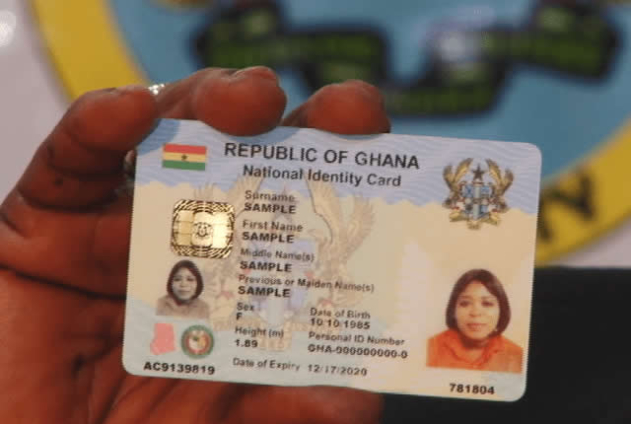
Ghanaians have been urged to stop institutions from photocopying their Ghana Cards for transactions. Instead, citizens should insist on verification methods prescribed by the National Identification Authority (NIA).
This call to action aims to enhance the security of personal data and ensure the integrity of the national identification system as Ghana advances towards a robust digital economy.
Caution on identity theft
This caution was issued by Moses K Baiden, Chief Executive Officer (CEO) of Margins ID Group, during a visit to the company by the Ministry of Communication and its agencies.
The visit allowed the Ministry and its agencies to observe the intricate processes involved in producing the Ghana Card and to understand the various purposes the secure database can serve.
Participating agencies included Ghana Digital Centres, Cyber Security Authority, Data Protection Commission, Ghana Domain Names Registry, Ghana Post, National Communication Authority, National Information Technology Agency, Ghana Investment Fund for Electronic Communications, Ghana-India Kofi Annan Centre of Excellence in ICT, and the Postal and Courier Services Regulatory Commission.
Impact of photocopying on data security
Mr Baiden highlighted that improper use of the Ghana Card, such as photocopying or sharing digital copies, can enable criminals to use others' identities to commit fraud and other crimes.
"Any reproduction of the Ghana Card exposes the card owner to identity theft," he noted, emphasizing the importance of adhering to NIA guidelines to protect citizens' identities.
He explained that the NIA system requires individuals to present themselves and provide fingerprint verification, which generates an audit code linked to the transaction. This method ensures a high level of security and authenticity in identity verification.
Challenges and solutions
Mr. Baiden also pointed out that the primary challenge in Ghana's data protection and identification efforts is not related to data collection or technology but rather to attitudinal and enforcement issues.
He urged institutions to fully familiarize themselves with the NIA system to make informed decisions and adopt best practices.
He noted that the system provides a unique identity because the base of fraud is to duplicate an identity. According to him, in order to commit a crime, the criminal has to wear a mask digitally or physically to harm public and private resources.
Therefore, he said the government prioritised ID as the first step in building a clean society.
Legal framework and technological integration
Mr. Baiden said the legal process determines how secure an ID is because the technology must always follow the law.
In an era where the world is swiftly transitioning towards digitization, data is essential for driving the digital economy.
Mr. Baiden described data as the new gold to drive the digital economy Ghana is building.
He stressed that a secure biometric database is crucial for the success of any digital economy.
He emphasized that the effective digitization of services can significantly reduce the stress citizens endure, lower transaction costs, and enhance the government's ability to deliver services more efficiently.
Engagement and education
During the visit, Mr. Baiden demonstrated how the secure biometric database supports not only the identity verification process but also a myriad of applications crucial for the digital transformation of the country.
He highlighted the necessity of accuracy and security in data management, pointing out that digitising services is a game-changer, offering numerous benefits such as reduced costs and improved service delivery.
The officials from the participating agencies asked questions about the process, which were answered by the top management of the company.
Latest Stories
-
Philanthropist Alhaji FuZak donates Da’wah bus to Ambariya Sunni community
4 minutes -
GUTA calls for suspension of Publican AI system over trade disruptions, demands temporary halt in import activities
7 minutes -
TTAG raises alarm over proposed recruitment of 7,000 teachers, demands national posting roadmap
40 minutes -
Civilians feared killed after reports of air strike on Nigerian market
50 minutes -
Bishop Simon Kofi Appiah installed as new Jasikan Diocese Bishop
51 minutes -
Trump’s Strait of Hormuz blockade threat raises risks and leaves predicaments unchanged
53 minutes -
US Court backs extradiction of former MASLOC CEO Sedina Tamakloe-Attionu’s to Ghana
1 hour -
Seven arrested as NAIMOS dismantles illegal mining camp, seizes firearms at Boin River
1 hour -
Fire erupts at Madina Ritz Junction, destroys multiple wooden structures and containers
1 hour -
Daniel-Kofi Kyereh returns from long-term injury, registers assist for Freiburg U23
2 hours -
Knifeman calling himself ‘Lucifer’ slashes three at NYC’s Grand Central
2 hours -
Brands are built from within to without
2 hours -
Matriculants urged to pursue excellence as gov’t reaffirms support for Maritime education
2 hours -
See the areas that will be affected by ECG’s planned maintenance on Monday, April 13, 2026
2 hours -
GPL 2025/26: Salim Adams double fires Medeama back to summit after Kotoko rout
2 hours