

Audio By Carbonatix
The Director of Communications for the Bawumia Campaign Team, Dennis Miracles Aboagye, has argued that Ghanaians are facing a higher cost of living than in 2024 despite improvements in key macroeconomic indicators.
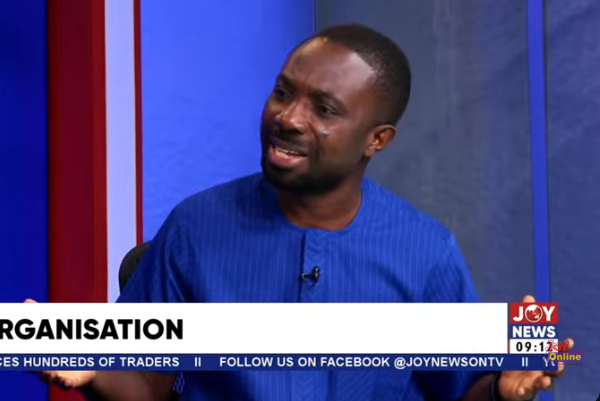
Speaking on JoyNews’ AM Show on Tuesday, 7 April, Mr Aboagye said both data and everyday experiences suggest a growing disconnect between economic statistics and the realities faced by citizens.
“The truth of the matter is that the Ghanaian today is worse off in terms of their cost of living than they were in 2024. It’s the data. There’s no lie about that,” he stated.
He acknowledged that indicators such as inflation, fuel prices and the exchange rate have shown signs of improvement but maintained that these gains have not translated into relief for ordinary households.
“The dollar has come down. Inflation has come down. Fuel has come down. And that is true… but there’s a disconnect. And we’re only drawing the government’s attention to that disconnect because it may not have realised,” he said.
Mr Aboagye questioned why improvements in macroeconomic indicators had not been reflected in the daily lives of citizens.
“Why is it that for the first time in this country, we see all these macroeconomic indicators improving drastically, massively, and yet it’s not reflected in our lives? There is a problem. Can you look at it?” he asked.
He noted that earlier concerns raised by the People’s Forum in December 2025 about rising living costs were initially dismissed but, according to him, recent developments have reinforced those concerns.
“Today, the reality is hitting us. If you like, go to the market and ask them; they’ll tell you. They cannot afford electricity. They cannot afford water,” he said.
Mr Aboagye also highlighted recent increases in utility tariffs as a major burden on households.
“In 12 months, you have a government that increases electricity by 24%. Then you have water increased by 15%. And those are the things that we’ve been speaking about all day long,” he noted.
He further pointed to rising fuel prices and their impact on transport fares, arguing that these increases have worsened economic hardship.
“This morning, as we speak, transport fares have gone up… I have to be able to afford fuel, pay my overhead, and maintain my buses,” he said.
Comparing past and current conditions, he questioned the government’s claims of economic progress, stating that despite improvements in inflation and exchange rate figures, living costs have continued to rise.
Mr Aboagye maintained that rising living costs remain the most pressing concern for many Ghanaians despite reported improvements in macroeconomic performance.
Latest Stories
-
NDC threatens sanctions over oversized campaign posters, gives aspirants 5 days to comply
40 minutes -
Star Oil paid GH¢2.7bn in taxes, levies in nine months of 2026
54 minutes -
Samson’s Take: The rule of law is cheaper before the bulldozer
55 minutes -
GRA blames system failure for delay in issuing receipt over passenger’s customs duty
1 hour -
Livestream: Newsfile discusses World Cup visa scandal, beach demolitions, education strikes, BRICS bid
1 hour -
NC-PTAs welcomes end of teachers’ strike, urges parents to prepare children for Monday
1 hour -
Government procures over 2,000 transformers as Ghana’s electricity access hits 89.13% – Energy Minister
2 hours -
UTAG-UG threatens strike on October 19 over unpaid allowance
2 hours -
Let The Constitution direct Chieftaincy to deliver “All Development Is Local”
3 hours -
John Jinapor outlines renewable energy, nuclear power priorities for 2027
4 hours -
Ghana explores centre of excellence for hearing, communication and cochlear implant care
5 hours -
Schizophrenia-related disorders lead mental health cases recorded in Ghana
5 hours -
Dutch authorities enlist Ghana in hunt for fugitive drug lord Bolle Jos
5 hours -
Ghana housing finance conference adopts communiqué to improve affordable housing access
10 hours -
Special Initiatives Minister urges Wa Technical Institute to enrol more girls as EU-backed solar training lab opens
10 hours