

Audio By Carbonatix
Co-chair of the Ghana Extractive Industry Transparency Initiative (GHEITI), Dr Steve Manteaw has stated that Ghana's oil industry may be affected badly if successive governments fail to attract more investors.
He is of the view that production may cease in 20 years—in 2024.
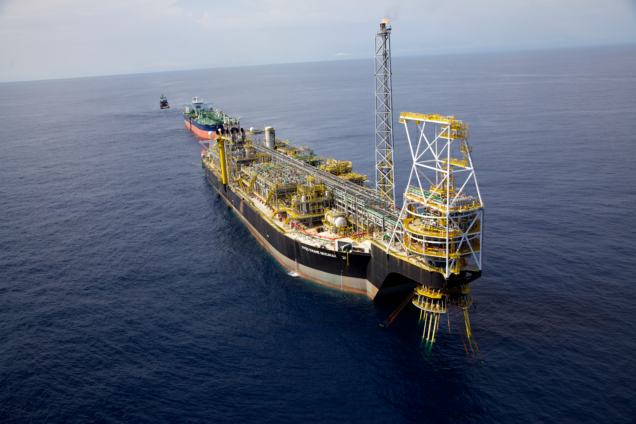
"We know we have been taking oil out of Jubilee for the last ten or 14 years now. The Jubilee lifespan was supposed to be 25 to 30 years, so if you have taken about 14 years then we have some few years ahead to exhaust the reserves", he said after the launch of the GHEITI 2021/2022 report.
Dr Manteaw expressed worry that the inability to bring new projects on-stream could be partly blamed on the consistent decline in oil production in the last four years.
"If we do not add to the reserves, my fear is that in the next 15 or 20 years our oil production will be gone. The reason is that while we are peaking we are not bringing new projects on-stream”.
He pointed out that the government has failed to design policies that will attract investors into the oil and gas sector.
“We are not inviting the investors. They are all moving to other neighboring countries. Our seismic data is also poor. We have 2D instead of 3D”, he said.
Dr Manteaw observed that the government has made little investment in the exploration of the commodity over the years.
This, he regretted sent bad signals to investors seeking to invest in the sector.
The GHEITI report
The report revealed that in 2021, the Jubilee field produced 27 million barrels of crude compared to a 2020 output of 30 million.
The Jubilee field contributes about half the total national output, even though production reduced slightly by 10 percent.
In 2022, the Jubilee field contributed half of the total output, showing a production increase of 11.5 percent from the 2021 output.
The highest monthly production volume on the Jubilee field was recorded in March and the lowest in May.
There were however 33 and 28 percent in the Tweneboa Enyera Ntomme (TEN) fields in 2021 and 2022 respectively.
This was attributed to poor reservoir performance. However, production at the Gye Nyame Sankofa projects saw some improvement in 2020, but declined again in 2021, which was linked to the Emergency Shutdown.
Recommendations from the report indicated that the government should invest in data collection to help deal with the challenge facing the country’s oil field.
Latest Stories
-
I assure Otumfuo, Mahama will join him to commission KNUST Teaching Hospital by end of this year – Haruna Iddrisu
13 minutes -
Gov’t to roll out free special education for persons with disabilities from July 1 – Education Minister
35 minutes -
“We used it to test our officiating officials’ readiness” – Bawah Fuseini after CAA Athletics event
1 hour -
Volleyball emerges as Ghana’s fastest rising sport
1 hour -
National Sports Fund needs strong leadership from the top – Administrator David Wuaku
1 hour -
JoySports Exclusive: Steve McLaren in talks with GFA after expressing interest in Black Stars job
2 hours -
Fire guts auto parts warehouse at Bubuashie, one fire officer injured
2 hours -
I owe my victory to coach Ofori Asare – Allotey after winning WBA Africa Gold Super Flyweight belt
2 hours -
Church of Pentecost supports over 2,000 BECE candidates in Obuasi with career guidance seminar
3 hours -
Brandon Asante and Coventry all but promoted to Premier League despite Sheffield Wednesday draw
4 hours -
GPL 2025/26: Late Kwartemaa strike downs Hearts in Tema
4 hours -
Ghana Faces Sierra Leone Moment as Prosecutorial Powers come under strain
4 hours -
Don’t consume fish or seafood from Tema Shipyard until further notice – FDA warns
4 hours -
Why volunteering might be Africa’s most underrated career accelerator
4 hours -
ActionAid Ghana raises concern over gender gaps in Feed Ghana Programme
4 hours