

Audio By Carbonatix
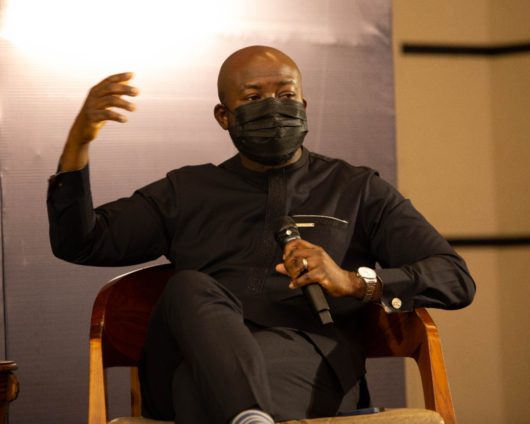
Former Chief Executive Officer of the Chamber of Bulk Oil Distributors, Senyo Hosi, says the government’s decision to withdraw foreign exchange support for rice imports is not a well thought through policy.
According to him, while he realizes the goodwill that may have influenced the decision, the policy proposition is brash and does nothing to solve the problem it was intended to fix.
He noted that the government had failed to consult key stakeholders in the agricultural sector, particularly in the rice sector, to come out with a more robust and sustainable policy proposition for the 2023 budget.
This he says is what has led to the government formulating policy propositions that are mere rhetoric and have no substance to them.
Speaking on JoyNews’ PM Express, he explained that the withdrawal of FX support for rice importers would hit Ghanaians more than improve local production.
With Ghana’s local rice production at 43% according to Ministry of Agriculture records, Senyo Hosi notes that local producers will not be able to fill in the 57% gap that will be created if importers are unable to bring in rice.
This he says is because the government in their policy proposition failed to provide any tangible support system for rice farmers to locally produce to fill the expected gap.
“So you have this 57% that’s outstanding, that’s about a million tonnes of milled rice. Who is going to fill the gap? What policy structure do you have in place for us to fill the gap? Because for us to fill the gap, we need to cultivate four hundred and fifty something hectares. So if you’re not going to do that it means that local production will not fill the gap, so what happens? We still will import.
“But we’re not going to import with Bank of Ghana dollars, we’re going to look for other dollars meaning that the cost of the dollar for those imports will go up. Who is going to make the money? It is the FX traders,” he said.
According to him, a more prudent measure to improve local production of rice was to introduce a levy which would be invested into the local rice industry to grow it.
“What you could have done is you could have rather introduced a rice development levy or tax, whatever name you want to give it, then you use that money to help support industry grow that four hundred and fifty something hectares required to be able to knock out imports over time. But what have you done? What you’ve done right now, local production is not there.
“You don’t have proper policy to really support or fund us to expand capacity. So you’re going to make money for FX traders who will be sitting down and looking at commodity swaps for rice and other things across the world. I don’t see the sense yesterday, and I don’t see the sense tomorrow over that policy.
“I see a good heart wanting to do a good thing but hasn’t thought through the thing he wants to do. And sadly, he’s not consulting. That policy is off,” he said.
Latest Stories
-
Power restoration fault suspected in Kumasi Central Market fire
2 hours -
The 7-foot giant of Ngleshie Amanfro: Seven-foot Ghanaian Ephraim Saawa dreams of joining the national basketball team
3 hours -
Government promises support for Kumasi Central Market fire victims
3 hours -
Vibes The Movie: Big Ghun’s Ghanaian film earns five nominations at 2026 REFFA
4 hours -
MamaCare CEO warns unresolved conflicts among health workers could undermine maternal and neonatal care
4 hours -
Health professionals urged to translate medical knowledge into practice to save mothers
4 hours -
Conflicts among care providers linked to maternal, neonatal deaths – Expert
6 hours -
GIS marks 10th TIME conference, champions improved teaching practices
6 hours -
BRICS Or Balance? What Ghana’s bid really means
6 hours -
GPRTU wants full TRAFFITECH-GH implementation to start in 2027
6 hours -
Mahama announces plans to import electric wheelchairs for PWDs
7 hours -
KGL U17 Colts 2026: Western beat Prempeh Elite Academy to set up final final with Greater Accra Region
7 hours -
Late Solanke strike salvages 10-man Spurs draw at Man United
7 hours -
Gender Ministry to monitor welfare of Nana Akua Addo’s children amid domestic violence case
7 hours -
Benedict Okyere Yeboah: Ghana’s football problem goes beyond sacking a coach
7 hours