

Audio By Carbonatix
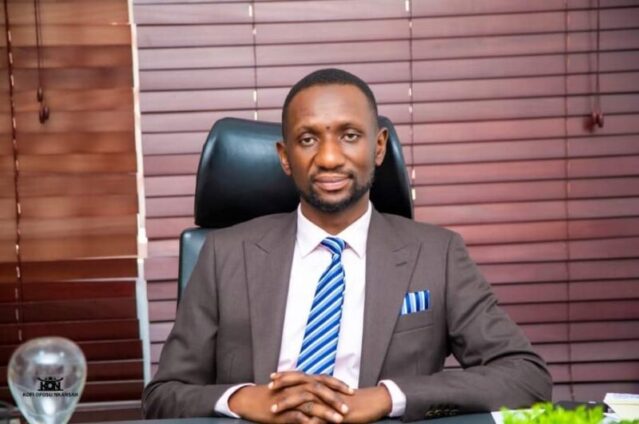
The Chief Executive Officer of the National Entrepreneurship and Innovation Programme (NEIP), Kofi Ofosu Nkansah, has revealed that the government spends approximately GH¢9,000 on each student enrolled on the Free Senior High School (SHS) programme.
This investment covers the educational needs of students across various public schools, ensuring access to secondary education without financial barriers.
According to the NEIP CEO, the substantial expenditure reflects the government’s commitment to providing quality education to all Ghanaian students.
In addition to Free SHS students, Mr Nkansah disclosed that the government allocates over GH¢9,000 per Technical and Vocational Education and Training (TVET) student.
This amount, he noted, is slightly higher than the investment in SHS students, due to the specialized nature of TVET education, which requires additional resources for practical training and technical equipment. The aim is to equip TVET students with the skills needed to thrive in technical fields and contribute to Ghana’s industrial growth.
Mr Nkansah highlighted that these expenditures are part of the government’s broader vision of improving access to education and building a skilled workforce.
The Free SHS and TVET programme are seen as crucial pillars in developing human capital, reducing inequality, and preparing students for the job market.
In a Facebook post on Wednesday, October 9, Mr Nkansah also emphasised that education remains a priority for the current administration, as it plays a pivotal role in the country’s socioeconomic transformation.
Despite the significant expenditure, the NEIP CEO expressed confidence that the long-term benefits of the Free SHS and TVET programmes would far outweigh the cost.
He noted that the government’s continued investment in education would lead to a more skilled and educated population, which is essential for driving national development and innovation.
“On average, the government spent Ghc 8,936/9,808 on an SHS/TVET boarding student for 3 years using 2021 academic year rates.”
“People who cannot save 10,000 cedis their entire life are getting their children educated for free. Impacting generations,” he posted.
Latest Stories
-
High Court sets November 4 for ruling on Wontumi’s bail application
12 minutes -
Tetteh Kwetey files nomination for NDC Greater Accra Regional Chairmanship
22 minutes -
Korle Bu appeals for more doctors, nurses as A&E Centre struggles under pressure
34 minutes -
AFCON 2027Q: ‘I’m optimistic Black Stars can turn things around’ – Agyemang-Badu
36 minutes -
Digital innovation could widen Africa’s inequalities if people are left out – Sam Jonah
38 minutes -
Galamsey is an economic, health and moral problem – Sam Jonah
40 minutes -
Africa must create AI technology instead of paying to use it – Sam Jonah
43 minutes -
2026 U-17 WWC: Black Maidens to face Norway, Brazil and Canada in Group C
47 minutes -
Agbodza, Sam George move to curb fibre optic cable cuts during road works
54 minutes -
2026 U-17 WWC: Black Maidens unveil 21-player squad for competition in Morocco
56 minutes -
South Africa evacuation and the minority’s half-truth
1 hour -
‘You never know tomorrow’ – Anthony Baffoe on contesting for GFA Presidency
1 hour -
Obuasi SHTS head accused of sexually abusing students is NDC Juaben secretary seeking chairmanship
1 hour -
Cedi depreciates by 7.11% against dollar in August 2026 – BoG report
2 hours -
Put women and youth at the centre of mineral resource governance — ActionAid
2 hours