


Audio By Carbonatix
Vice President Naana Jane Opoku-Agyemang has reaffirmed government’s commitment to investing in critical infrastructure to boost agribusiness, with a strong focus on tomato production and value addition.
She gave the assurance during a meeting with GB Foods executives in Barcelona, as part of efforts to reduce Ghana’s dependence on tomato imports while expanding exports of processed tomato products.
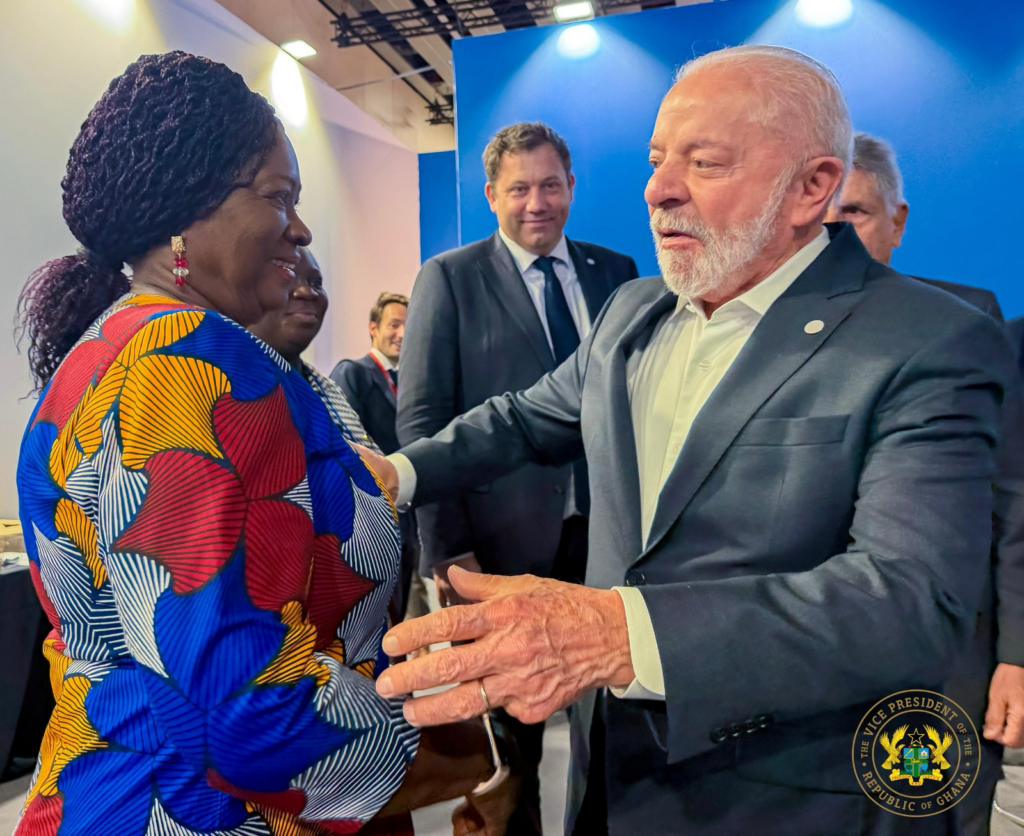
The Vice President stressed that government’s support for investments across the agricultural value chain will enhance domestic production capacity and strengthen agro-processing in Ghana.
“We look forward to mutually beneficial relationships and sustained business as we expand to other areas and encourage local farmers. We want to ensure smaller farmers are also included, so no one feels left out. We are committed to building and sustaining an inclusive system,” she said.

She noted that such partnerships would not only stabilise supply but also create sustainable jobs, improve rural livelihoods, and drive economic growth.
“We are aware that these interventions are key to job creation. The goal of our agro-industrial drive is to improve lives and ensure our citizens benefit fully from our resources. We look forward to broad support to maximise these opportunities,” she added.

Director of Corporate Affairs for Africa at GB Foods, Teddy Ngu, revealed that the company has secured about 6,000 hectares of land in the Afram Plains for the project. The initiative is expected to significantly improve tomato supply stability, particularly following recent export restrictions from Burkina Faso.
According to him, the key to transforming tomato production lies in technology-driven farming.

“Tomatoes are one of the most difficult crops to grow. In Ghana and Nigeria, yields average about five tonnes per hectare, compared to 120 tonnes in Spain and 180 in China. There is huge potential here, but it requires the right technology—precision irrigation and specialised farming techniques,” he explained.
He added that GB Foods has already increased yields in Nigeria from five to 60 tonnes per hectare, expressing confidence that similar gains can be achieved in Ghana.

The partnership is expected to enhance long-term sustainability in the sector, strengthen Ghana’s food security, and reduce reliance on imports.
Latest Stories
-
Power restoration fault suspected in Kumasi Central Market fire
5 hours -
The 7-foot giant of Ngleshie Amanfro: Seven-foot Ghanaian Ephraim Saawa dreams of joining the national basketball team
5 hours -
Government promises support for Kumasi Central Market fire victims
6 hours -
Vibes The Movie: Big Ghun’s Ghanaian film earns five nominations at 2026 REFFA
6 hours -
MamaCare CEO warns unresolved conflicts among health workers could undermine maternal and neonatal care
6 hours -
Health professionals urged to translate medical knowledge into practice to save mothers
7 hours -
Retired judge Justice Francis Korbieh charges 1,568 new lawyers to uphold integrity
8 hours -
Conflicts among care providers linked to maternal, neonatal deaths – Expert
8 hours -
GIS marks 10th TIME conference, champions improved teaching practices
8 hours -
BRICS Or Balance? What Ghana’s bid really means
9 hours -
GPRTU wants full TRAFFITECH-GH implementation to start in 2027
9 hours -
How 10-mile walks for basic education birthed a 50-year legal career for Justice Korbieh
9 hours -
Mahama announces plans to import electric wheelchairs for PWDs
9 hours -
KGL U17 Colts 2026: Western beat Prempeh Elite Academy to set up final final with Greater Accra Region
9 hours -
Late Solanke strike salvages 10-man Spurs draw at Man United
10 hours