

Audio By Carbonatix
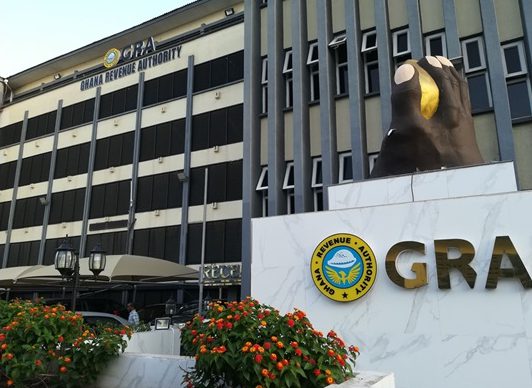
The Ghana Revenue Authority (GRA) has notified the law firm of legal practitioner Jonathan A. Alua of a tax audit barely a week after he took the authority and the Attorney-General to the Supreme Court over the exercise of powers relating to passenger baggage tax exemption rules.
According to a letter dated September 9, 2026, the GRA said the law firm had been selected for a tax audit covering the 2023 to 2025 financial periods.
The development comes amid a legal challenge by Mr Alua over the powers of the GRA Commissioner-General under the Exemptions Regulations, 2025 (L.I. 2514), particularly in relation to customs duties and taxes on passenger baggage.
The timing of the audit has attracted attention because the notice was issued approximately one week after Mr Alua commenced the Supreme Court action.
GRA says audit does not imply wrongdoing
In its letter to the law firm, the GRA said the audit was being conducted under its mandate in the tax laws and stressed that the exercise should not be interpreted as an indication that the firm had breached any tax obligation.
“This is to inform you that your company has been selected for audit under the provisions of the Tax Laws for the periods 2023-2025. We would like to assure you that this exercise does not suggest you have done anything wrong,” the letter stated.
Mr Alua expressed surprise at the development in a Facebook post about the audit, accompanying his reaction with a laughing emoji.
The GRA has not indicated that the audit is connected to Mr Alua’s Supreme Court case.
Lawyer challenges GRA's tax exemption powers
In his case before the Supreme Court, Mr Alua is seeking a declaration that Regulation 18(2)(b) of the Exemptions Regulations, 2025 (L.I. 2514) is unconstitutional.
His challenge centres on powers granted to the GRA Commissioner-General under the regulation, particularly the authority to waive or vary taxes.
Mr Alua argues that the provision permits the Commissioner-General to waive or vary taxes without first obtaining the approval of Parliament.
The case therefore raises a constitutional question about the extent to which an administrative authority can exercise powers relating to taxation and exemptions without parliamentary approval.
While the Supreme Court is yet to determine the matter, the GRA's audit notice has added a new dimension to the dispute, given its timing and the fact that the taxpayer being audited is the law firm of the lawyer challenging the Authority's powers.
Latest Stories
-
Kwabena Boamah appointed Board Chair for Impact Investing Ghana
1 minute -
Striking teacher unions to meet Fair Wages and Salaries Commission on October 6
15 minutes -
EOCO working with AG to arraign Nana Baffour Awuah before weekend court
18 minutes -
Duraplast reassures customers after fire, announces October 5 reopening
26 minutes -
Call off strike, gov’t will not renege on promotion arrears pledge – Haruna Iddrisu appeals to teacher unions
29 minutes -
Committee set up to validate teachers eligible for 20% deprived-area allowance – Education Minister
33 minutes -
Five-member committee to search for new Black Stars coach after Sports Ministry-GFA meeting
1 hour -
Pinktober: Breast cancer survival exceeds 90% when detected early – Breast Society of Ghana
1 hour -
TCDA to adopt Upper West’s MATCO mango farm as northern prototype, issues warning against felling shea trees
1 hour -
‘Fear delegates’ tag: Afoko touts genuineness among delegates ahead of NPP delegates conference
1 hour -
John Boadu: The leader our party needs at this time – Amb. Edward Akwasi Boateng
2 hours -
Baffour Awuah: EOCO arrested, detained MP after hours of waiting, questioning – Afenyo-Markin
2 hours -
EOCO court warrant authorised search of Baffour Awuah’s law firm, not residence – Afenyo-Markin
2 hours -
NPP delegates conference: 3,000 to 4,000 police personnel deployed for security in Kumasi – Anthony Karbo
2 hours -
KGL Foundation commits $200,000 to support juvenile football for the next two years
2 hours