

Audio By Carbonatix
The government of Ghana has called for stronger regional collaboration, intelligence sharing, and joint maritime operations to tackle growing insecurity within the Gulf of Guinea.
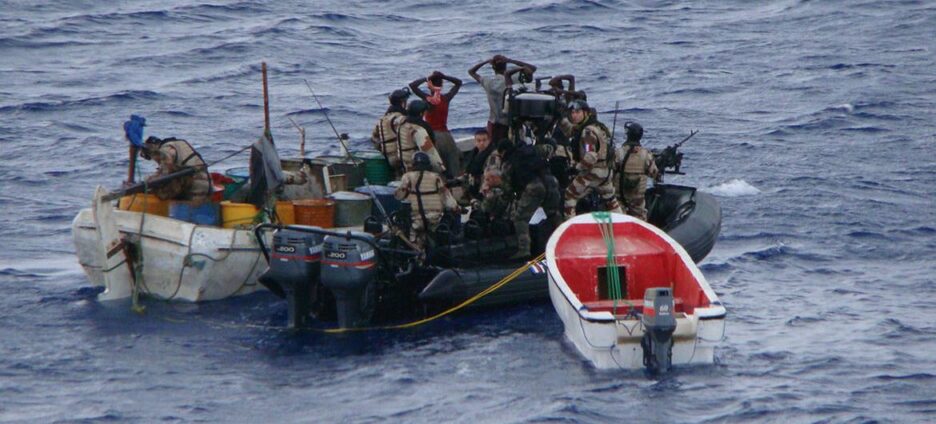
Rear Admiral Godwin Livinus Bessing, the Chief of Naval Staff, speaking on behalf of Mr Ernest Brogya Genfi, the Deputy Minister for Defence, said maritime threats such as piracy, illegal fishing, armed robbery at sea, and small arms smuggling continued to undermine regional peace and economic development.
He made the remarks during the opening ceremony of the Maritime Action Platform (MAP) III Seminar held at the Alisa Hotel.
The seminar brought together representatives from ECOWAS, maritime agencies, defence institutions, international organisations, and regional security stakeholders.
Rear Admiral Bessing described the Gulf of Guinea as a strategically vital maritime region that served as a lifeline for international trade, fisheries, energy transportation, and the livelihoods of millions across coastal nations.
He noted, however, that the region faced increasing threats from illegal, unreported and unregulated (IUU) fishing, piracy, drug trafficking, and illicit arms smuggling.
“Illegal, unreported and unregulated fishing drains billions of dollars from our economies each year, undermines food security, and threatens the sustainability of marine ecosystems upon which future generations depend,” he stated.
According to him, although piracy and armed robbery at sea had been reduced due to regional cooperation, maritime insecurity continued to pose risks to seafarers and coastal economies.
“These challenges are interconnected with other maritime crimes such as illicit bunkering and drug trafficking. They therefore demand comprehensive solutions rooted in collaboration, intelligence sharing, and strengthened maritime governance,” he added.
Rear Admiral Bessing stressed that no single nation could secure the Gulf of Guinea alone because maritime security remained a shared responsibility among governments, navies, coast guards, law enforcement agencies, and international partners.
He said platforms such as the Maritime Action Platform seminar provided opportunities for dialogue, innovation, and strategic partnerships to address regional maritime challenges.
“Through enhanced maritime domain awareness, joint operations, capacity building, and legal coordination, we can safeguard our waters and ensure that the Gulf of Guinea is known not for insecurity, but for cooperation, prosperity, and stability,” he said.
The Chief of Naval Staff commended the Ghana Armed Forces and the Ghana Navy for their vigilance and readiness in protecting Ghana’s territorial waters.
He also acknowledged the support of the Centre for Stabilisation at the Royal Danish Defence College for supporting maritime security initiatives in the region.
Latest Stories
-
New Mexico wants Meta to pay up to $40 billion in penalties after data privacy trial
58 minutes -
Oil rises slightly as market weighs mixed supply signals
1 hour -
Jordan ‘Last Dance’ jersey sells for £9m
1 hour -
Nigeria charges man with running fictitious government agency
1 hour -
COMAC renews call for full deregulation of fuel prices
2 hours -
Putin warns West that Russia is ready to use every weapon to protect Kaliningrad
2 hours -
Fuel sector overcrowded as 245 OMCs compete for market share – COMAC CEO
4 hours -
Mobile Money Fintech LTD, UMB train hairdressers and beauticians
4 hours -
COMAC boss blasts gov’t interference in fuel pricing, demands full deregulation
4 hours -
OpenAI fires workers for mishandling ‘sensitive information’
4 hours -
What’s gone wrong at Nike? How the world’s sportswear giant lost its mojo
4 hours -
Carney pitches oil pipeline as a response to US-Canada trade war
5 hours -
Badenoch welcomes expanded grooming gangs inquiry
5 hours -
GACL MD sues Samuel Buabeng over alleged Facebook defamation
5 hours -
Asylum votes show people want help, says Kemi Badenoch
5 hours