

Audio By Carbonatix
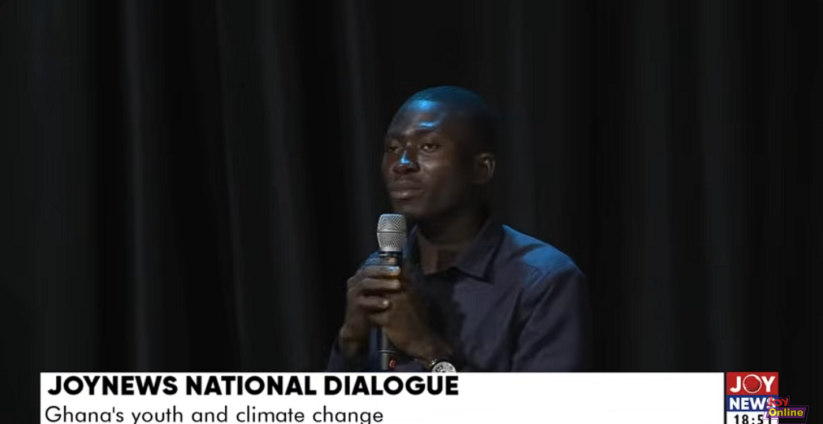
The Executive Director of the youth-led organisation African Students for Interfaith Tolerance, Issa Toha Shamsoo, has called for a shift in how climate change is understood and addressed.
He urged policymakers to treat it not only as an environmental challenge but also as a pressing peace and security issue.
“Climate change is not just about the environment. We need to look at the intersection between climate, peace, and security. It is increasingly becoming a national security concern,” he said.
He further noted that climate-related disasters, such as flooding in some farming communities, destroy homes and livelihoods, leaving affected populations with limited options for survival.
In such conditions, he argued, competition for resources can intensify and increase the risk of conflict.
He called for stronger policy attention to the climate–security nexus, emphasising the need for long-term solutions that address both environmental degradation and the socio-economic drivers of instability.
Mr Toha Shamsoo further noted that climate impacts are increasingly driving tensions between communities, particularly in northern Ghana, explaining that rising temperatures in the Sahel are altering traditional grazing patterns, pushing cattle herders southwards into Ghana earlier than usual in search of pasture.
This seasonal shift, he noted, often brings herders into contact with farming communities whose crops are still in the field, leading to frequent destruction of farmlands and heightened tensions.
“These interactions between farmers and herders are becoming more frequent due to climate pressures, and they often escalate into conflict situations,” he said.
Beyond farmer–herder tensions, he also highlighted the impact of climate change on agriculture, which remains the main source of livelihood for many young people in northern Ghana.
According to him, worsening weather patterns and increasing pest outbreaks are making farming more difficult and less productive.
As a result, many young people are being forced to migrate to the southern parts of the country in search of alternative livelihoods. He warned that this rural-urban migration is placing additional pressure on social infrastructure and contributing to broader social challenges.
Latest Stories
-
Total expenditure as of July 2026 amounted to GH¢147.07bn, 16% below target – BoG
2 hours -
Total revenue & grants stood at GH¢144.5bn in July 2026, slightly below target – BoG
3 hours -
Ghana Sports Fund urges sports federations to submit credible proposals and measurable targets
3 hours -
Sally Rooney books withdrawn in UK over Palestine Action support
3 hours -
Musk says US government may be behind slowdown of Ukraine drone speeds
3 hours -
Picking Chief Justices nearing retirement could give Mahama immense power – Bentil
3 hours -
Netflix to shed 1,000 jobs in steepest cuts since 2022
4 hours -
Burnham had two hospitality dinners with Man City chairman, deleted records show
4 hours -
Semenyo ‘froze’ after alleged racist abuse, court told
4 hours -
‘Shameless’ – Mourinho critical of Vinicius Jr ban timing
4 hours -
Loyalty can outweigh competence in Chief Justice selection – Bentil
4 hours -
Man City suffer as PSG masterclass sets up Champions League win
5 hours -
Customer Service Africa CEO urges business leaders to observe staff and customer interactions
5 hours -
On night of mayhem for Liverpool, Barcola arrives in style
5 hours -
Muzic Mensah finds healing and renewed love in new single ‘WayƐ Late’
5 hours