

Audio By Carbonatix
The Ghana Water Company Limited (GWCL) has proposed a 280 per cent upward adjustment in water tariffs.
The company cited the devastating impact of illegal mining (galamsey) and pollution of water bodies as the main drivers behind the request.
The proposal, presented during the Public Utilities Regulatory Commission (PURC) stakeholder engagement for 2025, represents the highest tariff adjustment request among utility service providers, following the Electricity Company of Ghana’s (ECG) proposal.
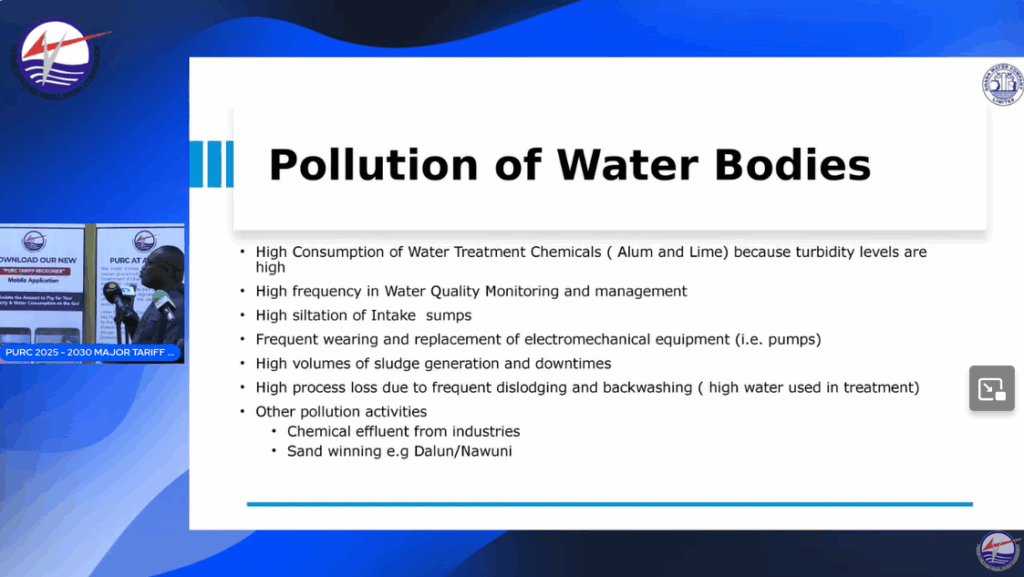
GWCL explained that rampant pollution of rivers and streams has significantly increased operational costs. The company now consumes unusually high volumes of treatment chemicals such as alum and lime because of rising turbidity.
Frequent siltation of intake sumps and high sludge generation are causing equipment damage and downtimes.
ECG's Chief Manager of Corporate Planning, Michael Klutse, also noted that industrial chemical effluents and sand winning activities in areas such as Dalun and Nawuni continue to worsen the situation.
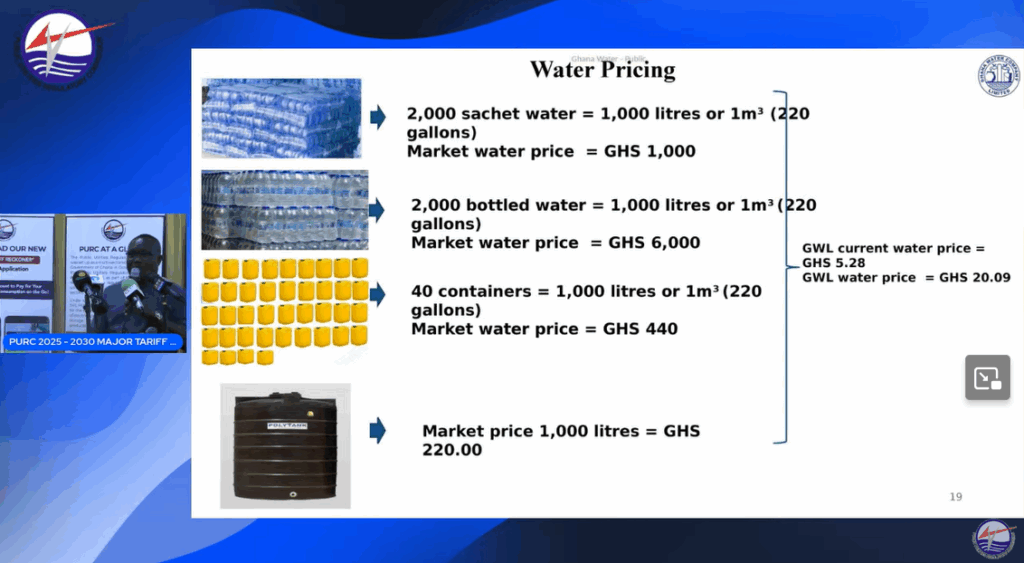
In a comparative analysis, GWCL highlighted that the market price of water far exceeds the current utility tariff.
A thousand litres of sachet water costs around GHS 1,000, while bottled water of the same quantity costs about GHS 6,000.
The same volume sold in containers costs roughly GHS 440. By contrast, GWCL’s current tariff is just GHS 5.28 per 1,000 litres, far below market prices.
The company argues that the proposed adjustment is necessary to sustain operations, ensure water quality, and replace worn-out electromechanical equipment.
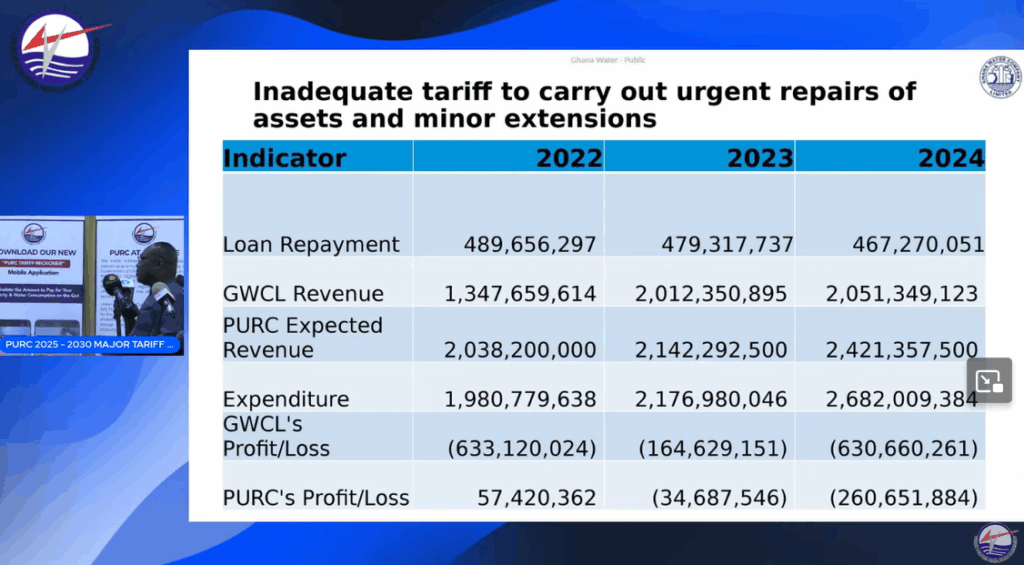
The PURC is expected to review GWCL’s proposal alongside other submissions before announcing approved tariff adjustments for the 2025–2030 major tariff period.
Already, ECG has submitted a proposal to the PURC for a steep 225% increase in its Distribution Service Charge (DSC1).
The power company says the huge rise is necessary to avert financial collapse and ensure a reliable power supply.
The proposed new charge would see the DSC1 rise from its current GHp19.0384/kWh to GHp61.8028/kWh for the period 2025–2029.
The company, which serves over 73% of Ghana’s population and 4.87 million customers, argues that the current tariff is unsustainable.
According to ECG, the DSC1 constitutes only 11% of the total electricity value chain cost, far below the global benchmark of 30-33%.
This deficit, coupled with the Ghana cedi’s depreciation of about 74% between 2022 and 2024, has reduced the real value of the company’s revenue by 45%.
To counter these challenges and address the public's persistent complaints about service quality, ECG has presented a detailed plan to invest the new revenue in critical infrastructure.
Latest Stories
-
Judges’ conference forces further adjournment of Salomey Baffoe case
7 minutes -
GRA assures Tullow of collaboration to settle $393m tax liability without disrupting its petroleum operations
37 minutes -
South Korea demands apology from Pyongyang for landmine blasts that injured three
40 minutes -
Carlos Queiroz not the sort of coach Black Stars need – Nii Lante Vanderpuye
1 hour -
AFCON 2027Q: ‘Our Black Stars team is gone’ – Former Sports Minister
2 hours -
Prof. Prempeh calls for public review of draft constitutional reform bills
2 hours -
AFCON 2027Q: ‘I have never seen a poor performance from Black Stars like against Gambia’ – Nii Lante Vanderpuye
2 hours -
Bawumia backs insurance sector reforms after engagement with IBAG
2 hours -
Nigeria set to launch National Digital Address System 9 years after Ghana showed the way
2 hours -
Policy rate decision takes time to reflect in lower lending rates – BoG
2 hours -
Western Regional Minister applauds Karpowership’s role in Ghana’s power sector
3 hours -
Playback: Road safety crises: Where are we getting it wrong?
3 hours -
Enterprise Life celebrates 25 years of protecting families and building trust
3 hours -
ICC London rules in favor of Ghana against Tullow over $400m tax charge
3 hours -
We are disappointed in ICC’s ruling over our corporate income tax assessment in Ghana – Tullow Oil
3 hours