

Audio By Carbonatix
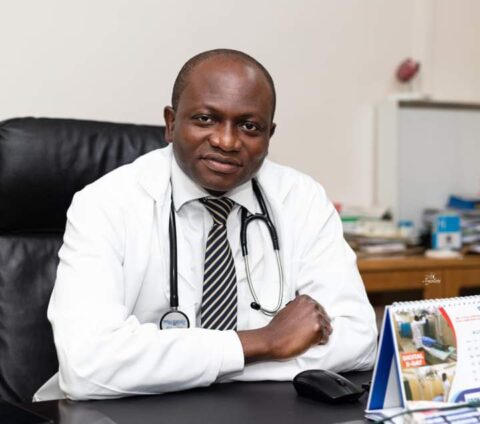
The Chief Executive Officer of the Health Facilities Regulatory Agency (HeFRA), Dr Winfred Korletey Baah, has expressed support for Ghana’s Free Primary Healthcare Programme, describing it as a well-structured and cost-effective intervention that could transform healthcare delivery in the country.
Speaking in an interview on The Pulse on JoyNews, Dr Baah said while the Free Primary Healthcare is not a new concept, the current initiative stands out because of how deliberately it has been designed and implemented.
“Free Primary Healthcare has been there, and we are all trying to achieve universal health coverage. What we are witnessing now is a specific policy that will complement all the other efforts as a country,” he said.
According to him, the programme introduces a more organised and proactive approach, with a strong focus on prevention and early detection of diseases rather than waiting for patients to report serious conditions.
“This one is unique because it has strong health promotion and prevention components. Instead of waiting for people to come with their conditions, we are going into homes, markets and communities to screen people and bring them to the clinic, and all of that is covered,” he explained.
Dr Baah acknowledged that similar outreach efforts have been carried out in the past, but stressed that the current programme is more structured and coordinated.
“Some of these things were done before, but this programme puts it in a very organised and controlled way. In some ways, it is almost mandatory, not by force, but once people are reached in their communities, they are encouraged to take part. For us, it is a good thing,” he said.
He also assured the public that HeFRA is actively overseeing the implementation to ensure safety and quality standards are met, saying that the agency has already inspected and licensed the first health post under the programme.
“I can tell you on authority that the first one that was done has been inspected by my team and licensed. All the other health posts that will be set up across the country will also be licensed.”
Dr Baah added that the equipment being used has been checked and calibrated, and that continuous monitoring will be carried out.
“As regulators, we are going to monitor the whole process to make sure that safe and quality healthcare is provided to the people of Ghana,” he stated.
On the issue of cost, he said that the programme is financially sensible in the long term because it focuses on prevention.
“When you prevent disease, it is more cost-effective. If you diagnose hypertension early or even prevent it through lifestyle changes, you avoid much more expensive treatments in the future, such as dialysis. If you look at the cost over 20 years, this approach makes sense,” he explained.
He also expressed confidence in the sustainability of the initiative, citing dedicated funding support.
“I am very sure it will be sustained because there is dedicated funding from the National Health Insurance Authority,” he said.
Responding to concerns about pressure on existing health facilities, Dr Baah said the programme would actually reduce the burden on higher-level hospitals.
“If someone has malaria and it is detected early at a health centre, they are treated immediately. Without this system, the person might stay at home and later go to the hospital with severe complications, which is more expensive and puts pressure on higher-level facilities.”
He added that strengthening care at the basic level would ease demand on district, regional and tertiary hospitals.
“For me, this is a very great intervention. It is good for the country, and we must all support it,” he said.
Dr Baah expressed optimism about the long-term impact of the programme, saying its benefits would become clear over time.
“I am sure that in 10 years, when we evaluate this programme, we will know that we have done this country good,” he said.
Latest Stories
-
Benedict Okyere Yeboah: Ghana’s football problem goes beyond sacking a coach
7 minutes -
GPL 2026/27: Darkwah Wiafe’s winner sees All Blacks beat Kotoko
13 minutes -
ITF World Tour : Patel Wins Boys’ Singles Final at J100 Accra
26 minutes -
Ghana must pursue BRICS partnership if it brings economic benefits – Kpebu
29 minutes -
Success and Wright Claims J100 Accra Girls’ Doubles Championship
29 minutes -
ITF J100: America’s Wright wins J100 Accra Girls’ Singles Title
36 minutes -
Expedition hopes to find aviator Amelia Earhart’s plane on remote island
36 minutes -
US seeks changes to rejected $109m health compact with Ghana – Mahama
1 hour -
Nine dead in mass shooting at Pennsylvania home
1 hour -
‘Time for Ukraine to get new president,’ says Trump after Zelensky condemns diesel deal
1 hour -
Hincapie injury adds to Arsenal issues after Guimaraes rescue act
2 hours -
Henderson scores twice as Chelsea thumb Bournemouth
2 hours -
Photos: Mentapulse Africa convenes health and labour summit to address talent retention
2 hours -
Mahama inspects Nkokɔ Nketenkete plant, eyes Bechem as chicken capital
2 hours -
Ghana not seeking full BRICS membership, applying as Partner Country – Ablakwa
2 hours