

Audio By Carbonatix
High lending rates: IEA blames government, BoG, banks
The debate over high lending rates in the country will not end anytime soon, as the Institute of Economic Affairs is blaming the high cost of credit on government, banks and the Bank of Ghana.
Though the institute believes the problem is multifaceted, it is attributing the high cost of loans to these three actors.
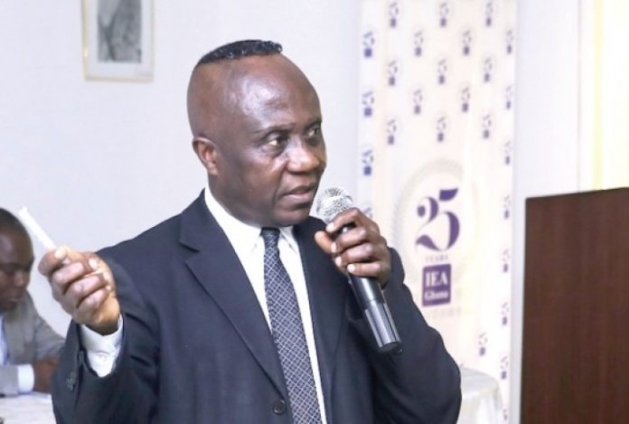
According to the Director of Research at the IEA and Senior Economist, Dr. John Kwakye, banks contribution to high lending rates which emanates from their inefficiencies, and government continuous borrowing from banks to finance the budget are major causes of the high cost of loans.
“Banks contribution to high lending rates emanates from their inefficiencies, high operating costs, poor appraisal of projects, collusive practices and customer capture”, the Senior Economist said are some causes of high lending rates.
For government, he said “government responsibility for high lending rates emanating from borrowing from banks to finance the budget, macroeconomic instability associated with high budget deficits, and high and multiple taxes imposed on banks.”
With regard to the Bank of Ghana, he attributed the causes of expensive loans to “the role of the monetary and regulatory authority in high lending rates emanating from the inherently upward bias of monetary policy on interest rates, cost of high and currency-differentiated reserve requirements and lack of well – functioning Credit Reference Bureaux”.
Whilst, the spread between lending rate and policy rate is about 7%, that of lending rate and savings rate is about 12%.
Studies have also shown that factors such as cost of funds, Treasury bills rate, non-performing loans and inflation are the major contributing factors to the high lending rates.
Also, the high lending rate inhibit investment and economic growth as well as contributing to the rising prices of goods and services in the country
IEA recommendations to address high lending rates
Dr. Kwakye made some recommendations in order to address the high lending rates in the country.
On the part of the banks, he urged the financial intermediaries to reduce their operating and overhead costs.
“Addressing operational inefficiencies to reduce costs so that they are not passed on to consumers. Improve working processes and systems through modernization and more digitization.”
“Strengthen customers’ project appraisal capacity to reduce incidence of loan defaults and the effect on costs”, he added.
For government, he called for the reduction in borrowing from the domestic market, but urged the Bank of Ghana to reduce the primary reserve ratio from the current level of 8% to 5% to reduce the associated costs to government.
Secondly, Dr. Kwakye urged government to streamline bank taxes to help reduce their costs, adding “provide a level playing field in respect of their corporate tax.”
With regard to the monetary and regulatory authority, the IEA Director of Research urged the Bank of Ghana to ensure that the fight against inflation does not itself fuel high lending rates. This requires a broader approach to fighting inflation, including paying attention to the supply – side causes, as overly emphasis on demand management tends to weigh on interest rates.
“Reduce the primary reserve ratio from the current level of 8% to 5% to reduce the associated costs to banks. Further, allow banks to cover their dollar deposits with dollar reserves to avoid their exposure to exchange risk and its passage on to lending rates”, he added.
Latest Stories
-
At least 22 dead after two boats collide on Congo river, official says
1 hour -
Heavy rains lead to Senegal floods, government reports several deaths
1 hour -
FTBLRLIFE targets Ghana in expansion of global grassroots football network
3 hours -
Former ‘American Idol’ contestant sentenced to life without parole for wife’s murder
4 hours -
Education Ministry commends Ghanaian teachers on World Teachers’ Day 2026
4 hours -
NPP can reconcile with aggrieved members who want to return – Nana Akomea
5 hours -
Tamale Child Deaths: Vehicle owner arrested as IGP deploys homicide team
5 hours -
From ShattaFest to MoMo Fest: Entertainment takes centre stage in youth engagement
5 hours -
Nigerian military aircraft crashes, killing 32
5 hours -
MTN encourages Ghanaians to use MoMo for saving, investing and financial planning
5 hours -
Absa Bank Ghana names Stephen Ato Frimpong as Board Chair
5 hours -
Pickford ‘almost caused crash’ with careless driving
5 hours -
Author and former politician Jeffrey Archer dies aged 86
5 hours -
No education reform can succeed without teachers – Education Ministry
5 hours -
Gauff condemns racist abuse after China Open win
6 hours