

Audio By Carbonatix
In an unprecedented turn of events, Ghana’s political landscape has witnessed a series of historic firsts following the country's recent general elections.
From record-setting political comebacks to groundbreaking gender milestones, these events mark a new chapter in the nation's democratic journey.
For the first time in Ghana's political history, a former president has been re-elected to lead the country.
John Dramani Mahama, who previously served as president from 2012 to 2017, has made a remarkable comeback.
His victory symbolizes a rare political rebound, earning him a place in the annals of Ghanaian and African history.
Mahama's return has been met with mixed reactions, with supporters hailing it as a testament to perseverance, while critics ponder its implications for Ghana's democratic trajectory.
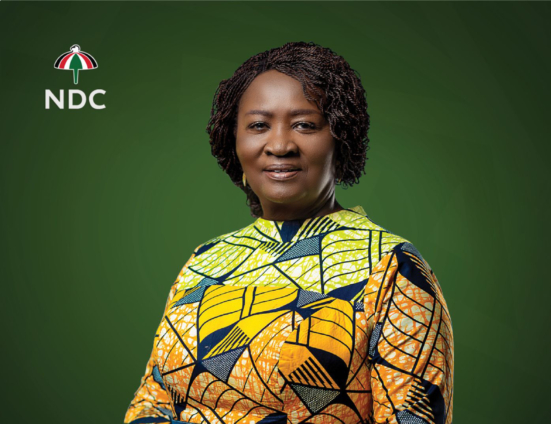
In another historic first, Ghana has elected its first-ever female vice president, Professor Naana Jane Opoku-Agyemang.
A trailblazer in her own right, she holds a legacy of academic excellence, having been a First Class student and the first female vice-chancellor of a Ghanaian public university, the University of Cape Coast.
Her rise to the vice presidency has been celebrated as a monumental victory for women's empowerment in politics, inspiring a generation of young women to aim for leadership roles.
Her achievement is being hailed as a step toward gender inclusivity and equity in Ghanaian politics.
The 2024 election also set a precedent in terms of political maturity.
Vice President Dr. Mahamudu Bawumia's fastest concession of defeat informed by data (one of his election campaign preoccupations) captured the nation's attention.
His swift and gracious acceptance of defeat drew widespread commendation from political analysts, citizens, and civil society organizations.
Many noted that his actions demonstrated political maturity, deepened democratic values, and provided a model for peaceful transitions of power.
Discussions on the importance of this gesture have dominated media platforms, with some suggesting it should become a standard practice in future elections.
Another landmark achievement occurred in the Ledzokuku Constituency, where, for the first time, the sitting Member of Parliament, Benjamin Narteh Ayiku, retained his seat.
This outcome defied past trends where the constituency had always seen a change in its parliamentary representative after every election.
The retention of Ayiku signals growing confidence in continuity, and his supporters view it as a reward for his effective representation and developmental projects in the constituency.
The 2024 elections also saw the opposition National Democratic Congress (NDC) achieving a rare victories by capturing many new seats in traditional New Patriotic Party (NPP) strongholds.
Key constituencies such as Tafo-Pankrono, Dome-Kwabenya, Kwadaso, and Afigya-Kwabre North, all of which had historically been safe seat for the NPP, fell to the NDC.
Analysts believe this shift reflects changing voter dynamics and dissatisfaction with the ruling party’s performance.
These wins have ignited debates on the NDC's growing influence and the NPP's declining dominance in certain regions.
The Dome-Kwabenya constituency, known as the largest and most populous constituency in Ghana, experienced a political shocker when it fell to the NDC for the first time since 1993.
This seat, previously considered an NPP stronghold, was lost following a highly contested race.
Many attribute the loss to internal divisions within the NPP, as well as strategic campaigning by the NDC.
Dome-Kwabenya's shift is seen as one of the most dramatic moments of the 2024 elections, with political pundits viewing it as a harbinger of larger shifts in Ghana’s electoral map.
For the first time, Ghana witnessed a high number of incumbent female MPs losing their parliamentary seats.
Notable among them are Ursula Owusu-Ekuful (Ablekuma West), Sarah Adwoa Safo (Dome-Kwabenya), Lydia Seyram Alhassan (Ayawaso West Wuogon), Mavis Hawa Koomson (Awutu Senya East), Sheila Bartels (Ablekuma North), Ama Pomaa Boateng (Juaben), Tina Gifty Naa Ayeley Mensah (Weija-Gbawe) and Freda Akosua Prempeh (Tano North).
This significant shift raises questions about gender parity in Ghanaian politics.
While some new female MPs have been elected, the number of female casualties remains a cause for concern.
Political analysts have linked the defeats to voter fatigue, poor constituency engagement, and growing demand for change.
Gender advocates have since called for greater support systems for female politicians to prevent such mass losses in future elections.
Political analysts believe these events will serve as a blueprint for other African democracies navigating electoral transitions.
Latest Stories
-
UK tries to stop Trump’s diesel export ban
3 hours -
Late Olise goal gives France win over Belgium
3 hours -
Mancini enjoys first win since return as Italy boss
3 hours -
Interest payments to average a high 20% of government revenue over next 4 years
3 hours -
Anthropic warns AI may pose ‘existential risks to humanity’ in IPO filing
3 hours -
Joe Hart trusts Man City chair Al Mubarak over ruling
4 hours -
Strategy of accumulating foreign reserves, gold carries high fiscal cost – S&P Global
4 hours -
Weak institutional arrangements, high debt servicing constrain Ghana’s rating – S&P
4 hours -
Man City CEO defiant over Premier League charges
4 hours -
Infantino makes bigger cash pledge to Fifa members
4 hours -
Bond market: Turnover declined by 28% to GH¢1.56bn
4 hours -
Volta Region National Public Speaking contest advances drug prevention conversation
4 hours -
New health training facility at Ampoma-Jema to address admission shortfalls, but Minister flags missing amenities
5 hours -
Black Challenge unveiled with sights set on Amputee World Cup glory
5 hours -
Pay striking teachers before expressway spending, Dr Kingsley Agyemang tells government
6 hours