

Audio By Carbonatix
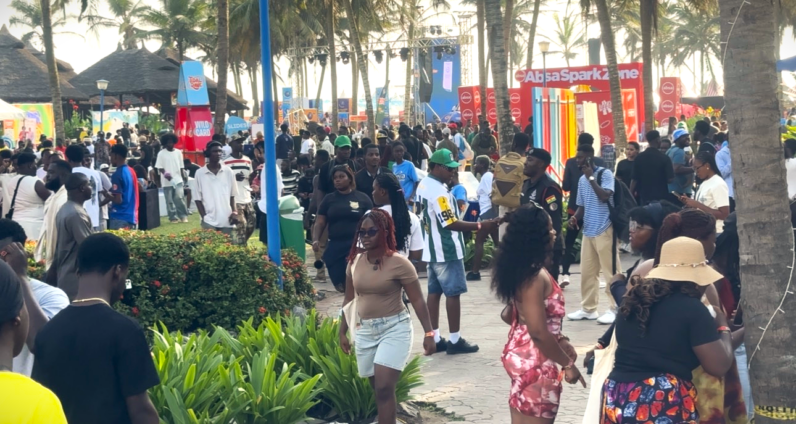
Young people came to Accra's La Beach for music, fashion and the energy of the Tidal Rave Festival. Revelers were hyped up, dancing to their favorite songs, with fun activities and food.
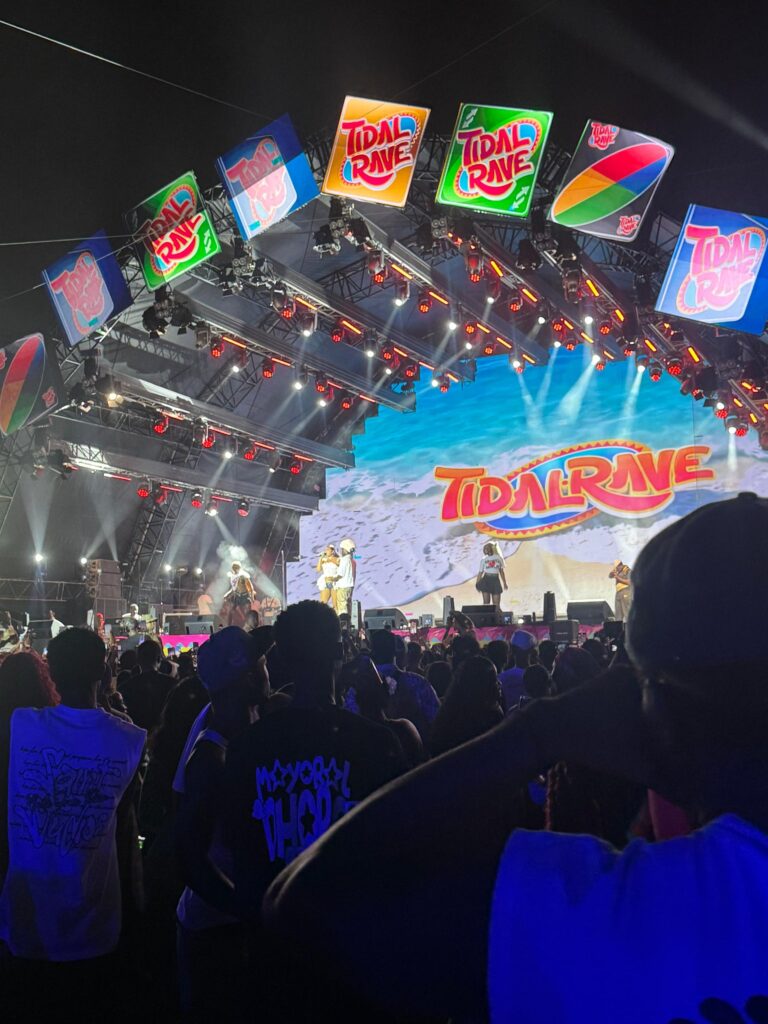
The euphoria only went higher as the bright orange sun gave way to the colorful, energy-filled night.
But beneath the colour, creativity, and celebration at the November 15, 2025 event was a generation beginning to connect its lifestyle choices with the future of the environment.
For some of the young people at the festival, sustainability was not presented as a scientific lecture or a distant global policy debate.
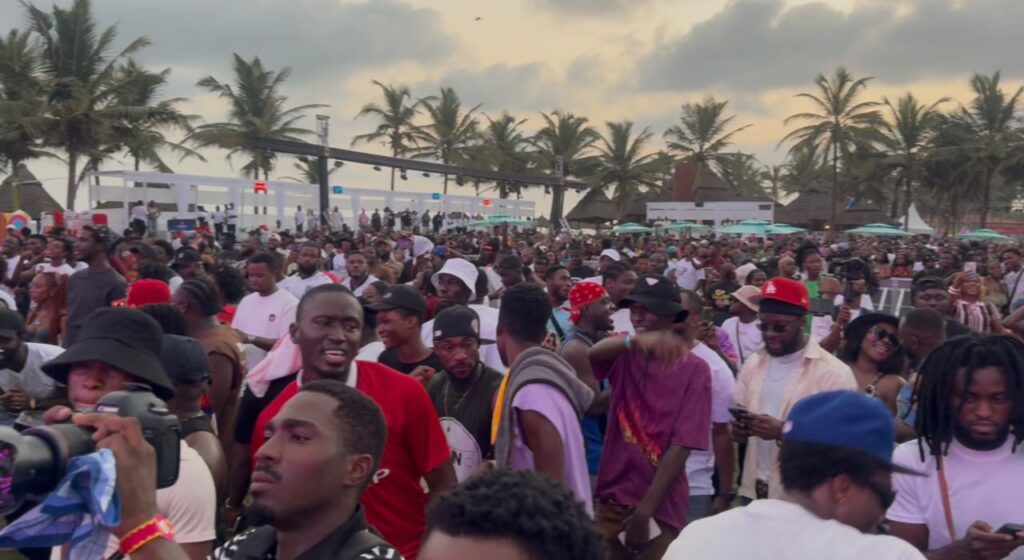
Every turn of the head was met with second-hand clothing, customised denim, thrift fashion and creative efforts to turn beach waste into art.
Could sustainable living become part of everyday life? Because clearly, youth culture may be one of its most powerful entry points, judging from was ensued at this rave.
It was moments before Black Sherif mounted the stage for one of the earliest daytime performances in his career. Ivy had arrived at the festival ready to party.
She is a nuclear energy enthusiast, but today, wearing second-hand denim shorts beneath a brown dress, Ivy was on a higher reactor frequency.

But behind the outfit was a conscious decision.
“I'm very particular about the things I wear, and I've also become really aware of the fact that fast fashion is destroying our environment,” she said.
“If I can find something that I can wear after someone has worn it and it's still in good shape and it still makes fashion sense, I'm definitely going to do it because it helps keep the environment safe.”
For Ivy, who describes herself as a nuclear energy enthusiast and speaks about sustainability through energy, choosing second-hand clothing was another way of contributing.

“I think this is my own contribution to society as well,” she said.
The fashion industry is responsible for 8–10% of global greenhouse gas emissions, with significant environmental impacts from raw material sourcing, dyeing, manufacturing, and disposal.
According to UNEP data, this exceeds the emissions from international flights and maritime shipping combined, and if current trends continue, the industry's GHG emissions are projected to increase by over 50% by 2030.
On the back of this data, Ivy's reasoning also went beyond the present generation.
“I think we often think that we live in this world, and once we go, maybe the world leaves with us. But it's going to be here for a long time. Our kids are going to be here. The people we love and care about are going to be here.
“So it would just be good to leave them an environment worth living in.”
Her comments proved that environmental responsibility is not only about governments, industries and international agreements, but also about choices people make in their everyday lives.
For dancer Melisa, thrift fashion was less about making a climate statement and more about creative freedom.
She wore second-hand clothing alongside customised denim trousers that she had cut and redesigned herself.

“I just wanted to be creative today,” she said.
She described thrift markets as spaces filled with possibilities.
“My creative self just wants to put things together and see how I can come out with them,” she said, pointing to her redesigned trousers.
“This was just plain, and I had to cut it and then make these designs out of it. It makes me feel proud. I just love being creative. I'm an artist.”
That creativity could hold an important lesson for the sustainability movement.
Young people may not always embrace sustainable fashion because of environmental terminology. But they may embrace it because it gives them something equally valuable: individuality.
Upcycling allows a person to take an existing item and make it their own. Thrifting offers access to different styles. Reusing clothing can become an expression of creativity rather than a sacrifice.
For climate advocates, that distinction could matter.
Another festival-goer, Miss Tobil, pointed to affordability and uniqueness as some of the reasons thrift fashion appealed to young people.
She said second-hand clothing made it possible to find items that were less common while also spending less.

“It makes you look nice and different,” she said.
But she also connected thrift culture to the pressures created by social media and the expectation that young people must constantly buy expensive and fashionable items.
“The world right now is being influenced by the social media thing,” she said.
“Seeing young ones like me wearing thrift, it's like they are not being bothered, they are not being pressured into buying stuff that's more expensive than what you can afford.”
She added that reusing clothing also prevents items from immediately becoming waste.
“If this is going to be thrown away, it's going to end up being waste,” she said.
“But if it's being brought for people to also purchase, then it reduces the waste because I am reusing it. So it's not in the dustbin.”
Her observation points to another possible driver of sustainable lifestyles among young people: sustainability does not always have to compete with affordability.
In a country where many young people face economic pressures, circular practices such as thrifting, repairing and upcycling can potentially offer environmental benefits while remaining financially accessible.

The connection between youth culture and sustainability extended beyond what ravers wore.
Mckingtorch Africa partnered with the Tidal Rave Festival to lead sustainability efforts and manage beach waste through creative upcycling.
One of its interventions, Turtle Rave, turned environmental education into an interactive experience.
Protecting the turtles that return to Accra's beaches to lay eggs is therefore connected to protecting the environment that allows thousands of young people to gather, celebrate and return year after year.
Festival-goers participated in a live upcycling activity, including the creation of turtle artworks from bottle tops, while learning about the need to protect biodiversity along Ghana's coastline.
Yayra Agbofah, Founder and Creative Director of THE REVIVAL, a community-led organisation working to transform fashion waste in Accra’s Kantamanto Market, believes Ghana’s growing thrift culture is rooted in a much longer tradition.
He points to Kantamanto, one of the world’s largest second-hand clothing markets, as evidence that reuse has long been embedded in Ghanaian life.
But he says young people are increasingly giving that tradition a new meaning by using thrift fashion as a form of identity, self-expression, creativity and survival.

“Here it is actually embedded in us that we see value in existing material, we see a value in existing clothing and styles,” he said, arguing that thrifting gives young people the freedom to create their own style while making fashion more accessible.
For Agbofah, however, the cultural appeal of thrift must also be understood against the growing environmental cost of fast and ultra-fast fashion.
He says the rise of disposable clothing is contributing to overflowing landfills, polluted beaches and communities bearing the consequences of fashion waste. His message to young consumers is therefore to look beyond the price and trend attached to an item and consider its wider impact.
“Whatever actions you take when it comes to consumerism, it's affecting somebody,” he said. “It's a ripple effect affecting somebody somewhere, and also affecting the environment.”
For him, the question young people should ask before following the next trend is simple: “Do I really need it, or I'm just following trends?”
Essentially, the beach is not simply the location of the festival. It is the ecosystem that makes the experience possible.
There is a broader lesson in the scenes from Tidal Rave.
Climate action is often communicated through conferences, reports, policies and technical language. Those spaces are necessary, particularly when the world is dealing with an environmental crisis of enormous scale.
But behaviour is shaped in other places too.
It is shaped in markets, on social media, through fashion, music, art and festivals.
The young people at La Beach may not have arrived at Tidal Rave intending to participate in a climate campaign. Yet their choices reflected several of the principles increasingly associated with sustainable living: reuse, creativity, reduced waste, conscious consumption and environmental stewardship.
This presents an opportunity for Ghana's creative and climate sectors.
Musicians, fashion designers, dancers, event organisers and cultural entrepreneurs have access to audiences that traditional climate communication often struggles to reach. They can potentially turn sustainability from something young people are told to care about into something they can wear, experience, create and share.
Ghana's climate and cultural institutions can build on these existing behaviours.
Can more festivals incorporate creative waste management and environmental experiences? Can fashion events make upcycling aspirational? Can artists use their platforms to promote circular lifestyles without making sustainability feel like a lecture?
The scenes suggest the foundations may already exist.
For some young Ghanaians, climate action is beginning to show up not only in what they say about the environment, but in how they dress, what they create, and the culture they choose to build.
And perhaps one of the most accessible forms of climate action begins with helping young people make those lifestyles more sustainable, not by abandoning their lifestyles.
Latest Stories
-
Conflicts among care providers linked to maternal, neonatal deaths – Expert
1 hour -
GIS marks 10th TIME conference, champions improved teaching practices
2 hours -
BRICS Or Balance? What Ghana’s bid really means
2 hours -
GPRTU wants full TRAFFITECH-GH implementation to start in 2027
2 hours -
Mahama announces plans to import electric wheelchairs for PWDs
2 hours -
KGL U17 Colts 2026: Western beat Prempeh Elite Academy to set up final final with Greater Accra Region
3 hours -
Late Solanke strike salvages 10-man Spurs draw at Man United
3 hours -
Gender Ministry to monitor welfare of Nana Akua Addo’s children amid domestic violence case
3 hours -
Benedict Okyere Yeboah: Ghana’s football problem goes beyond sacking a coach
3 hours -
GPL 2026/27: Darkwah Wiafe’s winner sees All Blacks beat Kotoko
3 hours -
ITF World Tour : Patel Wins Boys’ Singles Final at J100 Accra
3 hours -
Ghana must pursue BRICS partnership if it brings economic benefits – Kpebu
3 hours -
Success and Wright Claims J100 Accra Girls’ Doubles Championship
3 hours -
ITF J100: America’s Wright wins J100 Accra Girls’ Singles Title
4 hours -
Expedition hopes to find aviator Amelia Earhart’s plane on remote island
4 hours