


Audio By Carbonatix
A study conducted by Rivia, a network of tech-driven primary care clinics, from data collected in 2024, has indicated that Ghana is experiencing a rise in "silent" killer diseases.
According to the report, these illnesses, which develop insidiously, are taking a significant toll on individuals and the healthcare system.
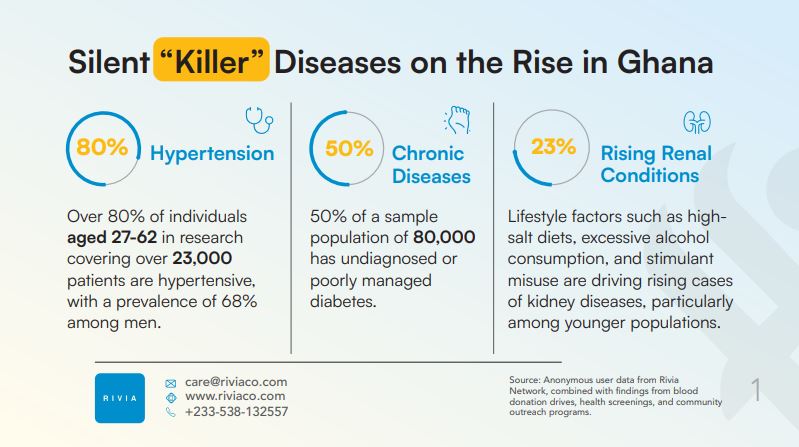
The findings from Rivia provide an alarming glimpse into the state of health in Ghana. The study revealed that over 80 per cent of individuals aged 27-62 in a sample of 23,000 patients are hypertensive, with men showing a 68 per cent prevalence.
It also found that 50 per cent of a sample population of 80,000 have undiagnosed or poorly managed diabetes.
Additionally, lifestyle factors such as high-salt diets, excessive alcohol consumption, and stimulant misuse have contributed to rising cases of kidney disease, particularly among younger populations, now affecting 23 per cent of them.
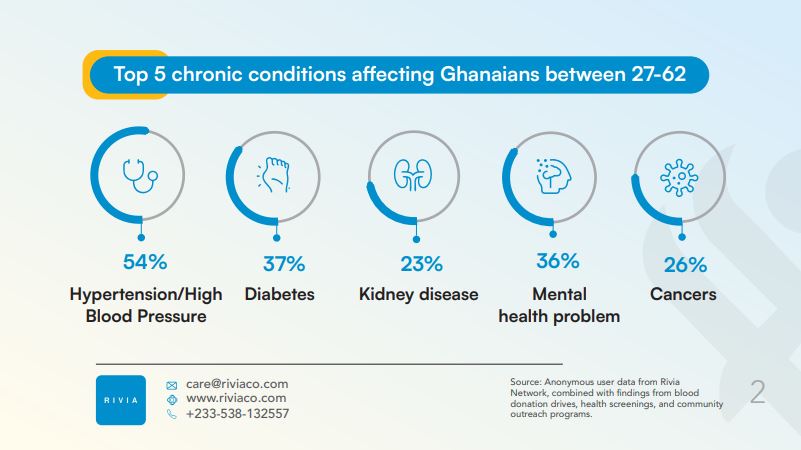
Among Ghanaians aged 27-62, the research indicated that the top five chronic conditions include hypertension, diabetes, kidney disease, mental health issues, and cancers.
To address this public health challenge, it stated that it requires a multi-faceted approach, encompassing government policies, workplace wellness initiatives, and preventive healthcare infrastructure.
The report suggested that government policies could play a significant role by offering tax incentives to encourage corporate health programmes and mandating subsidised annual health screenings promoted by companies, unions, and associations.
It also emphasised the need for stricter food labelling laws to reduce salt and sugar intake in processed foods, helping Ghanaians make healthier choices.
Furthermore, workplaces can foster healthier lifestyles by implementing regular health screenings for chronic diseases and offering programmes focused on stress management, mental health support, and physical fitness.
Employee health benefits, including partnerships with providers like RiviaCare, were highlighted as key to improving access to preventive care.
The report also called for mobile health units and the expansion of Community-based Health Planning and Services (CHPS) compounds to serve under-served areas.
Public campaigns to raise awareness about the importance of regular checkups and disease prevention were seen as crucial to empowering individuals to take proactive steps in managing their health.
Additionally, training healthcare workers in chronic disease management will ensure better care and outcomes for patients.
Latest Stories
-
Global InfoAnalytics poll puts John Boadu, Justin Kodua and Titus Glover ahead in NPP executive race
13 minutes -
Ghana to establish skills development university with $50m from German support package
19 minutes -
Baffour Awuah under EOCO investigation over alleged financial loss and money laundering – Deputy AG
25 minutes -
How healthy is Ghana’s health sector?
30 minutes -
HACSA Tech4Girls graduates 80 young women with digital and technology skills
31 minutes -
Arrest of Manhyia South MP should involve Parliament, not police station – Kpebu
1 hour -
Two Nigerians sentenced to 189 months in US prison over $2.4m cyber fraud
1 hour -
Cristiano Ronaldo leaves Portugal’s training camp after rift with Head Coach
1 hour -
Ghana Energy Awards opens nominations for landmark 10th anniversary edition
1 hour -
Aayalolo contra-flow: Are we treating the symptom instead of the disease?
2 hours -
GTEC orders Colleges of Education to begin 2026/2027 admissions despite fees approval delay
2 hours -
Legal reforms must solve real problems, improve justice – Bagbin
2 hours -
Ofori-Sarpong named Alumni President of the Year, honoured for PRESEC dormitory project
2 hours -
Germany commits $132m to Ghana for skills development and training university – Pelpuo
2 hours -
‘Influence should go beyond visibility’ – Taadi Banyinba GH launches The TB Impact
2 hours