

Audio By Carbonatix
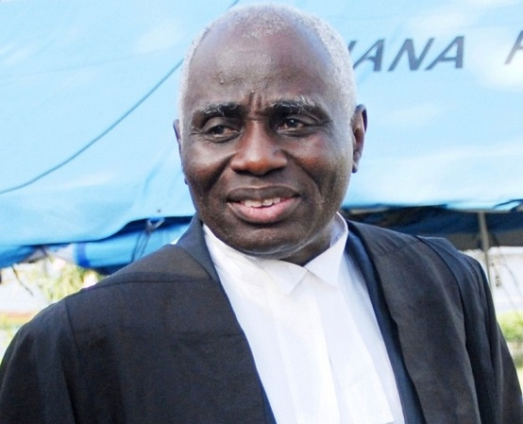
Legal luminary Tsatsu Tsikata says he deliberately avoids drawing attention to the fact that many judges he appears before were once his students.
He insists that courtroom roles must take precedence over past academic ties.
Speaking recently on PM Express with Evans Mensah, the former lecturer reflected on the unique experience of standing before benches that include judges he once taught and assessed.
“When I’ve appeared before the Supreme Court, even if all of them are my students, I have recognised the importance of not always reminding them that, because, in fact, some of them don’t want to be reminded,” he said.
He stressed that the courtroom demands a strict separation of roles, regardless of personal history.
“But really, on a more serious note, I recognise in the moment that I’m before them that they have their responsibility as judges and I have my responsibility as an advocate before them and I must show respect for their position, regardless of what they were in the past. So frankly, I don’t dwell on the past.”
While some judges occasionally acknowledge his influence, Tsikata made clear he does not encourage it.
“Sometimes they themselves sort of like to acknowledge that, ‘Mr. Tsikata, you taught us and so on.’ But I really don’t like to play that tune too loudly when I’m before them.”
Despite this restraint, the veteran lawyer admitted to moments of pride when observing the work of his former students on the bench, even in cases where rulings go against him.
“I have felt very proud, and there have also been instances where you feel otherwise… I’ve had occasions when, even during the election petition, there were several matters on which they gave rulings and so on, and that is 2013, and some of the rulings didn’t go in our favour.”
Yet he said that respect for judicial reasoning can outweigh personal disappointment.
“But there were occasions when, as you listen to the ruling, even though it didn’t go in your favour, you respected, okay, the way, the reasoning that had gone into it, and even the conclusions that had been reached.”
Tsikata noted that such moments reaffirm confidence in the judiciary, even beyond his direct influence as a teacher.
“And so yes, I felt very proud of many of my students again. I must confess, when I’m in court these days, sometimes I listen to a ruling, and I’m really quite excited.”
He recalled a recent experience outside Accra that left a lasting impression, despite having no connection to the case or the judge.
“Recently, I was in a court outside Accra, I won’t mention which one, and I heard a judge. I didn’t know who she was, but I had a judge read a ruling. I had nothing to do with that case, but I just heard her read a ruling, and the meticulous way in which she proceeded.”
For Tsikata, it was not about whether the decision was right or wrong, but the discipline of the legal reasoning.
“I’m sure that whoever she decided against in that case probably didn’t feel that she had decided rightly, but for me, not knowing, there wasn’t a question of whether she had done the right thing or the wrong thing, but just the way that she articulated her reasons and came to a conclusion was just amazing.”
Latest Stories
-
KGL U17 Colts 2026: Western beat Prempeh Elite Academy to set up final final with Greater Accra Region
3 minutes -
Late Solanke strike salvages 10-man Spurs draw at Man United
13 minutes -
Gender Ministry to monitor welfare of Nana Akua Addo’s children amid domestic violence case
19 minutes -
Benedict Okyere Yeboah: Ghana’s football problem goes beyond sacking a coach
29 minutes -
GPL 2026/27: Darkwah Wiafe’s winner sees All Blacks beat Kotoko
35 minutes -
ITF World Tour : Patel Wins Boys’ Singles Final at J100 Accra
47 minutes -
Ghana must pursue BRICS partnership if it brings economic benefits – Kpebu
50 minutes -
Success and Wright Claims J100 Accra Girls’ Doubles Championship
51 minutes -
ITF J100: America’s Wright wins J100 Accra Girls’ Singles Title
57 minutes -
Expedition hopes to find aviator Amelia Earhart’s plane on remote island
58 minutes -
US seeks changes to rejected $109m health compact with Ghana – Mahama
1 hour -
Nine dead in mass shooting at Pennsylvania home
2 hours -
‘Time for Ukraine to get new president,’ says Trump after Zelensky condemns diesel deal
2 hours -
Hincapie injury adds to Arsenal issues after Guimaraes rescue act
2 hours -
Henderson scores twice as Chelsea thumb Bournemouth
2 hours