

Audio By Carbonatix
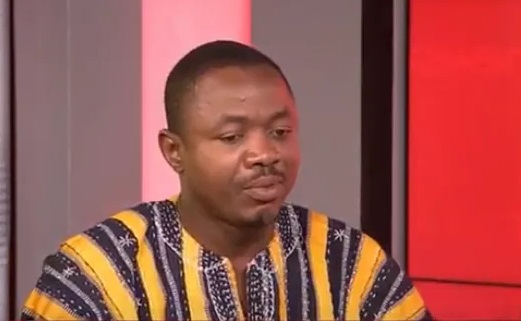
General Secretary of the Ghana Medical Association (GMA), Dr. Titus Beyuo, says both the government and the International Monetary Fund (IMF) should look for creative ways to solve Ghana’s problem rather than disadvantaging poor public workers as has been done in the past.
According to him, the cutting down of public sector employees, the freezing of new employment and the inappropriate compensation of workers that have characterized previous IMF programmes will be vehemently resisted this time around at a very high cost to government.
Speaking on JoyNews’ PM Express, Dr. Beyuo noted that the government spends more money servicing the interests on loans than on remunerating public sector workers, thus if anything is to be checked, that should be it.
“If you look at the data now government is spending more on interest payments than it is spending on wages and so if government and the IMF would only look at cutting down wage bill instead of looking at how to reduce the interest we’re paying, which will come from the fundamental question why are we borrowing so much?
“Why can’t we increase our own productivity so that we increase the GDP in this country and minimize the borrowing? And look at just reducing wage bill and use these three things I’ve talked about, which is freezing employment – not employing new people which are all part of agreements that government already has with labour;
“Which is not compensating people appropriately – we agreed to very insignificant increases in salaries on the condition that government will continue to employ people. And so if you use that to reduce wage bill, and then if you do not compensate people well then that is a very easy and cheap solution,” he said.
He argued that rather than reducing the wage bill using the three IMF tropes, the government could keep the employment machinery working and ensure that the right people, with the right qualification are being employed in the public sector to help boost productivity.
According to him, with adequate monitoring and supervision, the country could boost productivity and hence boost its Gross Domestic Product (GDP) in the process.
He also argued that even if the government and the IMF insist on tackling the wage bill, they should rather seek to address the large disparities in salaries earned across the spectrum.
“One CEO in the public sector's salary can pay COLA for an entire school of teachers, an entire hospital of doctors. And the 2015 programme failed to address that inequality, that disparity in salaries. Anytime we talk about the wage bill, we punish the low earners on the wage bill and favour the high earners in an attempt to reduce wage bill. This is what labour is determined to resist this time.
“And I will admonish the IMF that if they want to look at this and find solution they should focus on the inequalities in salaries or the disparities, the fact that some people are taking home so much than the ordinary worker, the little that that person is taking is being whittled away and those largesse are not touched,” he said.
Latest Stories
-
COCOBOD’S GH¢16.3bn SPV: Real progress toward a sustainable cocoa sector
19 minutes -
Ghana lose Morocco friendly as Atlas Lions turn to Mali
2 hours -
2026/2027 GPL: Kelvin Nkrumah strike sends Medeama top of league table
2 hours -
Emmanuel City crowned champions of maiden Global Game Scouting Tournament
3 hours -
Thomas Partey loses father Jacob Teye Partey
3 hours -
Martin Kpebu explains when EOCO can arrest Manhyia South MP after securing court warrant
3 hours -
EOCO’s reasons for seeking Manhyia South MP arrest warrant not justified – Kpebu
3 hours -
MTN Ghana warns SMEs against sharing PINs amid digital fraud risks
3 hours -
Yendi nursing students warn restricted access to skills lab could affect their training
3 hours -
Minority awaits formal notice of arrest warrant for Manhyia South MP – Annoh-Dompreh
3 hours -
LTIF announces 2026 Pan-African edition in Accra from October 6-7
3 hours -
Mfantsipim needs broader funding partnerships to bridge infrastructure gap – Prof Baiden
3 hours -
MP status must not shield anyone from law enforcement – Kwakye Ofosu
3 hours -
EOCO had tactical team ready to arrest Baffour Awuah – Felix Kwakye Ofosu
4 hours -
Afoko can unite NPP’s factions, says Charles Owusu Juanah
4 hours