

Audio By Carbonatix
Ghana’s Domestic Debt Exchange Program (DDEP) threatened pensioners’ bonds. Alarmed by this threat, the Pensioner Bondholders picketed at the Ministry of Finance to demand an exemption.
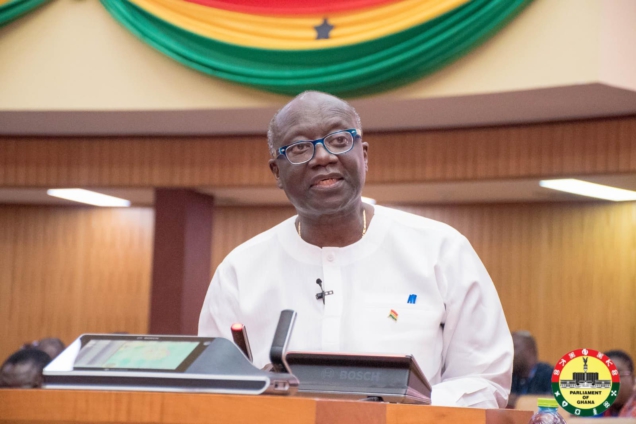
Finally, after six days of protest, the Finance Minister, Mr. Ken Ofori-Atta, exempted pensioners from the DDEP in his address to Ghana’s Parliament on February 16, 2023. For a government that is notoriously reluctant to yield to citizen demands, this response offers essential lessons for citizen action groups in Ghana. This article distills and elaborates on five such lessons.
Lesson one: Make a single, specific demand. The Pensioner Bondholders had one objective: government exemption from the DDEP. They wanted the government to declare them exempt and formally communicate the decision to the Association in writing. The group distinguished their demand from the so-called self-exempt. Indeed, there were several attempts to impose the self-exempt status on the group. That was debunked.
In his address to Parliament, Mr. Ofori-Atta responded to the group’s demand in unambiguous terms “…all pensioners who did not participate in the exchange are exempted…." This is precisely what the pensioners demanded. Citizen action groups can make one specific demand at a time.
This approach is not only pragmatic but also consistent with public policy research. A government’s policymaking architecture has serial capacity, meaning issues are addressed one after the other. Groups that make a specific demand to a government may likely induce a response.
Lesson two: Be consistent in communication. The Pensioner Bondholders maintained consistent messaging by keeping one official spokesperson, Dr. Adu Anane Antwi. He engaged the media, answered critics, and articulated the group’s demand. He demonstrated firm mastery over the issue and leveraged media attention to educate the public. By keeping one spokesperson, the group avoided conflicting media narratives that could have triggered mixed signals to the government or jeopardized their efforts. The consistent messaging also demonstrates the group’s internal unity, reinforcing the aphorism: united we stand. To increase their chances of success, citizen action groups in Ghana should maintain consistent messaging, stay united, and minimize internal power struggles. Moreover, the spokespersons for such groups should have a firm grip on the causes they fight.
Lesson three: Choose non-violent action. Rather than aggressive protests, the pensioners chose a non-violent path: they displayed placards and sang patriotic songs in the sweltering sun. The placards trumpeted messages like “our livelihoods are dependent on our bond investment,” “… spare us this ordeal, “empathize with pensioners,” and “don’t push pensioners into early graves.”
People's consciences were awakened as the media continued to blast the Internet with the group's daily protests. The scenes and the messages erupted mixed emotions of empathy and positive anger. Why would a country treat its senior citizens that way? The pensioners won hearts and minds locally and internationally.
At this point, the government probably sensed incurring the nation’s wrath and acted. History is replete with the power of non-violent action: Martin Luther King Jr. used non-violent action to fight racial injustice in America. Mahatma Gandhi used non-violent action to overthrow India’s imperialist powers. Citizen action groups in Ghana can embrace non-violent action to fight their cause. It is a more powerful tool.
Lesson four: Use calm and reason in discourse. The threat of losing one’s investment is a recipe for a highly charged emotional discourse. But the pensioners maintained their composure. The group’s spokesperson, Dr. Antwi, offered reasoned and intellectually robust explanations for their demand. His calm was disarming, and his choice of vocabulary was fitting.
Thus, both the group and its spokesperson could not be ignored. The former Chief Justice, Sophia Akuffo, who waded into the matter, brought the same force. She articulated her convictions for joining the group’s cause with calm power and unassailable logic. And when she responded to her critics, she did so with unmatched wisdom. In the end, calm and reason prevailed over sentiments and noises. That is instructive for citizen action groups in Ghana.
Lesson five: Expand the scope of conflict. In public policy debates, groups broaden the scope of conflict by mobilizing the crowd's support. Why? Numbers matter for public policy politics, and the public audience is not a neutral party. The Pensioner Bondholders dragged different publics into their cause.
The local and international media vigorously trumpeted the picketing scenes. The main opposition party, the National Democratic Congress, exploited the issue to launch an incessant diatribe against the government. Eventually, what started as a demand from a small group quickly assumed national and international dimensions.
The pressure on the government increased as the stakeholders expanded. The government had to act. Citizen action groups may keep a core base but can expand the stakeholders by drafting the public audience into their cause. This can induce government responsiveness.
Alex Osei-Kojo is an Assistant Professor at the University of Tennessee Knoxville. He can be reached at the following email address: aoseikoj@utk.edu
Latest Stories
-
Ghana’s recovery supported by gold strength despite global oil price pressures – Standard Bank Research
2 minutes -
Kwaku Azar writes: A-G vs OSP
35 minutes -
Mfantsipim–Adisadel rivalry built excellence, not division – Sam Jonah
60 minutes -
Vice President launches Mfantsipim’s 150 years of shaping Ghana’s greatest mind
1 hour -
I assure Otumfuo, Mahama will join him to commission KNUST Teaching Hospital by end of this year – Haruna Iddrisu
2 hours -
Barcelona dominate derby to extend La Liga lead
2 hours -
Gov’t to roll out free special education for persons with disabilities from July 1 – Education Minister
2 hours -
Importers and Exporters Association declares full support for Publican AI port system
3 hours -
“We used it to test our officiating officials’ readiness” – Bawah Fuseini after CAA Athletics event
3 hours -
Volleyball emerges as Ghana’s fastest rising sport
3 hours -
National Sports Fund needs strong leadership from the top – Administrator David Wuaku
3 hours -
JoySports Exclusive: Steve McLaren in talks with GFA after expressing interest in Black Stars job
3 hours -
Fire guts auto parts warehouse at Bubuashie, one fire officer injured
3 hours -
I owe my victory to coach Ofori Asare – Allotey after winning WBA Africa Gold Super Flyweight belt
3 hours -
Church of Pentecost supports over 2,000 BECE candidates in Obuasi with career guidance seminar
5 hours