

Audio By Carbonatix
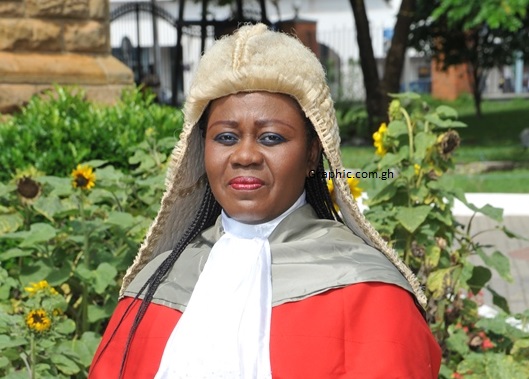
RE: Suspension of the Chief Justice of the Republic of Ghana — A Reaction to the Ghana Bar Association’s Communique by a Concerned Member
Dear GBA Executives,
For a long time, the Ghana Bar Association (GBA) has come under criticism for its silence on national issues. This is understandable, given that the GBA occupies a pivotal place in our march toward exemplary democracy. It has historically led the way when the nation was in dire need of thoughtful leadership and advocacy. With new leadership at the helm, members naturally look to the current executives to elevate the GBA to its rightful place as the nation’s voice of conscience.
That mandate, however, must never be mistaken as a call to reduce our noble Association to a vehicle for partisan advocacy. I write this in extreme frustration. The Association to which I belong, and of which I have always been proud, has pursued a course that casts a shadow of indecision and poor discernment over all its members.
With great respect to my seniors at the GBA—and perhaps also to those who sought to embarrass the Association at the recently held Mid-Year Conference—I submit that we have done ourselves great harm by using the Association as a conduit for partisan or personal sentiment.
I will now address the resolutions passed at the Mid-Year Conference and explain why, in my view, the GBA has erred in adopting them.
A. Revocation of the Suspension
“The Ghana Bar Association calls for the immediate revocation of the suspension of the Chief Justice as it considers the suspension to be unconstitutional, considering the fact that the President, who is not a judge or judicial officer, exercised his discretion to suspend the Chief Justice under Article 146(10) of the 1992 Constitution in the absence of a published Constitutional Instrument, Statutory Instrument or Regulation(s) governing the exercise of his said discretion as required by Article 296 of the 1992 Constitution.”
The GBA has no authority to call for such a revocation. It is nearly absurd to use the voice of the Association to urge action from other arms of government, knowing full well that such calls are unlikely to be heeded. This not only portrays the GBA as a powerless body, but it also reflects a troubling lack of prudence.
Let me be clear: the GBA should be vocal on national matters. Article 2 of the GBA Constitution expressly enshrines such advocacy. However, this mandate does not extend to making pronouncements that are devoid of legal merit or moral force.
We owe a duty to the public, just as we do to the profession, our clients, and the courts. While individuals may disagree with the necessity of the Chief Justice’s suspension, the Constitution does not leave that decision to us. The discretion lies with the President, who, acting with the advice of the Council of State, determines whether a prima facie case exists.
I take an admittedly strong position on Article 146(10): once a prima facie case is established, the suspension of the Chief Justice should be mandatory. This interpretation—consistent with the Modern Purposive Approach—exists to prevent undue influence on a committee that includes two of her judicial subordinates. The suspension in such circumstances is not punitive; it is precautionary.
Even if one does not share my reading, a literal interpretation still leaves no doubt that the discretion lies with the President. The GBA attempts to quote the law accurately but proceeds to misapply it. It argues that because no Constitutional Instrument (CI) exists to guide the President’s discretion under Article 296, the suspension is unconstitutional. That argument is deeply flawed.
One of our most respected jurists, Prof. Samuel Date-Bah, offers definitive guidance in Ransford France v. Electoral Commission & Attorney-General. He cautions against invalidating discretionary acts solely because they are not accompanied by a CI. The safeguard required by Article 296 is that discretion must not be exercised arbitrarily. If the President acts reasonably, fairly, and without malice, consistent with due process, then the absence of a CI is not fatal to the legality of his action.
Prof. Date-Bah aptly stated:
“The standard embodied in Article 296(c) may well offer a desirable benchmark for good practice… but non-compliance with it should not be treated as resulting in invalidity.”
These are the words of a revered jurist, not mine.
B. Enactment of Regulations
Does the exercise of power under Article 146 require a CI? Perhaps. But Article 296(c) must always be read in context. If the process is fair, candid, and devoid of malice or arbitrariness, then a CI is not a prerequisite. Could one be helpful? Yes. Is it essential? Not necessarily. The relevant constitutional provisions are sufficiently detailed to ensure procedural fairness without additional regulations.
C. Release of the Prima Facie Determination
This demand is particularly troubling. As legal practitioners, we must not approbate and reprobate. Article 146(8) clearly states that all proceedings shall be held in camera. While a petition initiates the process, the quasi-judicial proceedings commence only after a prima facie determination is made. That process is not meant for public consumption.
Citing past practice, such as in the removal of Charlotte Osei, is disingenuous. That disclosure may have been unauthorized. Indiscretion does not establish precedent.
D. Other Comments
What baffles me is the GBA’s posture, which suggests that the entire Judiciary is under siege. A lawful process is unfolding—one overseen by the Chief Justice’s peers on the Supreme Court, one of whom chairs the committee. These judges, aware of the burden and sensitivity of their task, have nonetheless accepted their constitutional duty.
To suggest that the Judiciary is under attack, while simultaneously casting doubt on a process overseen by judges, is contradictory. As guardians of the law, we should not issue communiques that undermine the very constitutional processes we are sworn to uphold.
There is only one Bar. Let us act like it.
Signed,
Jonathan A. Alua
Latest Stories
-
Zimbabwean author denies using AI to write award-winning story
1 minute -
GTEC’s letter directing public universities to reopen by October 16 is unprofessional – GAUA
1 minute -
Suspect in viral video assaulting wife jailed for 3 months
2 minutes -
GAUA insists strike will end only after Fair Wages addresses market premium issue
2 minutes -
Kpemka seeks compensation as he sues BOST over alleged unlawful termination
5 minutes -
GES asks applicants to check status of 2026 promotion applications on October 15
29 minutes -
Kobe Boujee joins Olympics.com team for Dakar 2026 Youth Olympic Games
37 minutes -
Slaty egret’s shifting nesting sites offer clues to changing ecosystems
44 minutes -
First phase of arrears for promoted teachers to be paid on Friday – Haruna Iddrisu announces
47 minutes -
Caveman Watches partners with Mfantsipim School for 150th anniversary
1 hour -
We’ll pursue GH¢15m defamation suit against Sammy Gyamfi to its logical conclusion – Afenyo-Markin’s lawyers
1 hour -
Martin Kpebu urges Afenyo-Markin not to return to court over Sammy Gyamfi lawsuit
1 hour -
GRA submits preliminary report on drug shipment case to Mahama – Commissioner-General
2 hours -
Sammy Gyamfi using ‘procedural roadblocks’ to dodge defamation case? – Afenyo-Markin’s lawyers
2 hours -
The illusion of a good deal: Why some everyday money-saving habits may be costing you more
2 hours