

Audio By Carbonatix
A representative of the World Health Organisation (WHO), Matthew Taylor, has urged journalists to avoid victim-blaming narratives in their reporting on road crashes.
He emphasised that such narratives downplayed the seriousness of road traffic issues, which result in fatalities and injuries, particularly among people in their productive years.
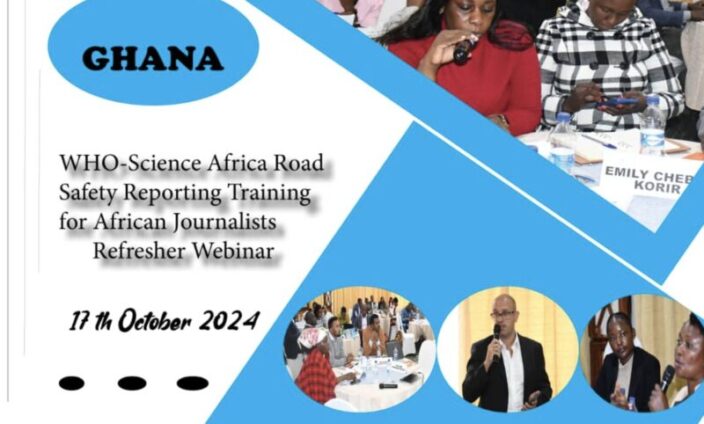
Mr. Taylor made these remarks while addressing Ghanaian journalists during the WHO-Science Africa Road Safety Reporting Training Refresher Webinar on Thursday, October 17, 2024.
He acknowledged that road crashes and collisions were inevitable, noting that fatalities were often seen as a byproduct of development.
However, he cautioned that that mindset led to unwarranted blame placed on individual drivers or pedestrians.
“Do we need to blame victims for crossing a busy road?” Mr Taylor asked, noting that referencing other crashes and making counterfactual statements could contribute to victim-blaming.
He cited instances where victims had been criticised for wearing dark clothing at night, emphasising that specific sentence structures could reinforce the perception of victim-blaming, urging journalists to be mindful of such practices.
To make a significant impact, Mr. Taylor encouraged journalists to include human elements in their stories by interviewing community members, family, friends, and experts.
He said that approach could help educate the audience, raise awareness, and influence decision-making.
Mr. Taylor acknowledged that while road crashes are inevitable, they are also preventable.
He emphasised the importance of framing stories to highlight the causes and effects of crashes, which could help draw policymakers’ attention to the necessity for improved road designs and safer transport systems.
He argued that prioritising that focus would save more lives than simply placing blame on victims.
Mr. Daniel Otunge, Science Africa Project Lead, underscored the need for solution journalism, noting that news reports should focus on addressing the identified problems associated with road crashes.
Latest Stories
-
Ghana explores centre of excellence for hearing, communication and cochlear implant care
10 minutes -
Schizophrenia-related disorders lead mental health cases recorded in Ghana
32 minutes -
Dutch authorities enlist Ghana in hunt for fugitive drug lord Bolle Jos
55 minutes -
Ghana housing finance conference adopts communiqué to improve affordable housing access
5 hours -
Special Initiatives Minister urges Wa Technical Institute to enrol more girls as EU-backed solar training lab opens
6 hours -
In the matter of my first year at the Bar
6 hours -
ActionAid Ghana calls for an end to child marriage, greater investment in girls’ rights
6 hours -
Newsfile to tackle World Cup visa scandal, beach demolitions, education strikes, BRICS bid
6 hours -
UK-Ghana Trade & Investment Summit: Trade Resource Centre to help businesses maximise UK-Ghana trade opportunities
7 hours -
Embassy of Denmark celebrates World Maritime Day
7 hours -
Linking LEAP to productive inclusion could cut extreme poverty by 2030 – UNICEF
8 hours -
Trade Ministry backs use of creative arts to rehabilitate prison inmates
8 hours -
Negotiations with government to continue despite strike suspension – GNAT
8 hours -
‘Ghana cannot afford to waste public resources; every cedi has a job’ – Ato Forson
8 hours -
Ghana expects economic boost as World Assemblies of God Congress brings 10,000 delegates to Accra
8 hours