

Audio By Carbonatix
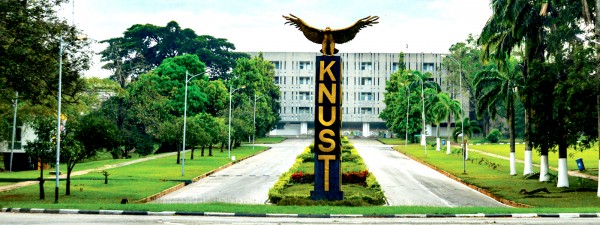
In response to the many comments and reflections that followed my first article, I feel compelled to continue the conversation. The concerns I raised about the disconnect between knowledge and productivity in Ghana’s top universities, especially KNUST, still stand, but let me now shift from lament to proposition.
In my crude view, KNUST should today be home to one of the biggest and most successful art galleries in Ghana. Think of the thousands of ceramics, sculptures, paintings, and textiles that have been produced over the decades by the College of Arts. Many of these are exquisite works, yet they gather dust or get tossed away because there is no institutional vision to turn creativity into commerce.
Imagine a vibrant on-campus gallery that not only showcases these works but sells them. Revenue generation meets exposure. That’s just one simple idea.
Let’s go further. The teaching hospital model used by medical schools across the country has proven that students can spend a good portion of their training in real-world settings. KNUST and UG medical students spend countless hours in clinics and wards before graduation. Even the Ghana Institute of Journalism, though less resourced, requires students to undertake long practical internships in media houses. The same model can and should be replicated across disciplines.
Why can’t the Civil Engineering Department be responsible for building the university’s new lecture halls or hostels? Why can’t students from the Department of Electrical Engineering install campus-wide lighting solutions?
Why are we teaching civil, mechanical, electrical, and structural engineering and then turning around to award all our building and development contracts to outsiders, some of whom are complete illiterates or people with no technical training whatsoever beyond business acumen and political connections?
Universities like KNUST must begin to operate as productive institutions. They must consider setting up fully fledged businesses in construction, fabrication, energy, agriculture, and related areas not just as theoretical extensions of teaching but as serious commercial enterprises. These ventures will serve multiple purposes: generate significant revenue for the school, offer internships and practical experience for students, and demonstrate a new model of institutional self-reliance.
Consider the Technical Universities. Their Catering Departments should be running some of the most reputable and innovative restaurants in their towns. Why aren’t they? These are institutions with kitchens, chefs in training, and students desperate for work experience.
Likewise, the Fashion Departments in our universities can execute uniform production contracts for Ghana’s police, immigration, and armed forces. Uniforms, like food and housing, are perpetual needs. Why outsource what we can produce in-house with better quality and ownership?
Many of China’s multibillion dollar companies today, especially in technology, manufacturing, and energy, originated as research institutions or university labs. These were centres of applied learning that evolved into corporate giants through state backing, commercial vision, and aggressive experimentation. Why can’t we replicate such a model?
I believe our universities can generate hundreds of millions of cedis in enterprise if they make the mental shift from being academic-only institutions to production-oriented ecosystems. They already have the land, the buildings, the manpower, and the talent. All that is missing is the will and a policy framework that allows bold experimentation and rewards initiative.
Some may argue that universities are not supposed to be profit-making enterprises. Fair. But I ask, what is more profitable than shaping a generation of job creators, manufacturers, and producers?
We can no longer afford to graduate thousands of students each year who have never built, designed, sewn, cooked, repaired, sold, or marketed anything real. We must return to a model where doing is equal to, if not more important than, knowing.
Ghana’s future will not be built in lecture halls alone. It will be built in workshops, in kitchens, in studios, in foundries, and in businesses; businesses that our universities must have the courage and creativity to lead.
Latest Stories
-
Calls to suspend Publican AI system premature – Awingobit
12 minutes -
Viktoria Plzen coach hails transformed Prince Adu after standout display against Slavia Prague
15 minutes -
“There was no security on our team bus” – Berekum Chelsea PRO recounts fatal robbery attack
1 hour -
Bodø/Glimt’s Hauge excited about representing Norway at FIFA World Cup
1 hour -
Daily Insight for CEOs: Driving performance through clear accountability
2 hours -
Israel steps up strikes on Lebanon and Hezbollah attacks continue as talks loom
2 hours -
Boost for 24 hour economy: PURC to introduce night power tariffs for businesses
2 hours -
GRIDCo commissions 145MVA transformer at Afienya substation
2 hours -
US judge dismisses $10bn Trump defamation suit against Wall Street Journal
2 hours -
Photos: UEW Public Lecture Series 2026
2 hours -
CSIR Scientist urges community-driven approach to fight illegal mining
2 hours -
GUTA suspends strike as gov’t opens door for further consultations on Publican AI System
2 hours -
Asokore Mampong bans minors, foreigners from operating ‘Adedeta’ tricycles
2 hours -
AUCB equips students to boost self-employment and cut graduate unemployment
2 hours -
Experts call for waste-to-energy shift to cut landfill costs
2 hours