

Audio By Carbonatix
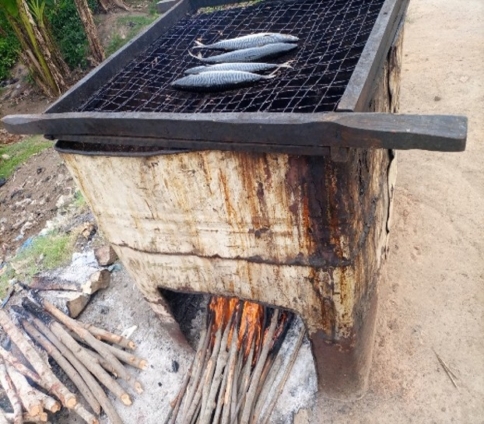
A latest investigation by researchers at the Department of Wood Science and Technology of the Kwame Nkrumah University of Science and Technology has found high levels of cancer-causing agents in older mangrove wood used for smoking fish.
The 2026 study discovered that old mangrove wood contained alarming levels of polycyclic aromatic hydrocarbons (PAHs) – a group of organic matter which could alter genes, cause cancer and be harmful to human health.
The investigation, led by Dr. Kwadwo Boakye Boadu, assessed the toxicity of the PAHs in three age categories of mangrove wood collected from the Salo market in Keta, located in the Volta region.
The age categories of the wood were 8 years (early), 11 years (mid-rotation), and late-rotation (14 years) which were within the typical mangrove fuel wood harvesting cycle of 6 to 15 years.
The work published in Elsevier B.V detected 18 PAHs in the woods whose concentrations increased with increasing wood age.
Four of them, classified by the European Commission as probable cancer-causing agents, including Chrysene, Benzo [a] anthracene, Benzo [b] fluoranthene, and Benzo [a] pyrene, were found in the woods.
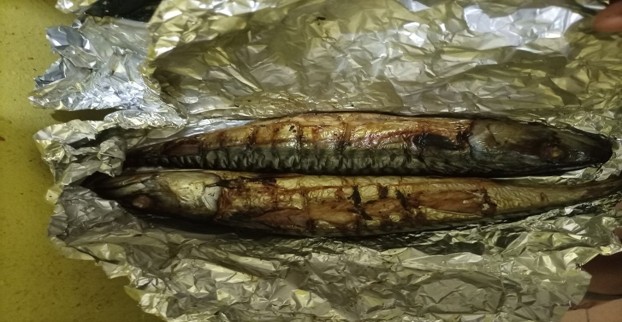
Although the concentration of Benzo [a] pyrene was within the EU limits (1.0 microgram/kilogram), the concentration of the four specific PAHs exceeded the 12.0 microgram/kilogram limit in fish smoked with 14-year-old wood which recorded 12.5 microgram/kilogram.
“If you wait until about the age of 14 years before you harvest, then the amounts of PAHs that are produced from the burning of the wood to smoke the fish become high. So, there will be a lot of deposits of the PAHs in the fish. That makes the fish unhealthy,” Dr. Boakye noted.
The study also assessed the levels of heavy metals (i.e., cadmium and Lead), which were found to be higher than the EU threshold.
The use of mangrove wood in fish smoking has been a concern for many environmental conservationists. However, fishmongers cite slow burning, strong flavour, and easy availability of the wood as reasons for their continuous use.
The researchers are proposing improved fish smoking practices and guidelines in the selection of wood age but ideally recommend that younger woods be selected if the fishmonger continues to rely on mangrove for fish smoking.
Latest Stories
-
Police arrest suspect over jewellery theft during fire outbreak
2 hours -
EOCO returns Hanan’s £6,700, GH¢2,750 and devices after defence challenge
2 hours -
Opplift Youth Entrepreneurs Summit 2026 equips entrepreneurs with skills, mentorship and support
2 hours -
Rival clubs want range of punishments for Man City
3 hours -
Tear gas in Paris and Marseille as school protests grow across France
3 hours -
Kane inspires England to win over Czech Republic in UEFA Nations League
3 hours -
Finland orders halt to work on two Google data centres
3 hours -
Substitute Merino scores twice as Spain win in Croatia
3 hours -
Ronaldo wants Portugal ‘punishment’ but not retiring
3 hours -
White House defends Trump comment to let Iran ‘take out’ LA and San Diego
4 hours -
Asos confirms hackers sent ‘unauthorised’ notification to app users
4 hours -
US televangelist Jim Bakker, disgraced from sex scandal and fraud, dies at 86
4 hours -
Congolese-born golfer to represent Ghana at Turkish Airlines World Cup grand final
4 hours -
Amazon wins global rights to stream Emmys in six-year deal
4 hours -
European Film Festival returns to Ghana after a 5-year break
4 hours