

Audio By Carbonatix
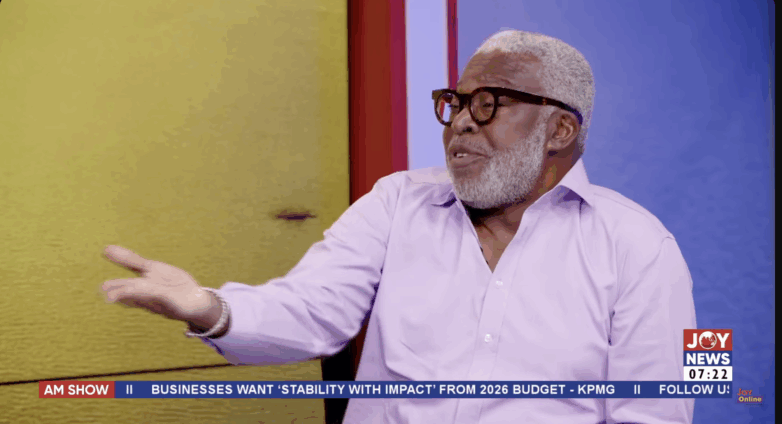
Chief Executive Officer of the Consumer Protection Agency (CPA), Kofi Kapito, has described Ghanaian workers as “magicians” for their ability to survive despite what he says are worsening living conditions, even after the government announced a 9% increase in the national daily minimum wage for 2026.
Speaking in reaction to the new wage adjustment on the AM show, Kofi Kapito said while the increment is a step forward, it is unlikely to make any real difference in the lives of workers who continue to struggle with high rent, food prices, and utility costs.
“You hear the workers complaining because everything wouldn’t have been reduced,” he said.
“The same thing with rent — now landlords are taking more than even one year in advance. People used to be merciful and say, ‘Don’t worry, give me one year.’ Now they want two years.”
Drawing a historical parallel, Mr. Kapito recalled a story from the era of former President Hilla Limann, when a parliamentarian named Kweku Baah presented a vivid demonstration of the cost of living in Ghana.
“He went to Parliament with breakfast, lunch, and dinner and showed that the cost of each was one cedi. At that time, the Ghanaian worker earned three cedis a day. So his point was — if one person’s meals alone cost three cedis, what about his wife, children, and other expenses?”
The consumer advocate said the same logic applies today, arguing that despite periodic salary adjustments, the average Ghanaian worker is still stretched thin due to inflation and rising living costs.
“That’s why I say Ghanaians are magicians,” he added. “Because somehow, people still find a way to survive.”
The National Tripartite Committee has agreed to a 9 per cent upward adjustment in the national daily minimum wage, moving it from GH₵19.97 to GH₵21.77.
The agreement, signed on November 9, 2025, between the government, represented by the Fair Wages and Salaries Commission (FWSC) and the Ministry of Finance (MoF), and Organised Labour, follows successful negotiations aimed at ensuring stability and fairness in the public sector.
The new rate takes effect from January 1 to December 31, 2026.
The increment, according to the committee, is meant to cushion workers against inflation and cost-of-living pressures.
However, labour unions have expressed mixed reactions — some welcoming the increase as progress, while others insist that the adjustment does little to reflect current market realities.
Economists have also warned that unless inflation and rent control policies are effectively managed, the real value of wage increases will continue to erode, leaving many workers struggling to make ends meet.
Latest Stories
-
Ghana’s BRICS move requires clear strategy to manage risks – Godfred Bokpin
1 hour -
Pay teachers realistic income – Duncan Amoah to gov’t
1 hour -
Bechem to become chicken capital of Ghana – Mahama projects
1 hour -
Gov’t targets recruitment of 16,500 health professionals in 2026
2 hours -
Two-week strike will not derail academic calendar – GNAT President
2 hours -
Headmaster detained after BBC investigation into alleged sexual abuse of students
2 hours -
GNAT pushes for clear implementation procedures of teachers’ conditions of service
2 hours -
Recurrent strikes threaten quality of education and academic calendars – Prof Bokpin
3 hours -
‘Cockroach’ group leaders among hundreds detained in Delhi protest
3 hours -
Don’t let speed of information become your judgement – CJ tells new lawyers
3 hours -
World Cup visa scandal: People have leveraged public office to facilitate fraud – Senyo Hosi
3 hours -
Glut! Farmers count losses as prices crash, customers happy
4 hours -
GSA postpones auction of unserviceable vehicles
4 hours -
Man charged with attempted murder after stabbing
4 hours -
World Cup visa scandal: Senyo Hosi says issue goes beyond calls for Sports Minister’s resignation
4 hours