

Audio By Carbonatix
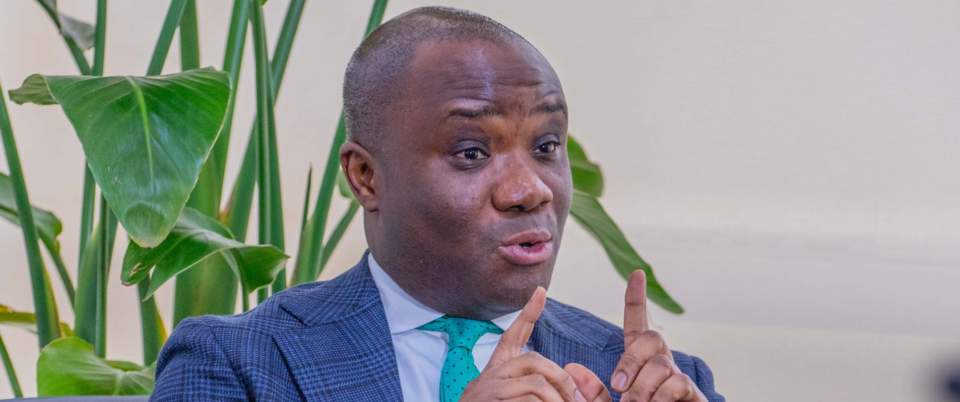
Minister in Charge of Government Communications Felix Kwakye Ofosu has defended President John Dramani Mahama’s request to the NDC Parliamentary leadership to suspend the introduction of a Private Members’ Bill seeking to scrap the Office of the Special Prosecutor (OSP).
His comments come amid concerns over possible executive overreach after President Mahama formally asked the Majority Leader, Mahama Ayariga, and the Majority Chief Whip, Rockson-Nelson Dafeamekpor, to halt their planned bill seeking to abolish the Office of the Special Prosecutor.
Speaking on JoyNews’ The Pulse on Thursday, December 11, he dismissed suggestions that the President was interfering with the work of the legislature, insisting that the President merely made a request, not a directive.
According to him, the President fully respects the principle of separation of powers and has no intention of dictating to Parliament.
“The President has not issued a directive but a request. It is true that the principle of separation of powers ought to be respected and the President respects that. But these are members of his party — the NDC — and on almost all issues, we tend to find a middle ground and consensus.
"So there is nothing wrong with engaging for further consultation to arrive at a common decision on a particular matter. It does not mean the President will get up and direct Parliament on what it should or should not do,”he stated.
When asked how he would personally navigate the issue as both a government spokesperson and a Member of Parliament expected to follow the direction of Parliamentary leadership, Mr. Kwakye Ofosu said:
“My records will show that when the matter first came up, I had my reservations. I felt doubtful about its necessity and about the work that has been done so far. But that does not mean the President—who is the leader of this nation—cannot hold a contrary opinion. And if he holds a contrary opinion and advances sound arguments, there is nothing wrong with considering them.”
He added that collaboration is essential when decisions have broader consequences for the country’s anti-corruption agenda.
“If other actors within the governance space are considering taking an action which the President believes may not augur well for the overall fight against corruption, there is nothing wrong with reaching out, dialoguing, and finding an amicable solution that benefits the people of Ghana,” he noted.
Latest Stories
-
NYA CEO, management doing ‘yeoman’s job’with meagre budget — Parliament’s Youth Committee Chairman
1 second -
Mahama commends Trade Minister for championing Ghana’s industrial growth
9 minutes -
Public cautioned against transactions over Borteyman land as Supreme Court rules in favour of Sino Africa
11 minutes -
Ghana Air Force mourns with Nigeria over 25 citizens killed aircraft accident
13 minutes -
Minority demands permanent scrapping of GSA’s $300 PVoC charge on imported vehicles
18 minutes -
White vs traditional marriage: Aesthetics above culture?
56 minutes -
Tumu Municipal Hospital receives new delivery bed to boost maternity care
1 hour -
Telecel Ghana unveils Project X with Black Sherif partnership
1 hour -
Rev. Kwadwo Bempah defies restriction on preaching on buses; warns it won’t succeed
1 hour -
French Embassy to partner Kobby Kyei Media for bloggers’ training
2 hours -
Nestlé and NBA announce multi-year international marketing partnership
2 hours -
Mahama sends condolences to Nigeria over plane crash that killed 25
2 hours -
Our lifestyles may be killing us but our spatial planning is too
2 hours -
12 arrested as police seize firearms, suspected drugs in Tamale
2 hours -
Chamber of Mines challenges Reuters report on proposed mining law
2 hours