

Audio By Carbonatix
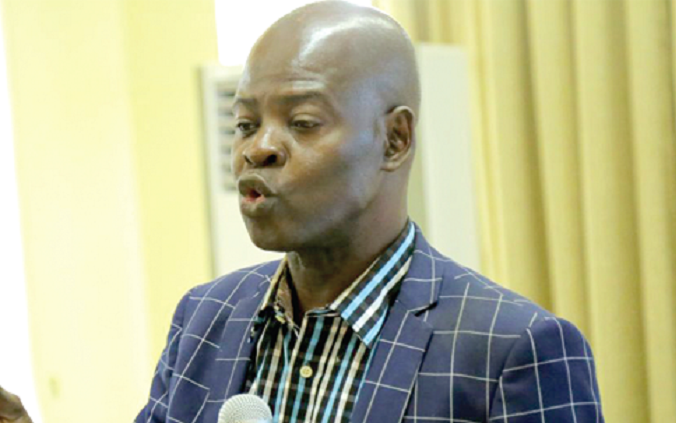
Policy analyst and natural resource governance advocate Dr Steve Manteaw has raised concerns over what he describes as inadequate consultation in setting royalty thresholds under Ghana’s proposed mining royalty framework.
Speaking on Joy News’ PM Express on Monday, he said the debate over mining royalties stems from earlier amendments to Ghana’s mining law, which left the responsibility of determining royalty rates to the sector minister.
“The Act 703 was amended, and we provided that the minister shall prescribe the royalty rate for mining companies in Ghana.”
“But in the absence of that prescription, the status quo will remain. So 5%, which was what the companies were paying at the time, remains until now.”
According to him, the issue gained renewed attention during discussions around Ghana’s lithium deal.
“And I think this whole discussion came about as a result of this lithium deal.”
Dr Manteaw noted that calls for reforms in the mining royalty regime date back more than a decade. He recalled that the Ghana Extractive Industries Transparency Initiative (GHEITI) proposed a windfall tax for the mining sector as far back as 2012.
“I remember, I recall that as far back as 2012, my committee, that is the Ghana Extractive Industry Transparency Initiative, proposed to the government to adopt a windfall tax for the mining sector.”
He explained that such mechanisms are common in resource sectors because commodity prices often fluctuate.
“We’re dealing with the commodity, and commodities go through boom and bust cycles.”
“So resource owners want to position themselves to be able to dream off a bit of the extra profit during the boom periods.”
However, the proposal was resisted by industry players at the time.
“At the time, I recall the gold price was around $1,600, so the industry kicked back and said, Look, this is not the time to be talking about what do you call it? Extra profit tax.”
“They said prices are depressed, and so let’s wait until the right time, and we can talk about this.”
He said that while the mining sector never adopted the windfall tax proposal, the petroleum sector incorporated a similar mechanism under Ghana’s petroleum revenue management framework.
“In the oil sector, around the same time, when we’re developing the petroleum revenue management framework, we provided for an extra profit tax in the form of an additional oil entitlement.”
He noted that such arrangements allow governments to benefit when commodity prices rise sharply.
“So every resource, especially if it’s a commodity that goes through a boom and bust cycle, you need an arrangement that enables you to clean off a bit of the extra profit that companies make during the boom periods.”
Dr Manteaw explained that the current proposal for a sliding scale royalty system serves a similar purpose.
“Because we did not have an extra profit tax arrangement in the mining sector, we decided to go for the alternative, which is a sliding scale.”
According to him, the model allocates risks and benefits between the government and mining companies based on commodity prices.
“Sliding scale allocates risk and benefits equitably.”
“So when the price goes up, we all share the enjoyment and the benefits of the boom, and when the price becomes depressed, the companies pay less and the government also gets less.”
Despite supporting the principle behind the approach, he expressed concern about how the royalty thresholds were determined.
“But what has brought all this discussion and the concerns from some of our development partners… I do not think we had adequate consultations.”
“Especially in establishing the price bands or the thresholds at which the various royalty rates kick in.”
He said some stakeholders believe the structure may disadvantage certain mining firms.
“If you look at the industry, the three biggest companies that produce the bulk of our gold are Newmont, Anglogold and Goldfields.”
“They have stability agreements, so this particular new royalty regime will not be applicable to them.”
Dr Manteaw warned that this could create uneven conditions within the industry.
“That creates some discrimination, because the majority of the companies, the 15 or so that are on their own, a lot of them are struggling.”
He added that several Ghanaian companies could face heavier financial burdens under the new regime.
“Some are Ghanaian, like ADAMUS Resources, Asante Gold and all that.”
“They are going to have to pay 12%.”
He cautioned that the new rates could pose challenges for smaller operators.
“It’s a challenge for them, because even some of the bigger companies that have been around longer are struggling with their operations.”
Latest Stories
-
Brandon Asante and Coventry all but promoted to Premier League despite Sheffield Wednesday draw
11 minutes -
GPL 2025/26: Late Kwartemaa strike downs Hearts in Tema
17 minutes -
Ghana Faces Sierra Leone Moment as Prosecutorial Powers come under strain
27 minutes -
Don’t consume fish or seafood from Tema Shipyard until further notice – FDA warns
32 minutes -
Why volunteering might be Africa’s most underrated career accelerator
38 minutes -
ActionAid Ghana raises concern over gender gaps in Feed Ghana Programme
40 minutes -
Windstorm wreaks havoc in Gushegu, displacing nearly 2,000 residents and damaging schools
43 minutes -
Friends of Bridget Bonnie Marks her 35th birthday with donation to Kasseh Model Health Centre
2 hours -
From Ekumfi Kokodo to the Pulpit Stage: Essi Donkor’s gospel journey takes shape
2 hours -
Landfilling waste management creates no value, it’s an economic waste
2 hours -
Photos: Speaker Bagbin Commissions MPs constituency office under parliamentary decentralisation programme
2 hours -
Black Stars technical advisor Winfried Schäfer sacked as GFA shakes up backroom staff
2 hours -
Wenchi water project almost complete, critical to gov’t agenda – GWL MD
3 hours -
Anti-LGBTQ+ bill not part of government’s legislative agenda – Inusah Fuseini
3 hours -
Anti-LGBTQ Bill: Forget the rumour mongers, I’m a man of action, and will pass the bill – Speaker
3 hours