

Audio By Carbonatix
Every day for the past 10 years, Trymore Wadyachitsve has regretted living in Chingwizi, a community 500km (310 miles) south of Harare, the Zimbabwean capital.
Until February 13, 2014, he lived in the Tugwi Mukosi area 150km (90 miles) away from his home today. But then floods displaced 60,000 people in and around the area, which is home to the largest inland dam in the Southern African country – measuring 90.3 metres (296 ft) tall and creating a 1.75-billion-cubic-metre (385-billion-gallon) reservoir.
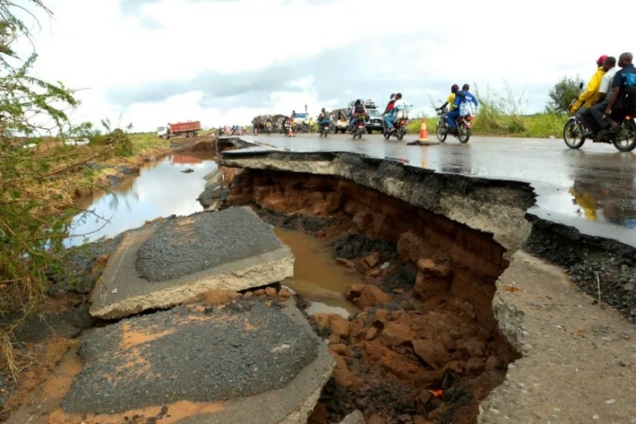
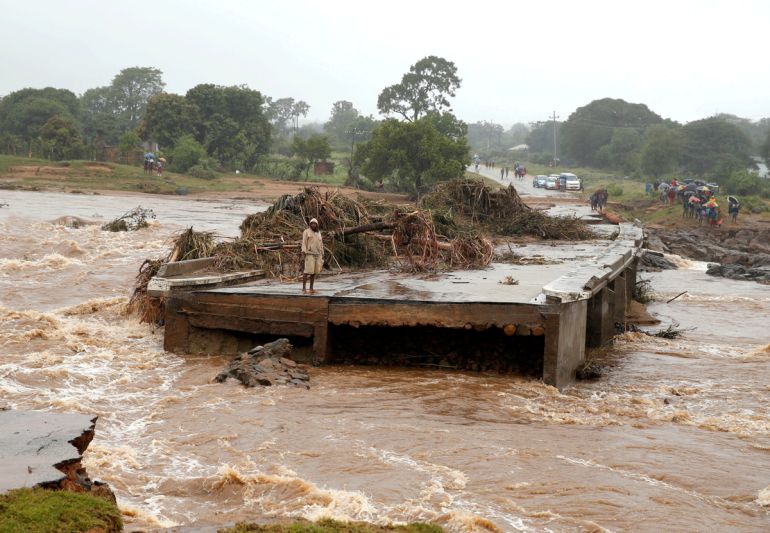
That day, the heaviest rain in 40 years fell, causing water levels at the dam to spike. The dam, still incomplete at the time, was breached, and many homesteads in the surrounding areas were flooded.
The government declared a state of emergency in the affected areas, launching rescue and relief efforts. The military also came with marching orders.
“The soldiers came and told us to leave, and we left,” Wadyachitsve, now 48, told Al Jazeera. “I thought I would be back after the floods.”
Those affected and at risk were relocated to sites like Chingwizi in Mwenezi District – about 2,500 households upstream of the dam and another 4,000 households downstream.
Advertisement
But the new location was no good, Wadyachitsve said. He said his old home was in a good area.
“The land had green pastures for the livestock. The sun was not as hot, and we had rivers close to us,” he said. “Life is very hard in Chingwizi.”
The mud and grass-thatched house he now lives in with his wife and five children is a far cry from his former home of 30 years in Tugwi Mukosi – a brick, asbestos-roofed, two-bedroom house. During windy periods, his current house is violently shaken, is damaged and requires repairs.
‘Life is just hell here’
For years, droughts and changing rainfall patterns have contributed to water shortages in parts of rural and urban Zimbabwe, impacting agriculture, industry and domestic water supplies.
Climate change-induced droughts and events like 2019’s Cyclone Idai worsened things, leaving villagers at risk of starvation and in need of alternative water sources.
This was also the case in Tugwi Mukosi in southeastern Zimbabwe, which has long grappled with low rainfall. Completion of the dam, long touted as the solution to water scarcity, was also meant to provide irrigation and power a 12-megawatt hydroelectric plant on site.
Advertisement
Ultimately, the dam changed the lives of those living around it – but for the worse.
“Life is just hell here,” said Sonia Madhuva, a 40-year-old mother of four who now lives in Chingwizi. Before the flood, she owned more than 7 hectares (17 acres) of arable land. She said the government promised her 4 hectares (10 acres) during the displacement but she was given only 1 hectare (2.5 acres).
“I can’t grow anything to sustain myself on that land. They told us to take what was on offer,” she told Al Jazeera.
Many people in the area said they cannot grow cash crops or earn a living from the land. They have also lost most of their livestock because there is no land for animals to graze any more and drinking water is hard to get for the 20,000 displaced people at Chingwizi.
“The water is bitter, salty, and when you drink it, it’s hard to pass urine. The water is not good,” Wadyachitsve said.
Advertisement
Those who are displaced are still looking forward to the irrigation infrastructure promised by the government, for their new plots, so they can grow crops all year round and earn some much-needed income. They and their neighbours currently rely on pipes passing through the area that comes from a nearby ethanol and sugar cane plant.
“If we had irrigation, our lives would be better,” Madhuva said.
High school students have to walk almost 10km (6 miles) to get to the only school in the community, and it barely has any classrooms and has no toilet.
Additionally, early marriages are on the rise among high school students, Wadyachitsve said.
Land reclamation
But for the displaced, the most painful issue remains the plots of land they have lost.
In Zimbabwe, which seized land from white farmers and redistributed it to Black citizens in 2000 and 2001, land remains an emotional issue.
The country’s founding fathers launched a two-decade guerilla war that ended in 1980 to press for civil liberties and restitution of land to Black people under the auspices of the Lancaster House agreement, a ceasefire that led to independence from Britain in 1980.
But in the early 2000s when the British government did not provide promised funding under the “willing buyer and willing seller” basis, then-President Robert Mugabe ordered the seizure of white-owned farms and resettled landless Blacks in a populist move.
Low productivity on resettled farms and the lack of secure tenure on those lands led many people to question Mugabe’s move in the years that followed.
Even today, some experts blame the current administration for not doing enough to entrench a new system for reclaiming land in post-independence Zimbabwe.
“If you put this government here and then you juxtapose it with the settler regime, you will notice they have the same approach on land dispossession and alienation of the Zimbabwean people from their land,” Farai Maguwu, a leading land rights campaigner in Zimbabwe and director of the Centre for Natural Resource Governance, told Al Jazeera.
Waiting for compensation
For Wadyachitsve, the barrenness of the land in Chingwizi is a constant reminder of broken promises by the government.
In October 2009, Zimbabwe signed the Kampala Convention on the protection of and assistance for displaced people in Uganda.
Under the convention, states are required to incorporate measures to prevent displacement, protect those who are displaced and provide durable solutions for their reintegration or resettlement.
Displaced people in Chingwizi said each of the 3,500 families there got the local equivalent of only $53 as compensation.
The beneficiaries said they felt cheated because the compensation for livestock and personal belongings was supposed to be in US dollars.
From 2009 to 2016, Zimbabwe adopted the use of US dollars as part of a multicurrency system to replace its plummeting currency as hyperinflation – peaking at 79.6 billion percent on a month-on-month basis – throttled the economy.
So for the displaced, getting compensation in Zimbabwe dollars meant receiving a pittance.
“The compensation was made in Zimbabwe dollars and did not help us in any way. It was eroded by inflation, so we can’t talk of compensation,” Madhuva said.
Rejoice Ngwenya, founder and executive director of the Coalition for Market and Liberal Solutions, told Al Jazeera that full compensation for displacement due to the government’s “development objective” is a constitutional right.
“Compensation is a statutory obligation, which, if ignored, can be enforced through the courts, so villagers are ignorant, misinformed or merely lethargic,” Ngwenya said.
But the displaced people in Chingwizi said they have nowhere to channel their demands for justice. In 2015, four villagers were convicted of attacking police officers and burning two police vehicles during a protest against the forced relocation of their clinic to Nuanetsi Ranch, 15km (9 miles) away.
Information Minister Jenfas Muswere did not respond to Al Jazeera’s queries on Chingwizi.
Wadyachitsve believes the flooding was a pretext to push him and others off their land.
“They flooded us out of our homes. They created a disaster. They caused the disaster. We were beaten and were given some Zim dollars. That money did not do anything. Life is hard.”
Latest Stories
-
Who’s Emelia Affi Agbenyo, the 43-year-old newly sworn-in Deputy EC Chair?
3 seconds -
Haruna Iddrisu calls for limits on annual university accommodation fee increases
36 minutes -
Today’s front pages: Tuesday, October 13, 2026
1 hour -
Wealth Over Water: How Galamsey Is Threatening Ghana’s Water Security
2 hours -
LA 2028: Black Queens pumped up for second leg of Mauritius tie
2 hours -
LA 2028: Black Queens hold final training session ahead of second leg against Mauritius
3 hours -
Standards are not Seasonal: What the EC appointments teach both sides
3 hours -
King Mohammed VI urges private sector to create youth jobs and spread benefits of growth
3 hours -
KGL U17 Colts 2026: Greater Accra win title after penalties win over Western Region
3 hours -
UK Investment Roadshow opens in London to advance UK-Ghana growth partnership
3 hours -
Assemblies of God requires pastors to resign before entering partisan politics – Rev. Wengam
3 hours -
Ghana targets 20% annual reduction in maternal deaths – Health Minister
3 hours -
Cyber attacks in Africa grow faster than global rate, report finds
3 hours -
Ghana signs UAE deal to create 5,000 overseas jobs
4 hours -
One Million Coders Programme targets 100,000 digital jobs in two years – Sam George
4 hours