

Audio By Carbonatix
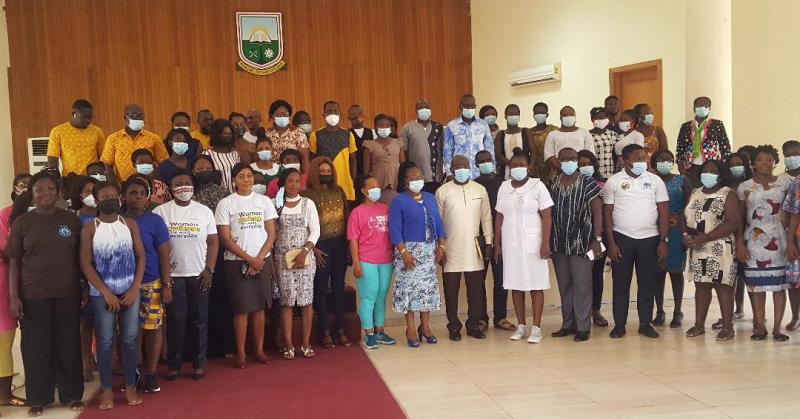
Ladies in Mining and Allied Professions in Ghana (LiMAP-GH) in partnership with other organizations have held a free breast and cervical screening for women in Tarkwa.
The other partners were the University of Mines and Technology (UMaT), Tarkwa, Abosso Goldfields Limited, Cal Bank PLC and Graduate Student Association of Ghana, UMaT chapter.
The objective was to promote the screening and treatment of breast and cervical cancer to help reduce the annual worldwide mortality rates associated with the disease.
Launching the programme, Professor Richard Kwasi Amankwah, Vice Chancellor of UMaT, expressed appreciation to LiMAP-GH for their continual support to promote better health care delivery among women.
He said "breast and cervical cancer have devastating effects on women. To have a female lose her breasts because of this disease is a major issue. That is why the awareness of breast cancer and particularly cervical cancer is essential".
"It is my wish that every female would take advantage of such programmes and make sure they are healthy to contribute their quota to benefit UMaT and the country at large" he added.
The Vice Chancellor on behalf of the sponsors entreated LiMAP-GH to make maximum use of the available funding to ensure the programme become a success.
Prof Grace Ofori-Sarpong, President of LiMAP-GH, explained that, "two years ago, we organized a similar exercise for only female staff and their dependents in UMaT".
She said the idea was aided by the former Vice Chancellor of UMaT Prof Jerry Kumah, and the University sponsored the programme, which was successful.
"We then decided to organize a bigger event, which needed more sponsorship, financial commitment and other resources. We approached the current management of UMaT led by Prof. Amankwah and they agreed to help. Cal Bank PLC, AGL and our own Graduate Student Association came to our aid to have this laudable programme".
Educating the participants on cervical cancer, Dr Johnson Abemafle of Apinto government hospital, said was it currently the second most common cancer in women.
It is estimated that in Ghana, 29 out of 100,000 women get this disease leading to a high mortality rate due to low screening procedures and late detections".
He said, "the disease was caused by Human Papilloma Virus which is transmitted sexually and through other ways such as skin to skin contact. Other risk factors are people who engage in sexual intercourse at an early age and those with multiple sexual partners".
"It does not cause only cancer of the cervix but that of the anus, throat, vagina and vulva. Through screening and immunization one can be insured against this disease" Dr Abemafle added.
Miss Patience Akpakli, a matron at Ghana Manganese Company hospital, advised women to cultivate the habit of examining their breasts often.
She stated that, "reducing excessive smoking and alcohol consumption, exercising regularly, eating balanced diets and breast feeding can minimize the risk of getting breast cancer, adding that, "men, please handle your wife's breasts gently to avoid damaging the tissues".
Latest Stories
-
Power restoration fault suspected in Kumasi Central Market fire
2 hours -
The 7-foot giant of Ngleshie Amanfro: Seven-foot Ghanaian Ephraim Saawa dreams of joining the national basketball team
3 hours -
Government promises support for Kumasi Central Market fire victims
3 hours -
Vibes The Movie: Big Ghun’s Ghanaian film earns five nominations at 2026 REFFA
4 hours -
MamaCare CEO warns unresolved conflicts among health workers could undermine maternal and neonatal care
4 hours -
Health professionals urged to translate medical knowledge into practice to save mothers
4 hours -
Conflicts among care providers linked to maternal, neonatal deaths – Expert
6 hours -
GIS marks 10th TIME conference, champions improved teaching practices
6 hours -
BRICS Or Balance? What Ghana’s bid really means
6 hours -
GPRTU wants full TRAFFITECH-GH implementation to start in 2027
7 hours -
Mahama announces plans to import electric wheelchairs for PWDs
7 hours -
KGL U17 Colts 2026: Western beat Prempeh Elite Academy to set up final final with Greater Accra Region
7 hours -
Late Solanke strike salvages 10-man Spurs draw at Man United
7 hours -
Gender Ministry to monitor welfare of Nana Akua Addo’s children amid domestic violence case
7 hours -
Benedict Okyere Yeboah: Ghana’s football problem goes beyond sacking a coach
7 hours