

Audio By Carbonatix
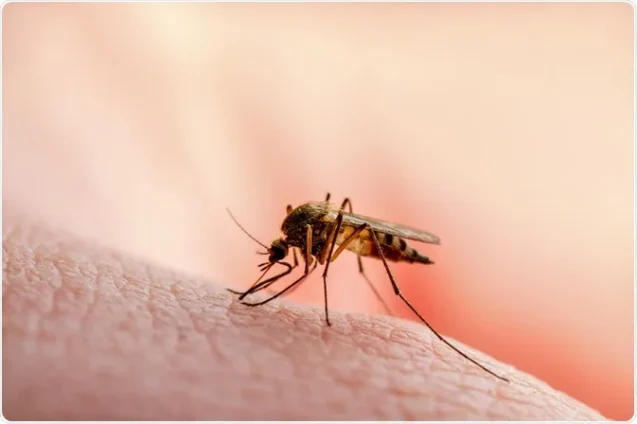
Malaria killed around 610,000 people in 2024, mostly young children in sub-Saharan Africa, the World Health Organisation said on Thursday, warning of the risks of rising drug resistance, climate change and funding cuts.
The toll was a slight increase from the number of deaths in 2023, and case numbers also went up, from 273 million to an estimated 282 million, according to the WHO’s annual malaria report.
After vast progress in the early 2000s, the fight against malaria has been stalling in the last decade. While 47 countries have been certified as malaria-free, others are seeing a jump in cases – in 2024, particularly Ethiopia, Madagascar and Yemen.
RISK OF RESURGENCE
“Too many people are still dying from a preventable and curable disease,” said Daniel Ngamije Madandi, director of the WHO’s global malaria programme.
He said rising resistance to malaria drugs and the insecticides used on some bed nets, alongside climate change and conflict, were all factors challenging the response to the disease, which is spread by mosquitoes.
The rise in cases and deaths is in part linked to population growth, but case incidence – which accounts for that – also grew in the period 2015-2024, the WHO said, from 59 to 64 cases per 100,000 people at risk. Mortality rates have declined, but only slightly, from 14.9 to 13.8 per 100,000 people at risk.
Funding is also consistently below what is needed, the WHO said. In 2024, the total investment in malaria control from both donors and affected countries reached $3.9 billion, far below a target of more than $9 billion.
That total, and the data on last year's cases and deaths, do not yet take in the cuts to international aid this year, which began in January in the United States and which have had an impact on the fight against malaria this year.
“The underfunding of [the] malaria response ... brings obvious risk, a massive and uncontrolled resurgence of disease,” said Ngamije.
He said new and better tools, including treatments, diagnostics and malaria vaccines, offered hope and had saved millions of lives. But they have to reach those at risk to have an impact, he added, a responsibility that lies with governments in the affected countries as well as international donors.
Latest Stories
-
President Mahama is not sincere with Ghanaians on LGBTQ bill matter – Hassan Tampuli
16 minutes -
Gov’t to establish Prison Industrial Hub to equip inmates with income-generating skills – Prison Service boss
34 minutes -
Alhassan Tampuli donates cement, roofing sheets to support storm victims in Gushegu
35 minutes -
Alhassan Tampuli appeals for urgent support for storm victims in Gushegu
38 minutes -
The hypocrisy must stop; pass Anti-LGBTQ+ Bill now – Alhassan Tampuli to Mahama
42 minutes -
Imprisonment should be rehabilitative, not punitive – Ghana Prisons boss at UNGA
1 hour -
Ga Adangbe traditional priests petition Mahama over McDan aviation licence revocation
1 hour -
Anti-LGBTQ Bill: NDC’s arrogance is worrying – Hassan Tampuli
1 hour -
Let’s give OSP time to mature, not to scrap it – Hassan Tampuli
1 hour -
Nigeria convicts 386 Islamist militants in mass trials
2 hours -
Djibouti president wins election with 97.8% of vote, state media says
2 hours -
We don’t have mandate to deduct tax from rent allowance of security services personnel – Interior Ministry clarifies
2 hours -
Ablakwa receives Presidential Special Envoy on Reparations to advance global agenda
2 hours -
Christina Koch becomes first woman to travel around the moon on Artemis II
2 hours -
Epstein survivors’ calls to meet King Charles and Queen harder to ignore as US visit approaches
2 hours